Saturday, 13 June 2026

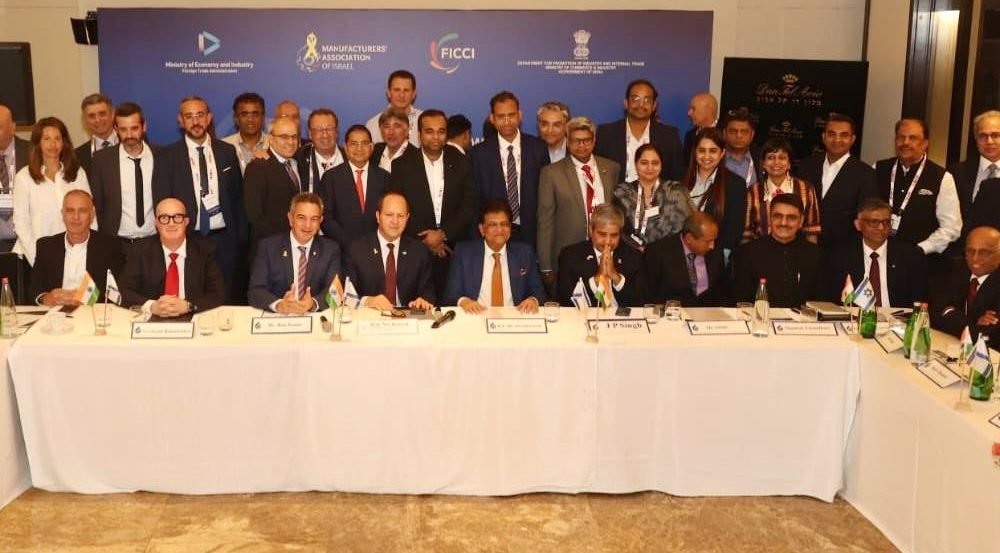
Delegation focusses collaboration on Co-ops & Agri-Tech
Union Commerce and Industry Minister Piyush Goyal’s three-day visit to Israel has placed a powerful spotlight on cooperation-driven growth, with a special emphasis on agriculture, technology and the cooperative sector. The visit not only advanced bilateral strategic engagements but also opened fresh avenues for Indian cooperatives, especially dairy giants like Amul, to collaborate with Israeli innovators in agritech, water management and community-based farming models.
Goyal’s meeting with Israeli Agriculture and Food Security Minister Avi Dichter marked one of the most significant developments of the tour. Dichter briefed him on Israel’s long-term food-security roadmap, advanced seed-improvement technologies and the country’s globally recognised leadership in water-reuse systems for agriculture. These areas resonate strongly with India’s cooperative sector, which continues to play a central role in rural development and food-chain resilience.
India’s dairy cooperatives, particularly the Gujarat Cooperative Milk Marketing Federation (GCMMF), which markets Amul, are already exploring collaborations with Israel to widen their footprint in West Asia.
Amul has shown keen interest in tapping Israel’s kosher-certified dairy market, and Goyal’s engagements further strengthen this evolving cooperation. With India being the world’s largest milk producer, and cooperatives contributing significantly to this achievement, the potential for joint ventures, technology exchange and market expansion remains vast.
During his visit to the Peres Center for Peace and Innovation, Goyal received detailed insights into Israel’s world-class innovation ecosystem, ranging from water-efficient drip-irrigation systems to agricultural sensors and next-generation technologies with deep applicability for India’s cooperative-driven agriculture.
He described the center as a testament to Israel’s strength in transforming grassroots challenges into scalable solutions, an approach that complements India’s cooperative philosophy of community-based problem solving.
A visit to Kibbutz Ramat Rachel further underscored the synergies between the two nations. The kibbutz model, rooted in cooperative living and shared economic activity, mirrors India’s own cooperative traditions, where community ownership and democratic decision-making remain central. Goyal observed the kibbutz’s sustainable agricultural practices and participatory governance, offering learnings that may inspire India’s ongoing efforts to modernise cooperative institutions.
On the trade front, Goyal held wide-ranging discussions with Israel’s Minister of Economy Nir Barkat and Minister of Finance Bezalel Smotrich to boost investment flows, fintech collaboration and regulatory cooperation. The India–Israel Business Forum saw strong private-sector enthusiasm in areas such as agritech, AI, precision engineering and advanced manufacturing, domains where cooperatives too stand to gain through technology infusion and new global linkages.
A major highlight of the visit was the signing of the Terms of Reference for the India–Israel Free Trade Agreement. Once concluded, the FTA is expected to unlock new opportunities for cooperative exports, dairy products, processed foods and farm technologies. Amul and other cooperative brands could benefit from reduced non-tariff barriers and smoother certification processes, especially in high-value markets such as Israel.
Goyal also interacted with leading Israeli companies like Netafim, IDE Technologies and Check Point, exploring partnerships in precision irrigation, water management and cybersecurity, all crucial for strengthening India’s cooperative infrastructure, particularly in rural credit, agriculture and supply-chain management.
As the visit concluded, it was clear that the India–Israel partnership is entering a new phase, one in which cooperatives, technology and innovation will play a defining role. By linking Israel’s cutting-edge strengths with India’s vast cooperative network, both nations are crafting a future where collaboration unlocks new growth for communities, industries and global markets alike.