Saturday, 18 July 2026


In a year when climate negotiations are increasingly demanding private-sector accountability, UPL has emerged as one of the most influential agri-innovation players on the global stage. The company’s Low-Methane Rice Project has won the prestigious SBCOP Award in the Food Systems category at COP30 in Belém, Brazil—recognition that positions UPL among the world’s leading contributors to climate-smart agricultural transformation.
The award, part of the Sustainable Business COP (SBCOP) program led by Brazil’s National Confederation of Industry (CNI), honors corporate initiatives that not only curb emissions but also demonstrate scale, replicability, and measurable impact. This year, the competition was intense: more than 1,400 project submissions from over 600 companies and institutions worldwide were vetted, narrowed down to 670 high-potential initiatives, and finally distilled into just 48 winners. UPL’s model stood out.
“For UPL, this recognition underscores our commitment to reimagining sustainability at the heart of global agriculture,” said Jai Shroff, Chairman and Group CEO of UPL Group. “The Low-Methane Rice Project empowers farmers with science-based practices that improve both productivity and environmental outcomes. It strengthens our efforts to build a more resilient and climate-friendly pathway for agriculture.”
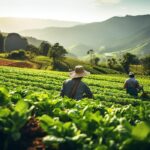
Rice cultivation accounts for roughly 10 per cent of global methane emissions—a climate challenge often overshadowed by debates around livestock and fossil fuels. UPL’s initiative tackles this head-on. The project integrates low-methane rice varieties, improved water management, and advanced cultivation technologies to significantly reduce methane release from paddy fields. The program is active across multiple geographies, reflecting UPL’s global footprint and its flagship #AFarmerCan mission to equip farmers with knowledge and tools to thrive amid climate pressure.
“Sifting through so many high-impact submissions made this year’s evaluation exceptionally rigorous,” noted Ricardo Mussa, Chairman of SBCOP. “UPL earned its place among the 48 global winners because the Low-Methane Rice Project delivers strong environmental results, clear economic value, and the ability to scale in diverse agricultural landscapes.”
SBCOP, a flagship initiative from the Brazilian National Confederation of Industry, is designed to institutionalize private-sector engagement in global climate governance. The platform seeks to deepen business influence in multilateral climate processes, accelerate decarbonization pathways, and build the foundations for a broader low-carbon economy supported by sustainable finance.
For UPL, the award is more than recognition—it is validation of a long-term strategy where climate science, innovation, and agronomic empowerment converge. The company’s work in rice methane reduction exemplifies how targeted interventions can lower emissions while strengthening farmer livelihoods and food security.
As global stakeholders increasingly expect agribusinesses to move from commitment to concrete action, UPL’s win at COP30 signals a broader shift. Climate-smart agriculture is no longer a peripheral ambition—it is becoming a cornerstone of competitiveness, resilience, and global food system transformation.
This achievement reinforces UPL’s mission to drive solutions that reduce environmental impact, enhance farmer resilience, and deliver long-term, sustainable value across the agricultural ecosystem.