Thursday, 16 July 2026

Production more than doubles over decade as rice and wheat also reach all-time highs
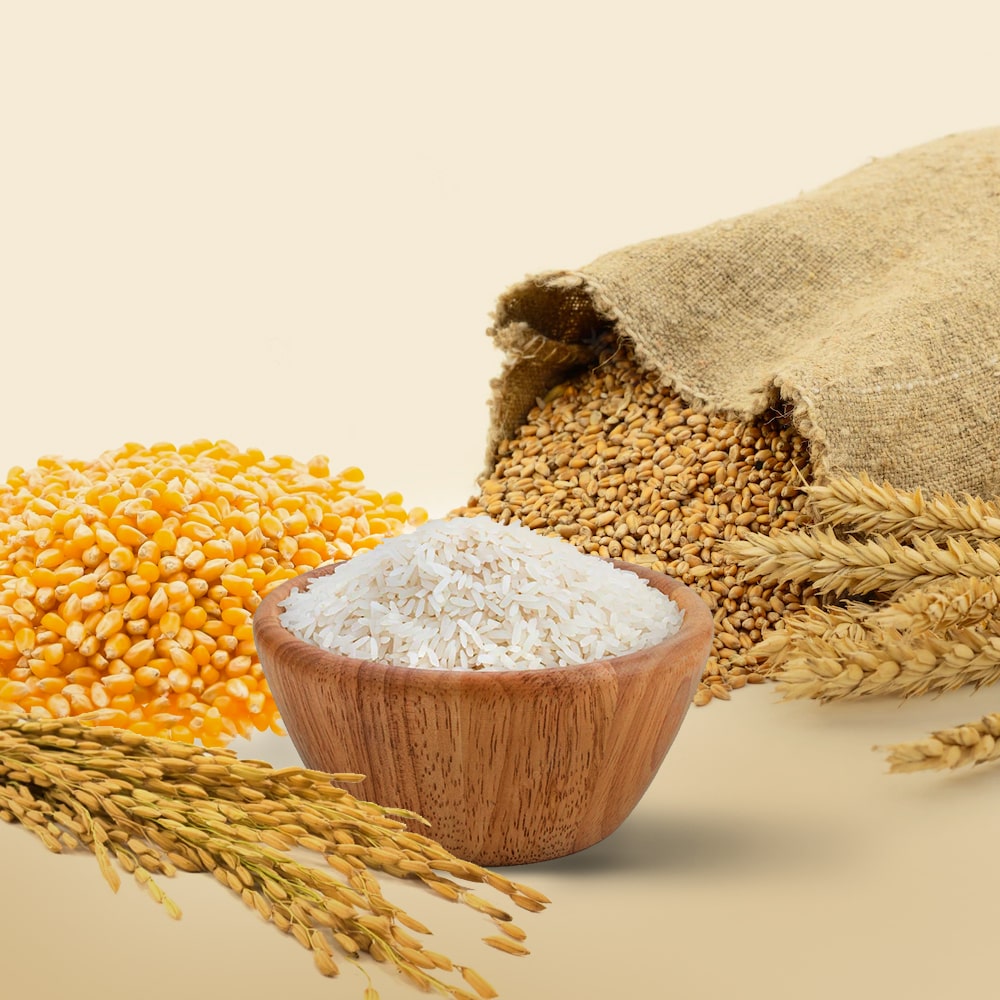
India’s cereal production story continues to gather momentum, with the Third Advance Estimates for 2025-26 released by the Department of Agriculture and Farmers Welfare indicating fresh record highs in key staple crops. The latest data underscores the resilience of the agriculture sector, with rice, wheat and maize posting their highest-ever production levels, reinforcing the country’s food security framework and strengthening prospects for agricultural-led economic growth.
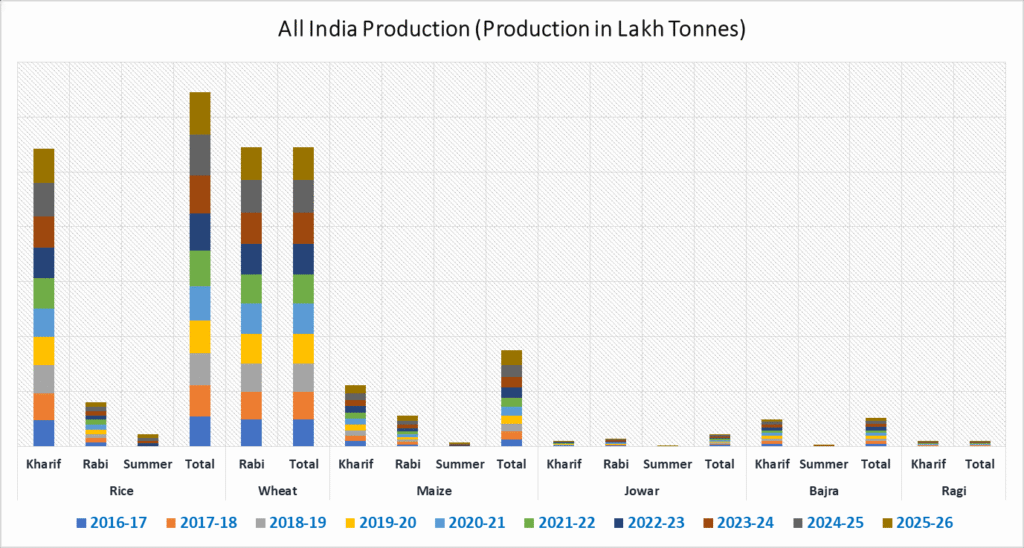
Rice production has emerged as one of the strongest success stories of the current agricultural year. Total rice output is estimated at 154.02 million tonnes, marking an increase of nearly 38 per cent compared with the 109.70 million tonnes produced in 2016-17. The growth trajectory has been particularly pronounced over the past two years, with production crossing the 150-million-tonne mark for the first time in 2024-25 and rising further in 2025-26. Kharif rice continues to dominate production, accounting for more than four-fifths of total output. At 124.76 million tonnes, Kharif rice production in 2025-26 is the highest ever recorded, reflecting favourable weather conditions, wider adoption of improved seed varieties and enhanced irrigation support. Rabi rice production has also rebounded strongly to 18.11 million tonnes, while summer rice output remains above 11 million tonnes, highlighting the increasing diversification of rice cultivation across seasons.
Wheat, India’s second-largest cereal crop, has maintained a steady upward trajectory despite periodic climatic challenges. Production is estimated at 120.66 million tonnes in 2025-26, representing an increase of more than 22 per cent over the 98.51 million tonnes recorded in 2016-17. After witnessing some moderation during 2021-22 due to adverse weather events, wheat production has consistently recovered and expanded, crossing successive milestones to establish a new record. The latest estimate reflects sustained improvements in productivity, better agronomic practices and continued policy support aimed at strengthening domestic grain supplies.
Among all major cereals, maize has delivered the most remarkable growth performance over the past decade. Total maize production is estimated at 55.09 million tonnes in 2025-26, more than doubling from 25.90 million tonnes in 2016-17. The crop has registered an impressive increase of over 112 per cent during the period, making it one of the fastest-growing segments within India’s cereal economy. While Kharif maize remains the principal production season, significant gains have also been recorded in Rabi and summer maize cultivation. Kharif maize production has surged to 30.51 million tonnes, while Rabi maize output has climbed to 20.03 million tonnes, reflecting growing demand from the poultry, feed, starch, ethanol and industrial sectors. The continued expansion of maize production signals the crop’s increasing strategic importance in India’s evolving agricultural and biofuel landscape.
The performance of coarse cereals presents a more varied picture. Jowar production is estimated at 4.36 million tonnes in 2025-26, marginally lower than the previous year and below the levels recorded during some earlier years. The decline in Kharif production has offset the relatively stable performance of the Rabi crop, suggesting a gradual shift in cultivation patterns and land allocation. Nevertheless, Jowar continues to play an important role in dryland agriculture and nutritional security in several states.
Bajra production remains resilient despite year-to-year fluctuations. Total output is estimated at 10.85 million tonnes in 2025-26, slightly lower than the previous year’s record level but significantly higher than the production levels observed during much of the previous decade. The crop continues to benefit from its adaptability to arid and semi-arid regions, making it increasingly relevant in the context of climate-resilient agriculture and sustainable farming systems.
Ragi has maintained a stable growth trajectory, with production reaching 2.00 million tonnes in 2025-26 compared with 1.39 million tonnes in 2016-17. The crop has witnessed renewed policy attention in recent years due to growing consumer interest in nutrient-rich millets and the government’s efforts to promote millet cultivation and consumption. The steady increase in production reflects both rising demand and expanding awareness of the crop’s nutritional benefits.
A comparison of the decade-long trends reveals a structural transformation underway within India’s cereal sector. Rice production has increased by approximately 44.3 million tonnes since 2016-17, wheat production by 22.1 million tonnes, and maize production by nearly 29.2 million tonnes. Together, these three crops account for the overwhelming share of growth in cereal production and have emerged as the primary drivers of India’s expanding foodgrain basket. Maize, in particular, stands out as the fastest-growing crop, underscoring the diversification of agricultural demand beyond traditional food consumption towards livestock feed, industrial applications and renewable energy production.
The latest estimates also highlight the increasing role of multi-season cultivation in enhancing overall output. The expansion of Rabi and summer production in both rice and maize indicates improving irrigation infrastructure and greater adoption of intensive cropping systems. This shift is helping reduce dependence on a single agricultural season while improving resource utilization and farm incomes.
The Third Advance Estimates for 2025-26 reinforce India’s position as one of the world’s leading producers of cereals. Record production levels in rice, wheat and maize not only strengthen domestic food security but also provide greater flexibility for exports, strategic reserves and industrial usage. As climate variability, changing consumption patterns and emerging biofuel requirements reshape global agricultural markets, India’s ability to sustain productivity growth across multiple cereal crops will remain central to its agricultural and economic strategy.
— Suchetana Choudhury (suchetana.choudhuri@agrospectrumindia.com)