Tuesday, 23 June 2026

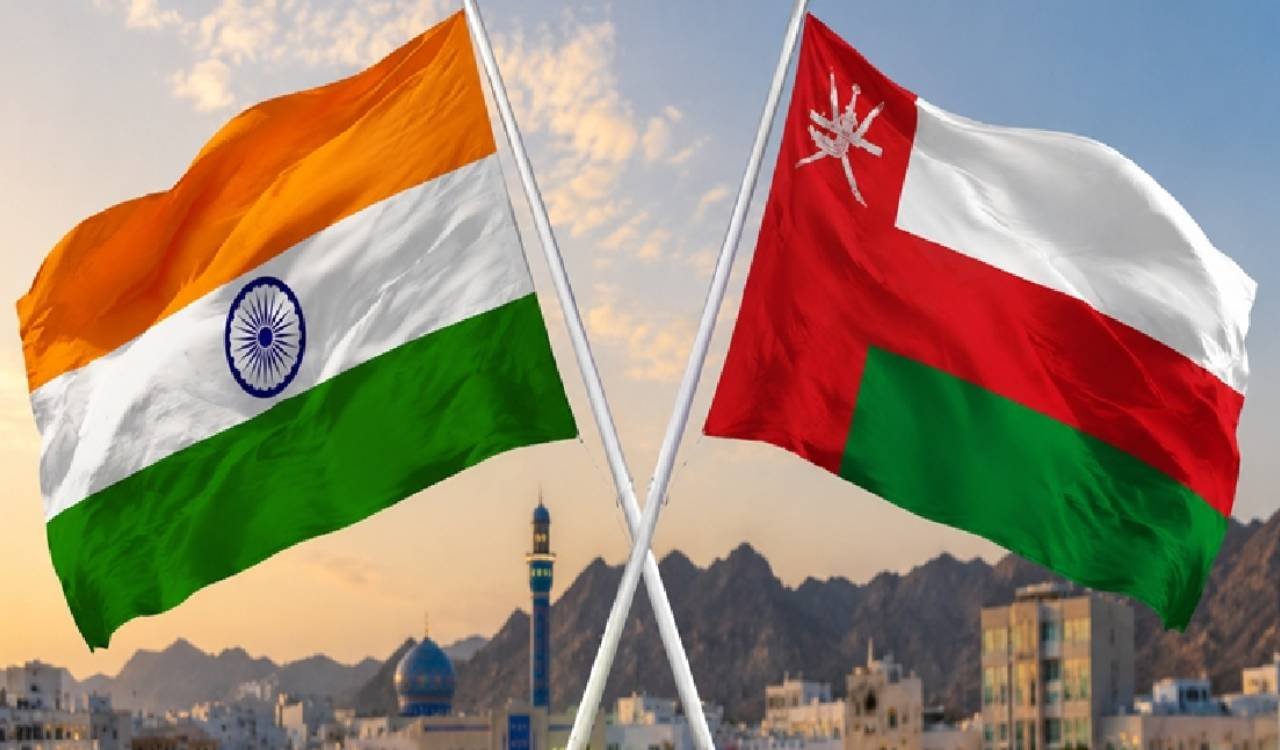
The landmark agreement strengthens bilateral trade, expands market access for Indian manufacturers and exporters, and leverages Oman’s strategic geography to secure future commercial flows
In a development whose significance extends far beyond conventional tariff liberalisation, the India–Oman Comprehensive Economic Partnership Agreement (CEPA) formally entered into force on June 1, 2026, marking a decisive step in India’s accelerating trade diplomacy and its broader quest to construct resilient economic corridors amid an increasingly fragmented global order.
Signed in Muscat on December 18, 2025, and implemented following the completion of ratification procedures by both nations, the agreement becomes India’s fifth free trade pact to be operationalised within the past five years and the fifteenth overall. More importantly, it reflects a strategic recalibration of India’s external economic policy, one that seeks not merely greater market access but also enhanced supply-chain security, export diversification and long-term economic resilience.
At first glance, Oman’s economic profile may appear modest. With a population of approximately 5.5 million and a GDP of around $110 billion, the Sultanate is hardly among the world’s largest consumer markets. Yet to evaluate the agreement solely through the prism of market size would be to miss its deeper strategic significance. In an era where geopolitics increasingly shapes trade flows, Oman occupies a position of disproportionate importance within India’s economic architecture.
Unlike most Gulf economies whose maritime lifelines remain dependent on uninterrupted passage through the Strait of Hormuz, Oman enjoys a unique geographical advantage. Much of its coastline lies outside the Strait, directly connected to the Arabian Sea and the Gulf of Oman. Major ports such as Salalah and Duqm therefore remain accessible even during periods of maritime disruption, allowing the country to function as a dependable trade and energy gateway when regional tensions threaten conventional shipping routes.
Recent developments in West Asia have vividly demonstrated this advantage. As geopolitical tensions disrupted commercial activity across the Gulf, India’s imports from major Gulf economies fell sharply from approximately $15 billion in April 2025 to $9.8 billion in April 2026, while exports declined from $4.4 billion to $2.7 billion over the same period. Oman emerged as a notable exception to this trend. India’s imports from the Sultanate surged by 246.4 per cent, rising from $430 million to nearly $1.5 billion, driven by increased purchases of crude oil, urea and industrial inputs. Meanwhile, Indian exports to Oman declined by only 10.3 per cent, significantly outperforming broader regional trade patterns. The experience reinforced Oman’s value not merely as a trading partner but as a strategic economic buffer capable of preserving commercial continuity during periods of geopolitical uncertainty.
The agreement itself offers substantial commercial benefits. Oman has granted immediate preferential access on nearly 98 per cent of its tariff lines, covering approximately 99 per cent of India’s exports by value. Indian exporters across sectors such as textiles and garments, leather and footwear, plastics, marine products, automobiles and auto components, sports goods, gems and jewellery, agricultural produce, pharmaceuticals, engineering products and chemicals are expected to benefit from lower or zero duties.
The practical impact of the agreement became evident on the day of its implementation. On June 1, approximately ten consignments comprising agricultural products and gems and jewellery were dispatched from Mumbai, Kolkata and Chennai under the preferential tariff framework, symbolising the commencement of a new phase in bilateral trade relations. For Indian exporters, the significance lies not only in tariff reductions but also in enhanced competitiveness relative to suppliers from countries that do not enjoy similar preferential arrangements with Oman.
While a large proportion of Indian exports already entered Oman under relatively low average tariffs, duties on certain product categories reached as high as 100 per cent. Their elimination is expected to improve market access and strengthen the position of Indian products within the Omani marketplace. Nevertheless, policymakers acknowledge that future export growth will inevitably be constrained by the country’s relatively limited domestic demand. Consequently, Oman’s greatest value may lie in its role as a strategic gateway to the wider Gulf Cooperation Council region rather than as a destination market alone.
Bilateral trade between the two countries has already exhibited robust momentum. Trade reached $11.18 billion during FY2025–26, compared with $10.61 billion in the preceding fiscal year, further consolidating Oman’s position as India’s second-largest trading partner within the Gulf Cooperation Council. The CEPA is expected to accelerate this trajectory by providing exporters with preferential market access and by leveraging Oman’s sophisticated port infrastructure to facilitate broader regional connectivity.
The agreement also delivers significant benefits to Oman. India has offered tariff liberalisation on 77.79 per cent of its tariff lines, covering nearly 95 per cent of its current imports from the Gulf nation. Oman’s principal exports to India include crude oil, liquefied natural gas, fertilisers, chemicals, methanol, ammonia and minerals. Reduced tariff barriers are expected to enhance the competitiveness of these products within the Indian market while supporting Oman’s Vision 2040 strategy, which seeks to diversify the economy beyond hydrocarbons and expand industrial and export-oriented sectors.
Beyond bilateral considerations, the CEPA forms part of a much broader transformation in India’s trade strategy. The country currently maintains 15 free trade agreements covering 26 nations and six preferential trade agreements spanning another 26 countries, while simultaneously negotiating trade arrangements with more than 50 additional partners. Agreements with the United Arab Emirates and Australia have already reshaped India’s export landscape, while negotiations continue with the European Union, New Zealand, Chile and the United States. India has also recently concluded a long-negotiated trade agreement with the United Kingdom. Once ongoing negotiations are completed, India will possess preferential trade arrangements with virtually every major global economic bloc, with China remaining the notable exception.
The strategic rationale behind this expanding network of trade agreements is increasingly evident. First, India seeks preferential access to overseas markets while simultaneously integrating itself into global value chains. Second, it aims to reduce excessive dependence on any single export destination, particularly at a time when trade policies across major economies have become increasingly unpredictable. Third, these agreements form a critical pillar of India’s ambition to raise exports to $2 trillion by 2030, a substantial leap from the $776 billion recorded in FY2023–24.
Against this backdrop, the India–Oman CEPA should be viewed as more than a conventional trade accord. It represents a carefully calculated instrument of economic statecraft, combining commercial opportunity with strategic foresight. In an era where supply-chain resilience, energy security and geopolitical stability are becoming as important as market access itself, Oman offers India a uniquely valuable partner positioned beyond one of the world’s most sensitive maritime chokepoints.
Ultimately, the true significance of the agreement may not be measured solely by the trade volumes it generates. Rather, its enduring value lies in the strategic certainty it provides. As global commerce increasingly prioritises resilience over efficiency and reliability over mere scale, the India–Oman CEPA stands as a powerful affirmation of India’s evolving approach to trade—one that views economic partnerships not merely as instruments of commerce, but as foundations of long-term national security and sustainable growth.