Tuesday, 23 June 2026

New $10 million biosafety-enabled facility in Almería aims to reduce breeding timelines, combat emerging crop pathogens, and strengthen global food security through grower-centric innovation
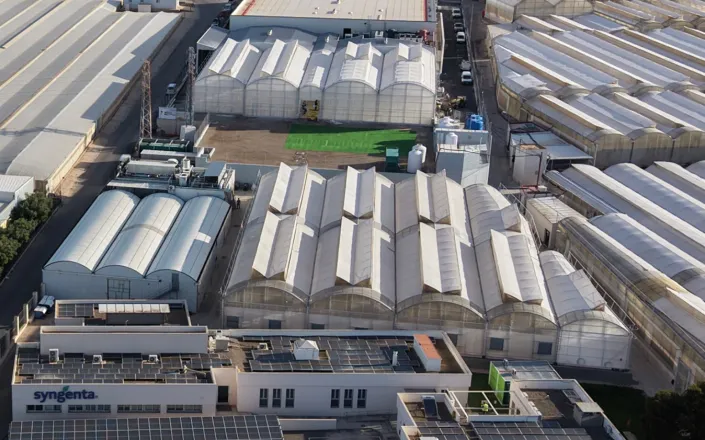
Syngenta Vegetable Seeds has inaugurated a new state-of-the-art Research & Development Technology Center in El Ejido, Almería, Spain, reinforcing its commitment to accelerating innovation in vegetable breeding and addressing emerging threats impacting global food production. The newly established facility, representing an investment of approximately $10 million, has been designed to reduce traditional breeding timelines while strengthening crop resilience for key vegetable categories including tomatoes, peppers, and cucumbers.
The Technology Center forms part of Syngenta’s broader Innovation Center footprint in El Ejido and is expected to play a critical role in developing advanced breeding solutions for fruity vegetable crops amid rising challenges from evolving pathogens, climate variability, and increasing pressure on global food systems.
Commenting on the development, Matthew Johnston, Global Head of Syngenta Vegetable Seeds, stated that new pathogens are emerging at an unprecedented pace, significantly impacting growers and agricultural productivity worldwide. He noted that the ability to deliver resilient, high-performing seeds is increasingly critical to safeguarding crop yields and protecting grower livelihoods. He further emphasized that the investment reflects Syngenta’s long-term commitment to supporting growers through science-led innovation and delivering effective crop protection solutions across global markets.
The newly inaugurated facility adopts a field-to-lab diagnostic model, enabling research and disease diagnostics to begin directly in growers’ fields rather than solely within laboratory environments. This integrated approach is intended to strengthen the connection between research teams and on-ground farming realities, ensuring that growers remain at the center of product development and innovation efforts.
The center brings together multiple capabilities under a single platform, including breeding, seed operations, trait development, fruit quality analysis, applied data science, and digital technologies. In addition, the facility is equipped with advanced biosafety infrastructure, allowing scientists to safely study emerging plant threats within a controlled and quarantined environment while maintaining the highest standards of plant health and containment.
Uri Krieger, Global Head of R&D for Syngenta Vegetable Seeds, stated that the El Ejido site represents one of the strongest examples within Syngenta’s global Innovation Center network of how closely breeders and growers can collaborate to improve product performance, quality, and availability. He added that the research conducted at the facility throughout the year will not only support growers in Spain but also contribute to Syngenta’s global R&D ecosystem through the sharing of insights, diagnostics, and scientific data across major agricultural regions worldwide.
The official inauguration ceremony took place on May 14, 2026, in the presence of Spain’s Minister of Agriculture, Luis Planas, along with more than 100 invited guests, who were given exclusive access to the advanced biosafety facility.
Southern Spain, particularly the Almería region, remains one of the world’s most significant vegetable production hubs and has long served as a strategic center for agricultural innovation. The region hosts the world’s largest concentration of greenhouses, spanning more than 30,000 hectares and producing close to 4 million tons of vegetables annually. Syngenta noted that these unique agricultural conditions make Almería an ideal environment for developing scalable agricultural technologies and breeding solutions capable of benefiting growers across international markets.
Through continued investments in research infrastructure, breeding technologies, and grower-centric innovation, Syngenta aims to further strengthen global food security while supporting sustainable agricultural productivity in an increasingly challenging farming environment.