Tuesday, 14 July 2026

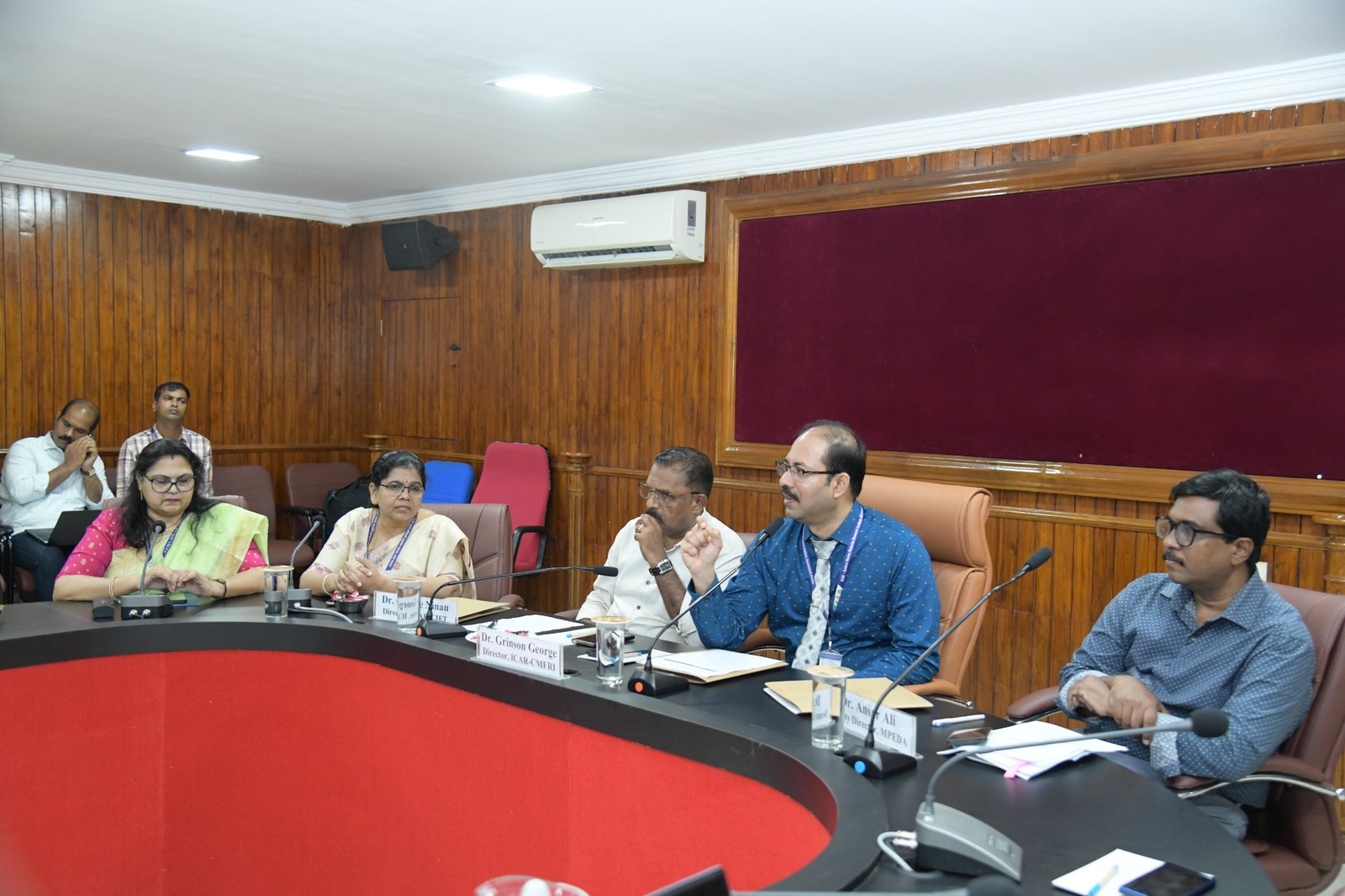
CMFRI-led consultation calls for mandatory end-to-end monitoring, sustainable sourcing and scientific assessment of mesopelagic resources for fishmeal and fish oil production
In view of the rising demand for fishmeal and fish oil, marine experts have called for making traceability a mandatory requirement to curb Illegal, Unreported and Unregulated (IUU) fishing, stressing the urgent need for transparency across the sector.
The demand was raised during a stakeholder consultation held by ICAR-Central Marine Fisheries Research Institute (CMFRI) on Tuesday. The meet was attended by marine scientists, industry representatives and policymakers emphasised that end-to-end traceability—from harvest to processing to consumers—is critical to ensure sustainability, regulatory compliance and market credibility.
Expressing concern about unregulated sourcing, participants emphasised that improved documentation and monitoring systems are essential to enhance accountability and prevent unsustainable practices. The consultation also underscored the need to diversify raw material sources for the fishmeal and fish oil sector to reduce pressure on traditional fish stocks. In this context, mesopelagic resources—deep-sea species found in midwater zones—were identified as a promising and underutilised resource base for sustainable production.
A collaborative pilot study led by CMFRI, the first of its kind in India, was presented at the meeting. It indicated that mesopelagic resources could be economically viable for fishmeal production, though experts called for further research and validation.
CMFRI Director Dr Grinson George said the institute would undertake required fish stock assessments to ensure that any expansion of the fishmeal sector is grounded in sustainability and scientific evidence. “The institute focuses on strengthening existing mechanisms by facilitating the upgradation of the country’s fishing fleet for deep-sea operations, thereby enabling traditional fishers to access offshore resources and improve their livelihoods”, he said.
“Fishmeal, an integral part of the fisheries and aquaculture sector, needs sustainable practices to conserve resources and fetch better prices in domestic and international markets”, said ICAR-Central Institute of Fisheries Technology Director Dr George Ninan.
Dr Sanjay Pandey, Deputy Commissioner of Fisheries, Govt. of India, urged stakeholders to implement the National Traceability Framework in the sector, highlighting the need for coordinated efforts among research institutions and industry players.
“The industry must come forward to adopt transparent practices, while stronger industry–research linkages are crucial for developing reliable systems and technologies,” said Dr Shubdeep Ghosh, Assistant Director of Indian Council of Agricultural Research (ICAR).
ICAR-Central Institute of Fisheries Technology Director Dr George Ninan, Dr J Jayasankar, Dr Sujitha Thomas, Dr U Ganga, Dr Shoba Joe Kizhakudan, Dr Ansar Ali and stakeholders representing fish meal and oil industry spoke on the occasion.