Monday, 6 July 2026

AI-powered intelligence platform transforms early warning into early action across vulnerable nations
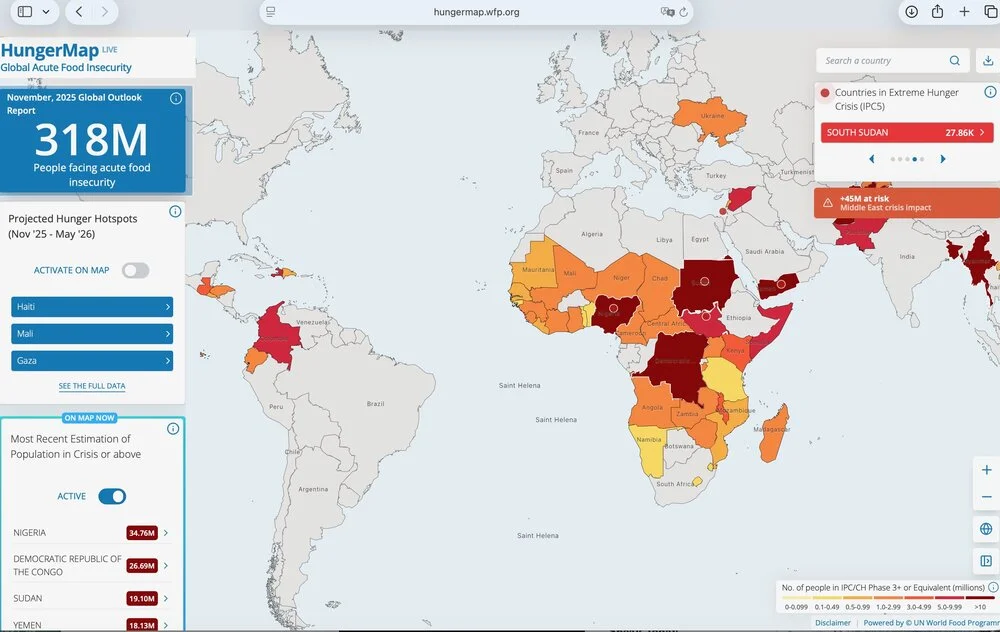
In a decisive leap towards data-driven humanitarian response, the World Food Programme has launched HungerMap Live, a next-generation intelligence platform designed to monitor, analyse, and predict food insecurity across more than 50 countries. Unveiled in New York, the platform arrives at a critical juncture as global hunger intensifies amid constrained funding for relief efforts.
HungerMap Live integrates vast streams of food security data with advanced predictive modelling, offering one of the most comprehensive and up-to-date pictures of hunger in the world’s most vulnerable regions. With AI-assisted forecasting capabilities, the platform focuses on WFP-designated Hunger Hotspots—16 countries already grappling with severe food insecurity—enabling stakeholders to anticipate crises before they escalate.
The urgency is stark. The number of people facing IPC Phase 5 conditions—the most extreme level of food insecurity—has surged dramatically, rising from 85,000 in 2019 to 1.4 million in 2025. Against this backdrop, early warning systems such as HungerMap Live are proving not only life-saving but cost-effective. The World Food Programme estimates that every dollar invested in anticipatory action yields at least seven dollars in savings through improved efficiency and reduced emergency response costs.
The platform draws on the expertise of more than 300 analysts within the World Food Programme, combined with data from a wide network of trusted partners. These include the globally recognised Integrated Food Security Phase Classification system, alongside government-validated statistics, and real-time inputs on climate, agriculture, markets, and economic conditions. With support from Google.org, the platform answers critical questions around current food security status, emerging risk zones, and the underlying drivers of hunger.
A distinctive feature of HungerMap Live is its focus on nutritional quality through a specialised “micronutrient intake adequacy” layer. Developed with backing from the Gates Foundation, this capability links food availability with dietary quality, helping identify populations at risk of “hidden hunger” caused by deficiencies in essential vitamins and minerals.
According to Cindy McCain, Executive Director of the World Food Programme, the platform marks a turning point in how the world confronts hunger, equipping decision-makers with the insights needed to act proactively rather than reactively. Complementing this view, Jean-Martin Bauer, Director of the Food Security and Nutrition Analysis Service at WFP, emphasised that sustained investment in data collection is essential to maintaining a credible early warning system.
Yet even as technological capabilities expand, challenges persist. Funding for global food security monitoring has declined sharply, with the World Food Programme reporting a 25 percent reduction in its data footprint over the past year. This underscores a critical paradox: at a time when better data can prevent crises, the resources required to generate that data are under strain.
With HungerMap Live, the World Food Programme is redefining the fight against hunger—shifting from reactive intervention to predictive action, and from fragmented insights to a unified, intelligence-led global response.