Tuesday, 14 July 2026

Volume holds firm, value softens as global demand patterns and product mix shift
India’s shrimp exports opened 2026 on a measured note, reaching 50,564 metric tonnes in January—a 3 percent year-on-year increase—while export value edged down 2 percent to $347 million, according to shrimpinsights.com. The divergence reflects a subtle but significant shift in product mix, with a higher share of raw exports and reduced contribution from value-added segments. This follows a robust 2025, when India recorded 9 percent growth in volume and a stronger 14 percent rise in value, underscoring the current recalibration rather than a structural slowdown.
Raw Dominance Strengthens as Value-Added Weakens
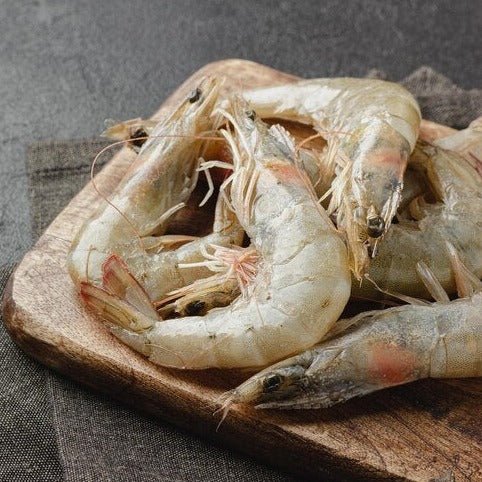
Raw Litopenaeus vannamei continues to anchor India’s shrimp exports, accounting for 36,765 MT in January, up 3 percent year-on-year. In contrast, value-added shrimp exports declined sharply by 17 percent to 4,664 MT, reflecting ongoing tariff challenges in the United States—the primary market for processed products—and limited penetration into the European Union for such offerings.
Meanwhile, raw Penaeus monodon posted a remarkable 51 percent surge to 3,670 MT, signalling continued diversification and improved crop distribution. Wild-caught shrimp volumes also showed a modest recovery, rising 5 percent to 5,465 MT, though still below historical levels.
Market Realignment Reshapes Export Flows
A sharp contraction in shipments to the United States—down 36 percent year-on-year to 13,888 MT—emerged as the most striking development, driven by elevated reciprocal tariffs that remained in place through January. In contrast, the European Union has strengthened its position as a key growth engine, with imports rising 49 percent to 11,099 MT, extending the momentum built through 2025.
China also delivered robust growth, with volumes up 72 percent to 9,016 MT, reinforcing its role as a critical alternative market. Exports to Vietnam remained stable at 3,618 MT following a year of rapid expansion driven by reprocessing trade, while Japan recorded modest growth of 4 percent to 2,392 MT.
A Year of Contrasts in Retrospect
The broader trajectory through 2025 reveals a dynamic yet uneven growth pattern, with monthly export volumes fluctuating between seasonal peaks and corrections, culminating in an annual total of 796,374 MT. Export value reached $5.66 billion, reflecting strong demand cycles and improved price realisation for much of the year, before softening towards year-end and into early 2026.
Structural Shifts Define the Outlook
The current landscape points to a structural shift in India’s shrimp export strategy, where reliance on raw exports is increasing amid external pressures on value-added trade. While emerging markets such as China and the European Union offer growth avenues, the continued weakness in the United States market highlights the vulnerability of premium segments to trade policy disruptions.
Balancing Growth and Value in a Changing Market
As global demand patterns evolve, the challenge for India lies in restoring momentum in value-added exports while sustaining volume growth across diversified markets. The trajectory ahead will depend on trade policy shifts, market access expansion, and the industry’s ability to move up the value chain—ensuring that growth is not only measured in tonnes, but in value and resilience.