Tuesday, 14 July 2026




Authored by Ranjana Singh, Partner and Isha Khanna, Associate, K&S Partners
Energy plays a vital role in modern agriculture by powering machinery, providing irrigation, and ensuring food security by enhancing production efficiency. As the world’s population is growing rapidly and technology is advancing the requirement of energy is also growing.
To address these challenges, switching to renewable energy and focusing on Corporate Social Responsibility (CSR) is an effective strategy for tackling the challenges. These efforts can improve agricultural productivity, and sustainability, especially in countries like India, wherein nearly 47 per cent of the population depends on agriculture. By 2022, India’s installed renewable energy capacity reached approximately 168.96 GW, making it the fourth largest in the world, following China, the United States, and Brazil. This includes 67 GW of solar, 43.7 GW of wind, 10.2 GW of biomass, and 4.9 GW of small hydropower.
The Indian government aims to achieve 500 GW of non-fossil fuel capacity by 2030, of which a significant portion is expected to benefit the agriculture sector. Agriculture in India consumes about 18 to 20 per cent of the country’s total electricity, mostly for irrigation. With nearly 47 per cent of India’s workforce dependent on agriculture, renewable energy solutions such as solar-powered pumps and biogas plants are being promoted to enhance energy access and reduce costs for farmers.
According to the Ministry of New and Renewable Energy (MNRE), over 325,000 solar water pumps have been installed across the country under various government schemes. Programmes like PM-KUSUM aim to support farmers by adding 30.8 GW of solar capacity through decentralized, grid-connected, and off-grid installations. These efforts reduce the dependency on the fossil fuel and also support India’s broader goals under its Nationally Determined Contributions (NDCs) and the Sustainable Development Goals (SDGs), particularly in clean energy, poverty reduction, and climate resilience.
Worldwide, investments in research and development are being made in the field of renewable energy for agriculture to reduce the dependence on fossil fuels and ensure sustainable agriculture in the long term. With increasing energy needs, technologies such as solar-powered irrigation systems, utilization of biomass, and energy-efficient practices are gaining importance.
This article explores how the integration of clean energy solutions and corporate engagement can create significant opportunities to empower smallholder farmers, improve food security, and decrease the carbon footprint of agricultural activities. This article also presents a summary of patent activities related to renewable energy technologies applied in agriculture and placing them at the forefront of recent trends in the sector.
CSR in Agriculture: Strategies and Impact
Corporate Social Responsibility (CSR) in agriculture means that farms and agribusinesses act responsibly toward the environment, society, and the economy. The agriculture sector requires CSR policies that promote responsible farming, help generate income for small farmers, and promote development in rural communities.
With CSR, farmers can be trained in effective agricultural practices, including business management, which enhances productive and profitable farming. CSR empowers farmers in non-farming income-generating activities, including poultry and livestock farming.
CSR Initiatives Driving Renewable Energy Adoption in Agriculture
A growing number of farmers are turning towards the renewable energy solutions as part of broader sustainability efforts. Initiatives, such as the installation of solar panels, deployment of biogas digesters, and adoption of water conservation techniques, are becoming increasingly common. Some agribusinesses are also extending their efforts beyond the farm, supporting community-level clean energy projects and creating employment through CSR programmes.
The report “Agricultural Shifts and Technology: The Global South’s Rise and India’s Innovation Story” states that, as of 2020, the Global South accounts for about 73 per cent of global agricultural output, driven by technological adoption and sustainable innovations.
In India, technology has become a key driver towards enhancing agricultural productivity. The use of digital tools, artificial intelligence, drones, and the emergence of agri-tech startups have significantly revolutionized the sector. Government initiatives such as the Digital Agriculture Mission, the Agriculture Infrastructure Fund, and the electronic National Agriculture Market (e-NAM) have collectively supported and facilitated market access, post-harvest management, and operational efficiency.
These initiatives have led to a commendable 4.6 per cent yearly growth in the farming industry, enhancing profitability and sustainability for farmers. More than Rs 35,000 crore has been invested in post-harvest infrastructure as a part of the Government of India’s “10 Years of Transformation” scheme, MSPs have been increased in 22 crops, and over 23 crore soil health cards have been issued. Such measures have strengthened the sector’s resilience and preparedness to adopt climate-resilient practices.
Schemes like “Per Drop More Crop,”which emphasizes on improved water use efficiency, are laying the groundwork for integrating renewable energy with the mainstream farming. For example, combining solar-powered micro-irrigation systems with innovative soil mapping technologies can significantly reduce input costs, conserve water, and decrease carbon emissions. The government-led agricultural reforms are laying the foundation for a climate-resilient, energy-efficient, and sustainable farming ecosystem.
Policy-Infused CSR in Action
India’s policy ecosystem, from mandatory CSR under Companies Act amendments to the PM-KUSUM scheme, creates the ground for aggrotech and agribusinesses to channelize CSR into meaningful renewable energy transformation.
Under the PM KUSUM scheme (Pradhan Mantri Kisan Urja Suraksha Evam Utthaan Mahabhiyan), farmers installing solar irrigation pumps receive a total subsidy of 60 per cent: 30 per cent Central Financial Assistance (CFA) from the MNRE and 30 per cent from State Governments. The remaining 40 per cent is financed through a combination of 10 per cent farmer equity and 30 per cent concessional bank loans, ensuring farmers pay only a nominal upfront cost of about 10 per cent of the total system value. In certain hilly and northeastern regions, the central subsidy under Components B and C can go up to 50 per cent further enhancing accessibility for farmers in these regions.
Under MNRE’s revamped National Biogas and Manure Management Programme (NBMMP) which runs through 2021–26 the government is accelerating the deployment of family-size biogas plants (1–25 m³/day) and medium-scale digesters (25–2,500 m³/day). These systems receive central assistance ranging from Rs 9,800 to Rs 70,400 per plant, with additional incentives for regions in the Northeast and hilly states. For larger biogas setups generating power or thermal energy, MNRE offers Rs 35,000–Rs 45,000/kW boosted by 20 per cent in special-category areas.
Corporate CSR funding is increasingly aligning with rural financing innovations, such as Kisan Credit Cards (KCC) integrated through agri‑fintech platforms like ITC MAARS, alongside NABARD‑backed climate‑resilient loan products. This powerful synergy reduces upfront investment barriers for farmers, boosting viability of clean energy projects and enables faster, scalable deployment of renewable technologies in agricultural communities.
At the same time, new investments in green hydrogen and solar manufacturing as highlighted by the MNRE are encouraging companies to use their CSR funds in a more integrated way. This not only supports sustainable agriculture and energy independence but is also helping India to move closer to its target of 500 GW of non-fossil fuel energy capacity by 2030.
Real World CSR Success: Policy Meets Practice
With growing global emphasis towards sustainable agriculture, CSR initiatives are essential for promoting renewable energy. This is clearly visible in the biogas sector, where government programmes, such as the MNRE’s NBMMP, are being strengthened by strategic CSR efforts. From multinational companies investing in rural digesters to innovative start-ups, these initiatives are turning farm waste into-energy. For example, Sistema. Bio’s biodigester mega factory in Pune is an example of how effective collaboration between policy, innovation, and CSR investment can deliver scalable and sustainable energy solutions in India’s agricultural regions.
With sustainable agriculture becoming increasingly important worldwide, CSR programmes are emerging as powerful catalysts for the adoption of renewable energy in the agricultural sector. For example, Nestle India’s “Biodigester Project” has emerged in collaboration with cooperatives in Punjab and Haryana to install nearly 3,000 small biodigesters and over 70 larger units at dairy farms. These systems convert cattle manure into clean cooking gas while producing nutrient‑rich slurry for organic farming.
Programmes like these help farmers reduce there dependence on fossil fuels and help in increasing their income from farming . For example under the MNRE NBMMP, (2021–26), these biogas units are eligible for Rs 9,800–70,400 of central assistance per plant, along with a 20 per cent bonus for units located in hilly, northeastern, or SC/ST dominated areas. Nestle’s efforts in CSR support a framework that promotes renewable energy and sustainable agriculture. These efforts include the installation of systems, training for operators, and ongoing technical monitoring, creating a model that effectively aligns corporate investments with government subsidies.
These initiatives exemplify how CSR activities can work alongside government initiatives, such as MNRE subsidies, to promote renewable energy and sustainable agriculture. These efforts help increase farmers’ income and support India’s vision for smart agriculture.
CSR-Powered Solar Irrigation
The government’s initiatives such as policies and the push towards green energy have opened up new opportunities and encouraged farmers across the country to move towards solar irrigation, significantly improving their lives.
In developing countries like India, various government programmes and policies, such as PM-KUSUM, are improvising the renewable energy sector in agriculture. Various agricultural regions in India are promoting the adoption of solar energy through initiatives like agrivoltaics, solar-powered irrigation, and state-specific programmes, all aiming to enhance farming practices and generate clean energy.
India has now become the fifth-largest installer of solar power in the world, with an installed capacity of 84 GW, and it currently ranks as the third-largest producer of solar energy. The country aims to achieve a total renewable energy capacity of 500 GW by 2030, with solar energy expected to contribute nearly 280 GW to this goal. Achieving these ambitious goals will require the use of 75,000 square kilometres of land for solar energy production.
One solution to this challenge is Agrivoltaics, a method that allows for the simultaneous use of land for agriculture and solar energy generation. This approach enables farmers to cultivate crops underneath elevated solar panels, thereby optimizing land use while also producing clean energy.
These efforts are paving the way for new ideas and are helping the farmers to learn about new technologies. When government policies, innovation, and CSR investment come together, India could become a leader in the Global South by bringing climate friendly solar solutions into farming. Successful CSR-driven initiatives are already evident in ambitious solar irrigation programmes at the state level, which are exploring integrations with agrivoltaics.
One of the examples is the Muradpur floating solar lift irrigation scheme in Nagpur district, which was inaugurated by Union Minister Nitin Gadkari on June 7, 2025. This 270 kVA floating solar array located over the Rama Dam reservoir powers lift irrigation systems spanning 465 acres, benefiting a community that is 53 per cent tribal. In addition to generating energy, the initiative incorporates contemporary agricultural practices, including drone spraying, cooperative machinery sharing, and sustainable farming techniques. The integration of renewable energy, efficient water management, and community-driven solutions illustrates how a holistic approach can significantly bolster agricultural economies and enhance climate resilience in rural India.
One of the examples for rural transformation through CSR, is the solar powered lift irrigation system by ACC, in partnership with the Adani Foundation, in Bohardhi village, located in Bilaspur district. This 20 HP solar-powered lift irrigation system irrigates approximately 55 to 60 acres of marginal farmland and operates for around eight hours each day. The project utilizes water from both borewells and surface sources ensuring consistent irrigation in the region. It serves as an exemplary model of a CSR-funded initiative that combines sustainable energy solutions with improved access to water and rural empowerment, offering a scalable model for similar areas.
In addition to India, Africa also offers inspiration for sustainable initiatives. Climate change poses significant risks to water and food security on the continent. In response, governments are promoting small-scale, farmer-managed irrigation as a vital adaptation strategy. Many farmers are transitioning to solar pumps, taking advantage of the abundant sunshine and water resources available.
This shift provides a feasible economic and environmental alternative for smallholders. However, access to suitable solar technologies in many African countries is often hindered due to high costs, and a lack of understanding. Fortunately, initiatives supported by the IWMI, including the Feed the Future Innovation Lab for Small-Scale Irrigation (ILSSI) and Africa Research in Sustainable Intensification for the Next Generation (Africa RISING) projects, have identified a range of innovative solutions with substantial agricultural benefits.
This integrated environment of policy, CSR, and technology is not just a theory; rather it is being put into practice globally through significant projects. These initiatives provide practical examples of how the combination of CSR resources, public policy, and technological advancements is creating a transformative approach to agriculture.
Innovative Technologies and Future Trends
A keyword and patent classification-based search methodology was employed using the Derwent Innovations Index and questel orbit published in the last ten years(2015 to 2025). The study was performed by measuring the count of patent families rather than individual publications (which belong to the same patent family) in order to accurately depict the number of innovations. Results obtained are shown in Figures 1 to 6 along with their analysis.
Global patent/patent application publication trends
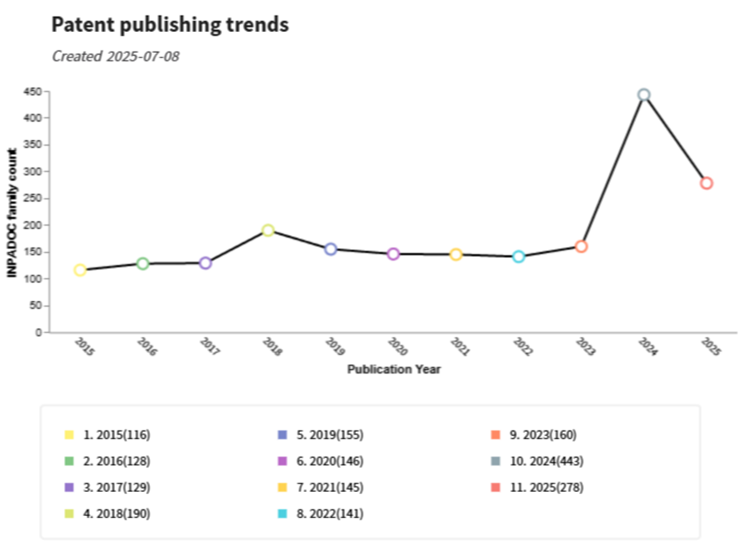
Figure 1: Trend of global patent/patent application publication in renewable energy in agriculture from 2015-2025
Figure 1 illustrates the number of INPADOC patent families (including published patent applications, patents, and utility models) by year of publication. The data indicates a growing trend in patent filings in the agricultural sector related to renewable energy, peaking in 2024. Patents published over the last decade show a significant increase in renewable energy applications within agriculture. This trend indicates that innovators are not just exploring new solutions but are also building intellectual property portfolios. This serves as a clear signal to investors, policymakers, and research and development institutions that this sector is gaining momentum.
IPC classification based global patent/patent application publication trend
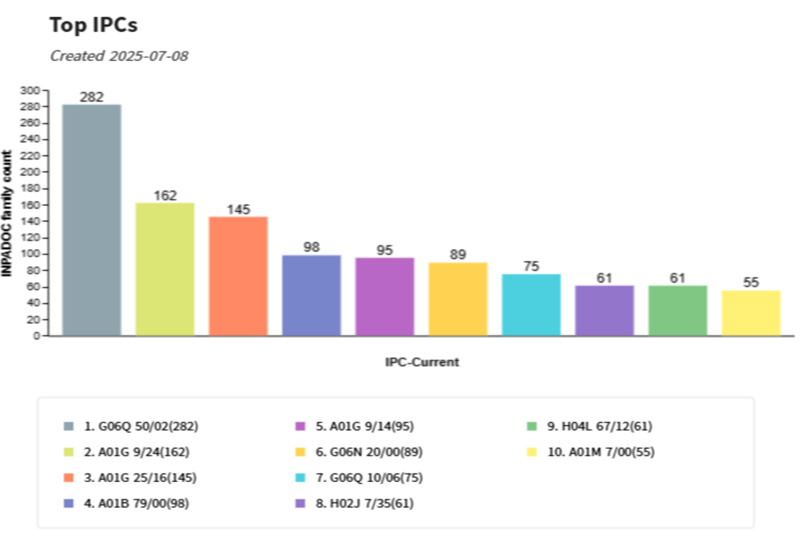
Figure 2: IPC classification based global patent/patent application publication trend from 2015-2025
Figure 2 illustrates the leading IPC patent classes and reveals a shift toward digital and sustainable agriculture. The patent class G06Q 50/02 indicates increased investments in digital farming. Innovations such as solar irrigation systems (A01G 9/24) and advanced sowing technologies (A01C 25/16) suggest a shift toward precision agriculture. Additionally, advancements in greenhouse systems (A01G 9/14) and pest control technology (A01M 7/00) represent new solutions to agricultural challenges, showcasing multidisciplinary innovation in the sector.
Filing trend worldwide
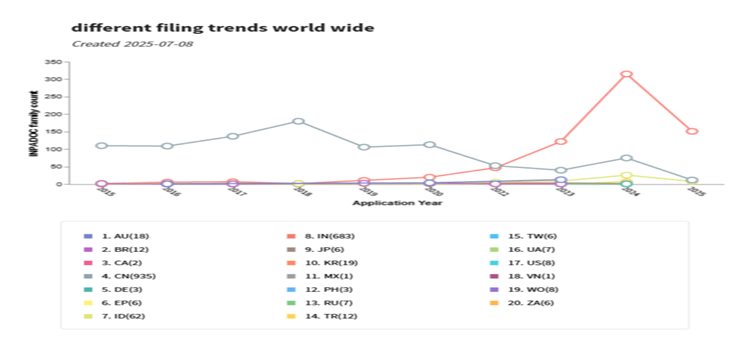
Figure 3: Filing trend worldwide from 2015-2025
Figure 3 illustrates global filing trends revealing the landscape of innovations in the technology. China (CN) leads the way with 935 filings, reflecting its commitment towards green technology. India (IN) is rapidly climbing the ranks with 683 filings, a significant growth post-2023 due to policy measures such as PM-KUSUM, CSR-supported initiatives, and affordable solar solutions for smallholder farmers.
Top applicants as per their patent families
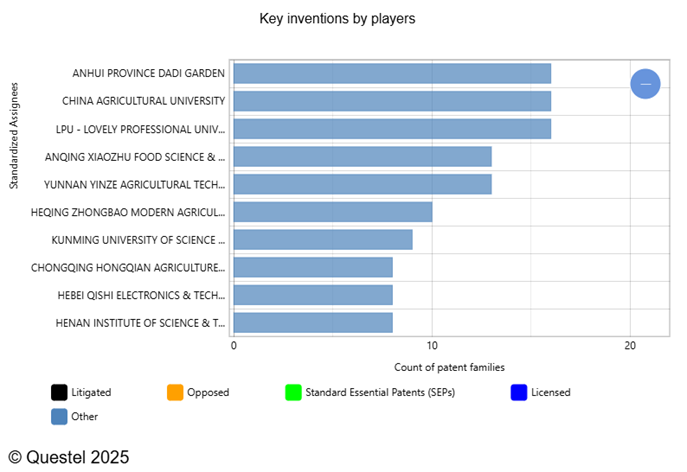
Figure 4: Top applicants as per their patent families from 2015-2025
Figure 4 illustrates an overview of the key players in the agriculture patent domain, highlighting their focus on sustainable agriculture, irrigation, energy integration, and smart farming. It is noteworthy that mainly the Universities/Research Institutes are contributing to the growing intellectual property in agriculture technology.
Status of the global patent/patent application publications
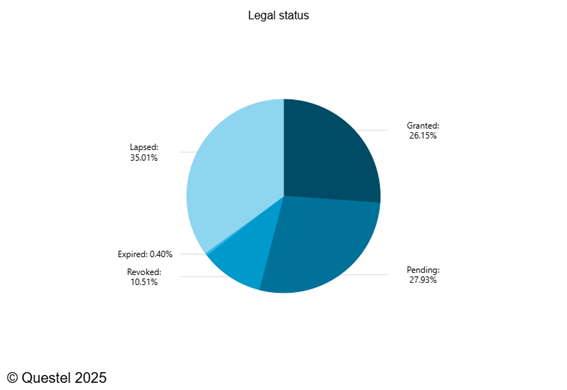
Figure 5: Status of the global patent/patent application publications from 2015- 2025
Figure 5 illustrates the global distribution of the legal statuses of patent applications in the agri- innovation sector. According to Questel’s 2025 statistics, granted patents make up 26.15 per cent, representing the enforceable intellectual property that signals potential market introduction. The low expiration rate of 0.40 per cent further signifies that this is a growing industry. Thus, it provides valuable insights for CSR sponsors, and policymakers to assess risk, and leverage patent intelligence for strategic planning.
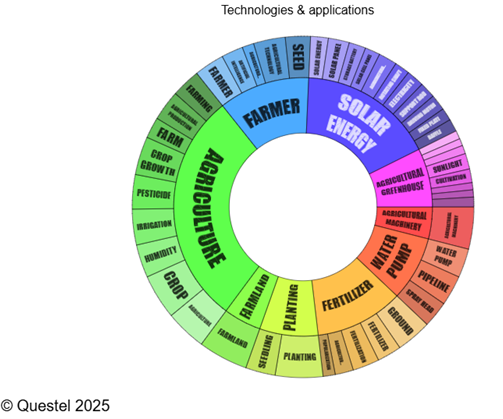
Figure 6: Technology Landscape and Its Interconnections in the Agriculture-Energy Ecosystem
Figure 6 illustrates a detailed overview of the technology landscape and its interconnections within the agriculture-energy system, with a particular focus on solar-powered agricultural solutions. It emphasizes key technological areas such as solar pumps, greenhouses, irrigation systems, and fertilizer technologies that are essential for achieving sustainable agriculture. This shows how combining different technologies can open up numerous opportunities rich in intellectual property benefiting agribusinesses, startups, and public research institutions.
The patent trends discussed herein reveals remarkable increase in patents especially for technologies like agrivoltaics, solar-powered irrigation, and smart farming technologies. The data suggests that innovation in this field is being driven by both government initiatives and corporate involvement through CSR efforts. After 2022, the number of published patents has risen showing that India is moving from simply adopting technology to becoming a major source of new inventions on the global stage. A closer examination of jurisdictional trends indicates that while China continues to lead in global patent filings, India is rapidly establishing itself as a key player, especially in the convergence of solar energy and agriculture. This progress is supported by policy frameworks like PM-KUSUM, various state-specific renewable energy missions, and CSR-driven initiatives to deploy technology in rural areas.
This collaboration of CSR investment, clean technology, and supportive government policies is reshaping rural India. Solar-powered irrigation pumps, biogas systems, and agrivoltaic technology are helping farmers to cut their expenses on diesel and LPG, and boosting their productivity. Companies like Nestle, ACC-Adani Foundation, and Sistema.bioare leading this movement by funding distributed energy projects and sustainable input systems. These innovations not only improve agriculture but also promote rural employment. With time, this collaboration between CSR, government policies, and innovation can mitigate agricultural risks, stabilize incomes, and promote sustainable economic development.
Conclusion
Renewable energy is not just an optional resource but a crucial requirement for the future of sustainable agriculture. Innovations in clean technologies, such as solar irrigation and biomass energy, not only have environmental benefits but also enhances the livelihoods. The way forward involves collaboration among farmers, businesses, and government entities. Together, they can work towards a more secure, and climate-resilient future.