Tuesday, 14 July 2026

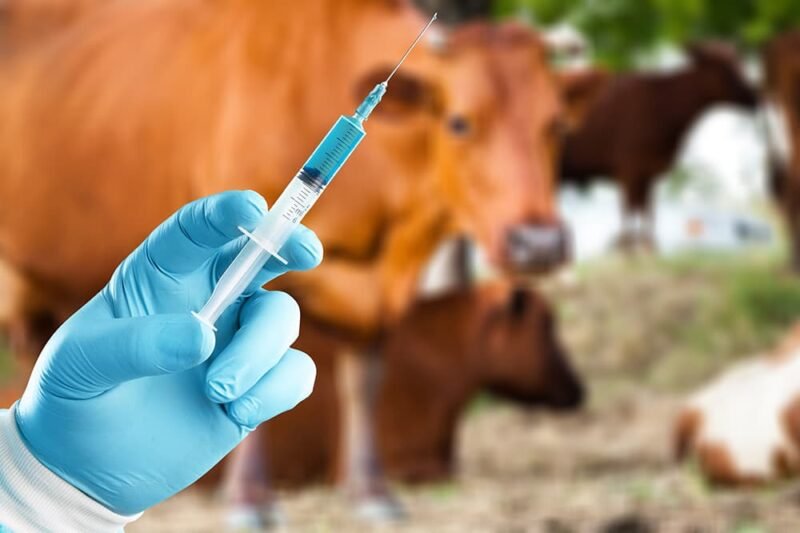
New partnership targets foot-and-mouth disease with scalable, next-generation technology
A new global collaboration is aiming to bring next-generation RNA vaccine technology into livestock health, as Centre for Veterinary Vaccine Innovation and Manufacturing (CVIM) and Tiba Biotech join forces to develop scalable, rapid-response vaccines targeting high-impact animal diseases.
Backed by funding from the Bill & Melinda Gates Foundation, the UK Foreign, Commonwealth & Development Office, and the Biotechnology and Biological Sciences Research Council, the partnership reflects a broader push to strengthen global vaccine innovation infrastructure—particularly for livestock systems in low- and middle-income countries.
The collaboration will leverage scientific expertise from The Pirbright Institute alongside CVIM’s advanced manufacturing capabilities, with an initial focus on RNA-based vaccine candidates for Foot-and-mouth disease (FMD), one of the most economically devastating infections affecting cattle and other livestock globally.
At the center of the effort is Tiba Biotech’s proprietary RNABL™ delivery platform, which has already demonstrated full protection against FMD challenge infections in cattle in earlier studies. The joint program will now move into deeper molecular characterization, evaluating antigen expression and immune response across multiple RNA formats—including messenger RNA (mRNA) and self-amplifying RNA (saRNA).
The goal is to identify viable vaccine candidates that can be advanced into livestock species such as cattle, swine, and sheep, with an emphasis on scalability and cost efficiency.
Expanding the RNA Playbook Beyond Human Health
The collaboration signals a strategic extension of RNA vaccine technology—widely validated during the COVID-19 pandemic—into animal health, a segment that has historically lagged in rapid-response vaccine innovation.
By combining Tiba’s delivery platform with Pirbright’s virology expertise, the partnership is positioned to accelerate development timelines while improving vaccine adaptability against evolving livestock pathogens.
Focus on Global Food Security
A central objective of the initiative is to develop affordable and deployable vaccines for low- and middle-income countries, where livestock diseases directly impact food security, farmer incomes, and rural economies.
The platform-based approach also opens pathways for broader applications across multiple diseases, potentially enabling faster responses to emerging outbreaks and reducing dependence on traditional vaccine manufacturing cycles.
Building a Global Innovation Network
The project builds on an expanding network of international collaborations, including partnerships with Australia’s Elizabeth Macarthur Agricultural Institute, the Canadian Food Inspection Agency, and Germany’s Friedrich-Loeffler-Institut.
Earlier development of the FMD vaccine candidate was supported by Australia’s Department of Primary Industries and Regional Development, as well as the Livestock Vaccine Innovation Fund—a Gates Foundation-backed initiative managed by Canada’s International Development Research Centre.
The Bigger Picture
As climate change, trade, and disease mobility increase pressure on global livestock systems, the ability to deploy rapid, scalable, and cost-effective vaccines is becoming central to both agricultural resilience and biosecurity.
The CVIM–Tiba partnership underscores a growing convergence between biotech innovation and food systems—where next-generation platforms like RNA could redefine how the world protects animal health at scale.