Friday, 3 July 2026

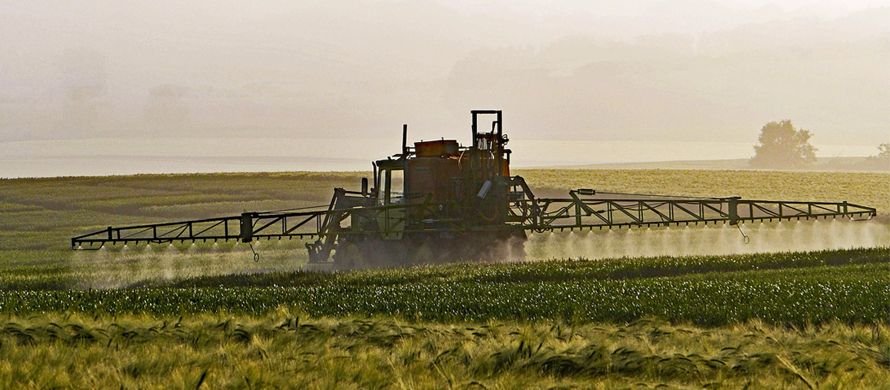
By revoking and revising MRLs across key crops, Canada signals global leadership in consumer protection — and new compliance hurdles for U.S. agribusiness
Canada’s Pest Management Regulatory Agency (PMRA) has unveiled proposed revisions to maximum residue limits (MRLs) for ethylene bisdithiocarbamate (EBDC) fungicides — mancozeb, metiram, maneb, and zineb — a regulatory shift that could reshape North American produce trade and global food safety benchmarks. The consultation, open until May 12, 2026, reflects Canada’s determination to modernize its residue definitions, tighten consumer protections, and recalibrate agricultural trade rules.
A New Residue Definition
PMRA proposes to replace the long‑standing polymeric residue definition, expressed as manganese and zinc compounds, with a modernized standard based on carbon disulfide (CS2). This change follows the cancellation of maneb and zineb registrations and the narrowing of approved uses for metiram, now limited to potatoes. With mancozeb remaining the only EBDC fungicide widely used in Canada, the new CS2 definition will serve as the foundation for revised MRLs across multiple commodities.
Commodity‑Specific Revisions
Under the proposal, new CS2‑based MRLs will be established for apples, cucumbers, dry bulb onions, grapes, and tomatoes. For apples, cucumbers, and grapes, the proposed limits equal or exceed U.S. tolerances, ensuring alignment. For onions, the proposed 0.5 ppm matches both current Canadian and Codex standards. Tomatoes face a significant reduction, from 4.0 ppm to 2.0 ppm, slightly below the U.S. tolerance of 2.5 ppm.
Equally consequential are the revocations of MRLs for broccoli, cabbages, lettuce, pears, and peppers. Once revoked, these commodities will default to Canada’s general MRL of 0.1 ppm — far below U.S. tolerances. For example, broccoli will drop from 7.0 ppm to 0.1 ppm, compared to the U.S. tolerance of 7 ppm. Cabbages will fall from 7.0 ppm to 0.1 ppm, against U.S. levels of 9 ppm. Lettuce will see a dramatic divergence: Canada’s 0.1 ppm versus U.S. tolerances of 3.5 ppm for head lettuce and 18 ppm for leaf lettuce. Pears will drop from 7.0 ppm to 0.1 ppm, below the U.S. tolerance of 0.6 ppm. Peppers will fall from 7.0 ppm to 0.1 ppm, compared to U.S. levels of 12 ppm.
Trade Implications
The revisions carry direct consequences for U.S. exporters, given Canada’s role as their largest market for fresh produce:
Canada is the top export market for U.S. fresh tomatoes, with a five‑year average of $113 million annually, absorbing over 80 percent of U.S. exports.
For cauliflower and broccoli (HS code 070410), Canada accounts for around 90 percent of U.S. exports, valued at $183 million annually.
U.S. cabbage exports to Canada average $78 million annually, with Canada taking 90 percent of shipments.
Lettuce exports are even more significant: Canada is the leading destination for both head and leaf lettuce, with combined annual imports exceeding $486 million.
Canada is the second‑largest market for U.S. pears, valued at $41 million annually, representing 25 percent of exports.
For peppers (HS code 070960), Canada absorbs 90 percent of U.S. exports, worth $87 million annually.
With Canadian MRLs set to fall below U.S. tolerances for several of these commodities, exporters face heightened compliance risks, potential testing delays, and market access challenges.
Strategic Outlook
Canada’s initiative underscores a broader global trend: the tightening of food safety standards and the recalibration of agricultural trade rules in line with evolving scientific definitions. By shifting to CS2‑based residue measurement, PMRA is not only modernizing its regulatory framework but also signaling its intent to prioritize consumer safety and international credibility.
For U.S. agribusiness, the proposal demands vigilance and adaptation. Exporters will need to reassess residue management practices, invest in compliance systems, and potentially adjust production methods to meet Canada’s stricter thresholds. For global stakeholders, Canada’s move may serve as a precedent for Codex deliberations and other national regulators, influencing the trajectory of fungicide regulation worldwide.