Sunday, 12 July 2026

Experts call for dedicated biomass crops, stronger feedstock supply chains, and lifecycle carbon assessment to sustainably meet India’s compressed biogas targets
As India works to expand its compressed biogas (CBG) ecosystem and reduce dependence on fossil fuels, industry experts are increasingly emphasizing the need for climate-resilient energy crops, structured feedstock supply chains, and advanced lifecycle assessment frameworks to ensure long-term sustainability in bioenergy production.
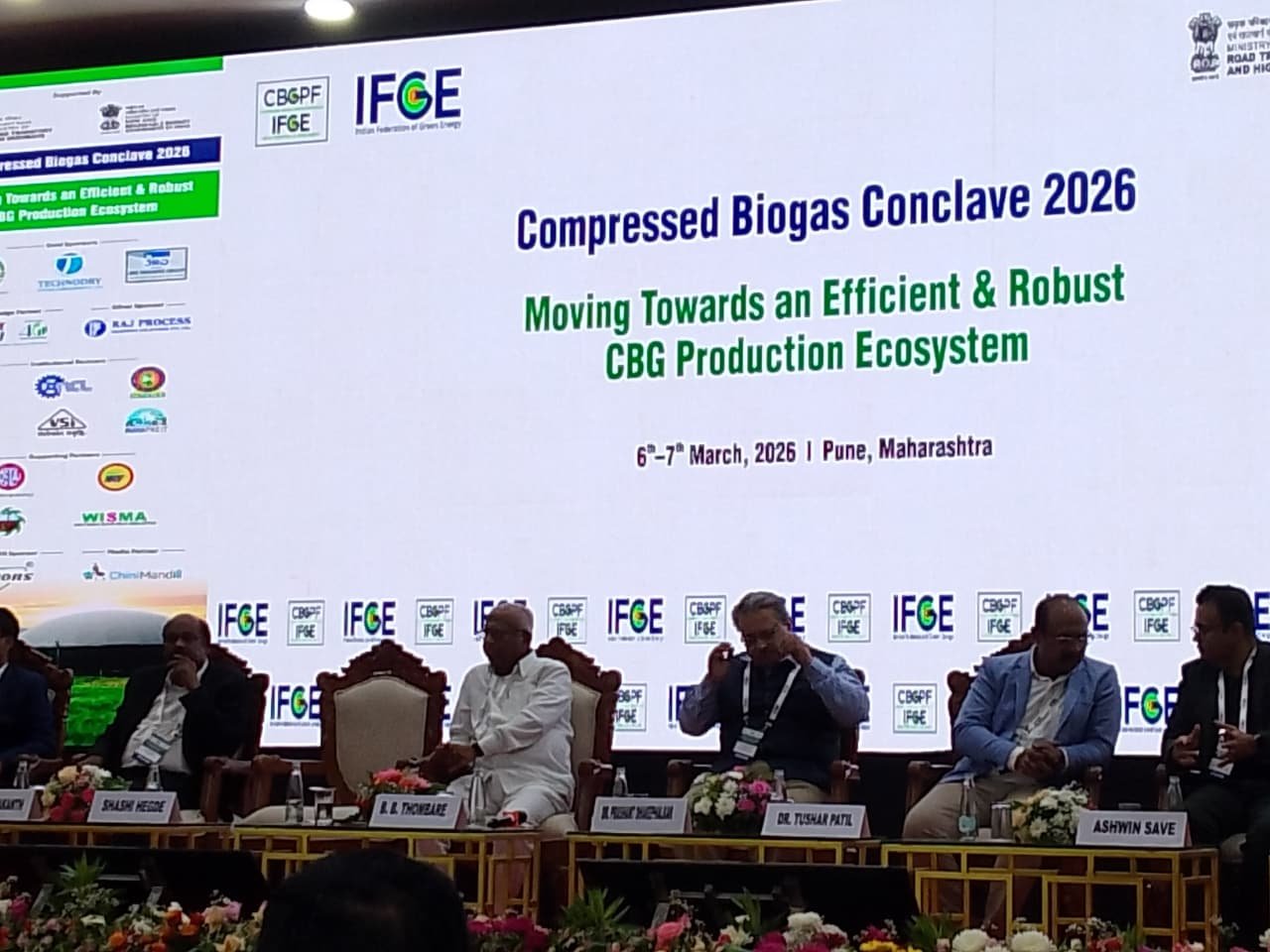
Speaking on the evolving feedstock landscape, Dr. A. V. Umakanth, Principal Scientist at the Indian Institute of Millets Research (IIMR), highlighted that global water constraints will play a decisive role in shaping the future of energy crops. As water scarcity intensifies worldwide, energy production systems are expected to increasingly shift toward water-use efficient crops that can deliver high biomass yields with lower resource consumption.
According to Dr. Umakanth, sorghum varieties have emerged as some of the most promising feedstocks for bioenergy due to their resilience, adaptability, and high biomass productivity. Several advanced sorghum cultivars have demonstrated strong performance in biomass output. Varieties such as CSV 4955 produce fresh biomass yields of around 55 to 60 tonnes per hectare, while CSV 5855 can deliver 62 to 65 tonnes per hectare. Hybrid sorghum varieties such as CSH 22 SS also show similar productivity levels of 60 to 65 tonnes per hectare, while CSH 47 can achieve fresh biomass yields of 65 to 70 tonnes per hectare.
Another promising development is the use of brown midrib (BMR) sorghum, a low-lignin variant that is particularly suited for second-generation biofuels and biogas production. BMR sorghum typically produces 35 to 40 tonnes per hectare of fresh biomass and 15 to 25 tonnes per hectare of dry biomass, making it highly suitable for efficient digestion and methane generation in bioenergy plants. In addition, varieties such as CSV 48 have been identified as high-biomass sorghum types capable of supporting large-scale bioenergy production.
Dr. Umakanth emphasized that the introduction of such dedicated biomass crops will be essential if India aims to achieve its compressed biogas production targets sustainably. Without integrating climate-resilient energy crops into the bioenergy supply chain, the country could face significant feedstock shortages in the future.
“India cannot meet its CBG targets sustainably without introducing climate-resilient dedicated biomass crops,” he said.
While crop innovation is essential, experts also point to the importance of building efficient feedstock aggregation systems that connect farmers with bioenergy plants. Ashwin Save, Managing Director and Chief Product Officer of Biofuel Circle Supply Pvt. Ltd., highlighted the need for a structured ecosystem that supports the aggregation, storage, and supply of agricultural biomass.
Biofuel Circle is working to develop digital and logistical infrastructure that can streamline biomass sourcing across regions. By building networks that connect farmers, aggregators, and bioenergy plants, such platforms aim to reduce supply disruptions and improve feedstock availability for compressed biogas facilities.
Industry experts say that reliable feedstock supply chains will be critical for improving plant utilization rates and ensuring consistent biogas production.
From a technology and strategy perspective, Dr. Tushar Patil, AVP for Corporate Strategy at Praj Industries, emphasized the importance of evaluating feedstocks through comprehensive lifecycle assessment (LCA) frameworks. According to him, understanding the energy balance and carbon footprint of feedstocks is essential for optimizing plant performance and unlocking additional revenue streams through carbon markets.
Lifecycle assessment can help determine the overall environmental benefits of bioenergy production by analyzing factors such as feedstock cultivation, transportation, processing, and methane output. This data can then be used to quantify carbon savings and generate carbon credits, strengthening the financial viability of bioenergy projects.
Dr. Patil noted that feedstock evaluation must be carried out carefully to determine the maximum operational efficiency of biogas plants. Methane yield from biomass plays a key role in determining plant economics, making feedstock selection a critical decision for project developers.
He also stressed the importance of establishing feedstock clusters within a defined collection radius, which can significantly reduce transportation costs and improve logistics efficiency. Creating such clusters can help ensure that biomass supply remains consistent and economically viable for plant operators.
“Feedstock clusters within a defined biomass collection radius are vital for the sector’s growth,” Dr. Patil said, adding that government schemes designed to promote compressed biogas must also encourage the development of such cluster-based ecosystems.
Another key factor in improving plant economics is the valorisation of by-products generated during bioenergy production. Dr. Patil highlighted that separating lignin from biomass feedstocks and utilizing it in other applications before digestion can improve process efficiency and unlock additional revenue streams.
By-product valorisation, he added, can also reduce the financial pressure on compressed biogas pricing by allowing plant operators to generate income from multiple outputs rather than relying solely on CBG sales.
As India continues to expand its bioenergy ambitions, experts say that integrating climate-resilient crops, advanced feedstock management systems, and lifecycle carbon assessment tools will be essential for building a sustainable and scalable compressed biogas ecosystem.
With growing policy support and technological innovation, stakeholders believe the sector has the potential to play a major role in India’s transition toward cleaner energy—provided the industry can effectively address feedstock availability, supply chain efficiency, and long-term sustainability.
— Suchetana Choudhury (suchetana.choudhuri@agrospectrumindia.com)