Saturday, 18 July 2026

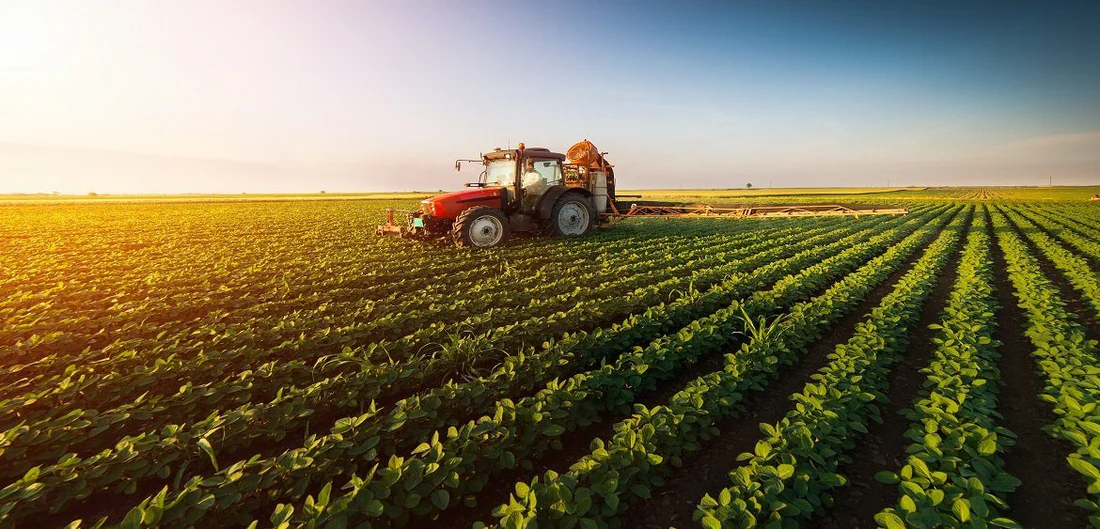
With AI-driven platforms like Bharat VISTAAR, a push for mechanisation, and integrated livestock and fisheries value chains, the Budget reframes farming as a productivity-led growth engine
The Union Budget 2026–27 marks a defining moment in India’s agricultural policy—one that moves decisively beyond short-term relief toward a structurally transformative, technology-led growth model. By placing artificial intelligence, mechanisation, allied sectors, and integrated value chains at the heart of its strategy, the Budget reframes agriculture as a future-ready engine of productivity, resilience, and rural prosperity.
At the core of this shift lies Bharat VISTAAR (Virtually Integrated System to Access Agricultural Resources), an AI-enabled, multilingual platform integrating AgriStack with the Indian Council of Agricultural Research’s extensive knowledge base. The initiative establishes digital intelligence as a foundational layer of Indian farming—delivering real-time, localised, and climate-smart advisories that empower farmers to make informed decisions across the crop cycle.

Commenting on the significance of this intervention, Dr. Pushpendra P. Singh, Dean CAPS & Project Director, ANNAM.AI, IIT Ropar, said:
“The Union Budget 2026–27 strongly reflects Prime Minister Narendra Modi’s vision of transforming Indian agriculture through technology and innovation. The launch of Bharat Vistaar is a significant step towards empowering farmers with AI-driven, real-time, climate-smart support… This Budget rightly positions AI and digital innovation as key enablers of a future-ready farm sector.”
Crucially, the Budget recognises that sustainable agricultural growth cannot be achieved through crop-centric policies alone. Instead, it places animal husbandry, fisheries, and integrated agri-value chains at the centre of rural income expansion—sectors where productivity gains and employment multipliers are both immediate and scalable.

Ravindra Agrawal, Chairman, KisanKraft, observed:
“By placing animal husbandry, fisheries, and integrated value chains at the centre of rural job creation, the Union Budget addresses where real income growth is happening beyond traditional cropping.”
He noted that credit-linked support and enterprise modernisation will accelerate mechanisation adoption:
“This will directly translate into higher adoption of practical, productivity-driven equipment—from chaff cutters and feed mixers to water management and refrigeration solutions—areas where mechanisation can immediately improve farm efficiency and profitability.”
The Budget’s emphasis on Livestock FPOs and women-led fisheries groups further strengthens this structural approach, recognising collective models as the backbone of rural resilience.
“When farmers aggregate, they invest in shared machinery, training, and technology—creating sustained demand for affordable, durable equipment tailored for small and marginal users,” Agrawal added.
A parallel shift is visible in the government’s push toward high-value and plantation crops such as coconut, cocoa, cashew, nuts, and sandalwood. This move signals a deliberate transition from volume-driven production to value-oriented agriculture—unlocking opportunities in orchard rejuvenation, high-density planting, and post-harvest handling.
“These initiatives strongly align with our mission of enabling farmers with the right tools, training, and after-sales support, ensuring mechanisation reaches the last mile and converts policy intent into measurable productivity on the ground,” Agrawal said.
From a food systems perspective, the Budget reinforces the idea that farmer prosperity must be built on knowledge, market access, and data-backed decision-making, rather than subsidies alone.

Dr. Prithwi Singh, CEO & Co-founder, Khetika, noted:
“The Union Budget FY 2026–27 sends a strong and timely signal by placing farmers at the centre of India’s growth agenda… Sustainable farmer prosperity cannot be driven by subsidies alone, but by better knowledge, infrastructure, and data-backed choices at the ground level.”
He emphasised the importance of collaborative ecosystems:
“This Budget reinforces the need for collaborative models where government, private enterprises and farmer communities work together to build a resilient, sustainable, and trustworthy food ecosystem for India.”
Industry leaders broadly welcomed the farmer-centric thrust while highlighting the need to sustain momentum on innovation.
M.K. Dhanuka, Chairman, Dhanuka Agritech Limited, said:
“We highly appreciate the government’s initiative to focus on farmer-centric growth and modernising Indian agriculture… The announcement of AI-based platforms like Bharat Vistaar, which will provide customised advisories in local languages, is particularly encouraging.”
At the same time, he underscored the importance of continued support for agri-innovation:
“There was hope for stronger support towards agri-innovation through enhanced R&D incentives and rationalisation of GST on essential crop-protection products.”
Anand Mahurkar, Founder and CEO, Findability Sciences added:
” Budget 2026 acknowledges that agtech isn’t a niche. It is central to India’s strategic priorities of improved farmer incomes and food security. With AI and machine learning embedded in digital agriculture infrastructure, we can anticipate pest outbreaks before they devastate crops, tailor irrigation and input usage down to the field level, and deliver climate-smart advisories that reduce risk. AI transforms agriculture from reactive struggle to proactive, data-driven growth.”
Mechanisation and manufacturing emerge as another defining pillar of the Budget.
Narinder Mittal, President & Managing Director, CNH India, highlighted the convergence of policy, trade, and technology:
“Technology, mechanization, and smarter farming practices will define the next phase of growth for Indian agriculture… The India–EU trade deal enabling faster flow of advanced global agricultural technologies creates strong momentum for farm modernization.”
From a policy execution lens, experts stressed that implementation will be critical.

Rajnish Kumar, Lead – Agriculture and Food Systems, MicroSave Consulting (MSC), observed:
“The Union Budget 2026–27 signals a decisive shift toward productivity-led agricultural growth… The real test will be rapid execution and demonstrable gains in productivity and farm incomes.”

Echoing this, Dr. P.S. Gahlaut, Managing Director, Indian Potash Limited, pointed to the importance of precision farming and mechanisation:
“The announcement of establishing Bharat-VISTAAR is a timely move allowing farmers to make informed decisions and enhance crop yield and nutrition through optimal resource utilisation.”
He also welcomed the Credit-Linked Subsidy Programme for Animal Husbandry, highlighting its potential to create sustainable rural enterprises.

Finally, the Budget’s sustainability lens was underscored by Tarun Sawhney, Vice Chairman and Managing Director, Triveni Engineering & Industries Ltd, who said:
“The Union Budget 2026–27 reinforces the Government’s long-term vision of building a technology-enabled, sustainable, and resilient agricultural economy. The exemption of Central Excise Duty on biogas-blended CNG will accelerate adoption of compressed biogas and reinforce circular economy models.”
Taken together, the Union Budget 2026–27 outlines a coherent, future-facing narrative for Indian agriculture—one that integrates AI-led intelligence, mechanisation, allied-sector growth, and sustainability into a single policy continuum. The direction is clear: productivity over acreage, value over volume, and resilience over short-term relief. The success of this vision will now hinge on execution—but the blueprint is firmly in place.
— Suchetana Choudhury (suchetana.choudhuri@agrospectrumindia.com)