Sunday, 12 July 2026


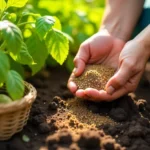
Image Source: FAO, Creative Commons/ Cody H
Jagua blue’s Codex entry highlights the future of clean-label innovation underpinned by rigorous risk assessment
In a milestone moment for the global food industry, a natural blue food colouring derived from Colombia’s jagua fruit (Genipa americana) has been formally included in the Codex Alimentarius, the international food safety standard jointly overseen by the Food and Agriculture Organization of the United Nations (FAO) and the World Health Organization (WHO). Long considered the industry’s “holy grail,” jagua blue is the first natural blue colourant that is both acid-resistant and safe for use across a wide range of foods.
Extracted from the unripe pulp of a fruit roughly the size of a kiwi or guava, jagua blue turns deep blue when exposed to air—a property that has been used for centuries by Indigenous Peoples of South America to paint skin, dye textiles, ceramics, and foods. What was once a traditional practice has now crossed into the realm of global food systems, completing the full natural colour spectrum sought by food manufacturers worldwide.
Crucially, jagua blue’s inclusion in the Codex Alimentarius—the global reference point for food safety, quality, and fair trade—clears a major regulatory hurdle for commercial adoption. Developed by a private Colombian company, the colourant underwent years of rigorous scientific assessment, including toxicological evaluations conducted by a joint FAO/WHO expert committee, to confirm both its safety and necessity as a food additive.
Following this process, jagua blue has been approved under Codex standards governing food additives, opening the door to its use in products ranging from confectionery and beverages to breakfast cereals. For the food industry, it represents a rare convergence of clean-label demand, functional stability, and regulatory approval.
Beyond industry implications, the decision carries significant socio-economic and environmental promise. Colombian officials say Codex recognition could improve livelihoods for Indigenous communities, particularly the Emberá Peoples of the forested Chocó region, who have long stewarded jagua trees. The standard is also expected to encourage biodiversity conservation, sustainable harvesting, and responsible agroforestry models.
“Good science and risk assessment are key to ensuring that Codex can play its essential role,” said Sarah Cahill, Secretary of the FAO/WHO Codex Alimentarius Commission. The jagua blue decision, she noted, illustrates the growing diversity of food ingredients circulating globally and the importance of science-based standards in maintaining consumer trust and facilitating trade.
As international food trade continues to expand at unprecedented scale, the Codex Alimentarius remains central to protecting consumer health and ensuring fair practices. The journey of jagua blue—from forest fruit to global food standard—underscores how transparent, inclusive, and evidence-driven regulation can bridge tradition, innovation, and safety in the modern food system.
In doing so, jagua blue does more than add colour to food. It signals a new chapter where indigenous knowledge, biodiversity, and rigorous science converge to reshape the future of what the world eats—and trusts.
To read original story, click: https://www.fao.org/newsroom/story/a-holy-grail-in-food-colour-and-food-safety/en