Friday, 3 July 2026

Implementing natural pest and disease remedies for greater climate resilience in Asia and the Pacific
Nguyen Thi Thu Huong is not someone who normally breaks with tradition.
The 56-year-old farmer, from Thanh Quoi commune deep within Viet Nam’s Mekong Delta, has strictly followed traditional ways of rice cultivation handed down through generations.
But, unlike earlier generations, Huong has witnessed first-hand how the intensifying impacts of climate change now threaten Viet Nam’s rice basket and her family’s way of life.
“Things are not like before. The weather is changing. There are more and different pests. It’s harder to produce crops now,” said Huong, while casting an eye over the five-hectare cluster of emerald-coloured fields where she joins five others each day to toil under the hot tropical sun.
Climate change has triggered waves of invasive pests, such as the destructive fall armyworm, and plant diseases like rice blast, leading to a 30 percent annual loss in crops in Huong’s commune. These devastating impacts on crop yields are magnified by the intensifying frequency and severity of climate crisis-driven floods and drought, while saltwater intrusion threatens large swathes of this usually fertile delta.
For Huong and other farmers in her province, traditional coping strategies, like reliance on chemical pesticides, have only compounded the situation. Intensive use of hazardous chemicals threatens the health of farmers, consumers and the environment, with contaminated soil and water harming biodiversity and beneficial insects. Furthermore, dense seeding to offset crop losses is financially costly and resource wasteful.
Viet Nam is not alone. Across Asia and the Pacific, agriculture-dependent communities remain acutely vulnerable to climate change. While monoculture cropping systems like rice paddies support 60 percent of regional caloric intake, they are under threat from pests, floods and heatwaves that erode smallholder annual incomes by 20–40 percent in hotspots, such as the Mekong Delta and Ganges Basin.
This makes ecological resilience and community adaptive capacity imperative to counter escalating climate shocks, with 19 percent rice yield declines for key producers like Viet Nam in the past decade set to climb to 30 percent if adaptations are not realized and scaled regionally.
“My family and others here realized the traditional ways of doings were no longer enough, but now we have a new way,” said Huong.
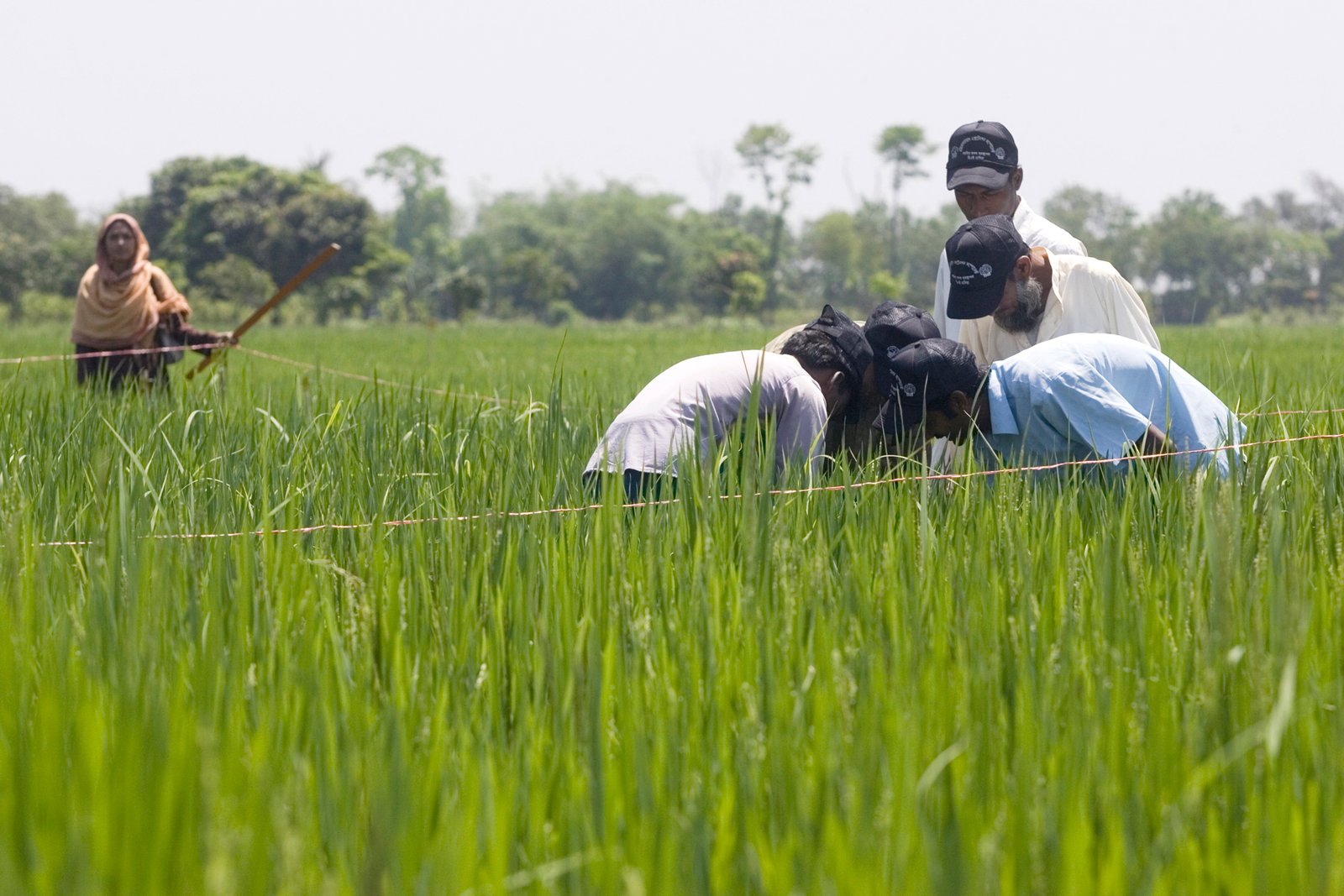
By blending indigenous agricultural approaches from past generations with innovations from today, a project by the Food and Agriculture Organization of the United Nations (FAO) is bringing proven country-specific research out of laboratories and into farmers’ fields to tackle the climate crisis. The model starts with hands-on training, delivered at Farmer Field Schools, on topics like ecological pest management and climate-adaptive cultivation solutions, applying these to demonstration plots for later replication on farms.
In Viet Nam, pheromone traps prevented pests from mating, while ducks released into rice fields controlled pests, weeds and provided natural fertilizer from their droppings and aerated soil through movement to eliminate needs for chemical pesticides and fertilizers.
The Alternate Wetting and Drying irrigation model maintained stable yields, while cutting water use and greenhouse gas emissions. Drones were employed to spray biopesticides and reduce farmers’ labour costs. These biopesticides tackled pests, while protecting natural enemies like spiders and pollinators such as bees to ensure biodiversity.
A 30 percent jump in net profit per hectare has turned Thanh Quoi commune’s farmers into champions of this new way of farming.
New methods implemented by the project have allowed farmers to cut material costs by nearly one-third (29 percent), particularly seeds (50 percent) and fertilizer (23 percent). Biopesticides delivered further financial gains by halving spraying regimes due to healthier crops.
In Bangladesh, where invasive pests and diseases accounted for 30 percent annual crop losses, a potent trio of biological control methods were combined to reduce fungal diseases and insect damage across okra crops by 60–70 percent at project sites in Mymensingh district, 120 kilometres north of the capital Dhaka. This holistic solution combines Trichoderma, a fungus that protects plant roots from diseases, with a predatory mite Neoseiulus longispinosus that controls pests, while Trichogramma is a wasp that parasitizes pest eggs to prevent hatching. With this integrated approach effective at all stages of pest life cycles, it improves crop health and reduces the need for chemical pesticides, harmful to the environment and friendly organisms.
While in Nepal, tomato growers have witnessed a 60–70 percent reduction in plant diseases. In partnership with Gandaki province’s Plant Protection Laboratory, the project supported participatory research and development of the fungus Trichoderma viride that antagonizes major soil-borne pathogens such as Fusarium which cause disease, while stimulating the tomato plant’s immune system to also fight-off pests such as the fall armyworm.
In Cambodia, as part of its mission to bridge critical gaps between research, field implementation and policy reforms, the project created innovative guidelines on the use of pesticides and biopesticides in the country.
By embedding ecological resilience within local communities, farmers now have nature-based knowledge and skills to cultivate agri-food systems for climate-resilient futures.
“These results have completely changed the way I and others farm now and into the future. There is no turning back,” said Huong.