Friday, 26 June 2026

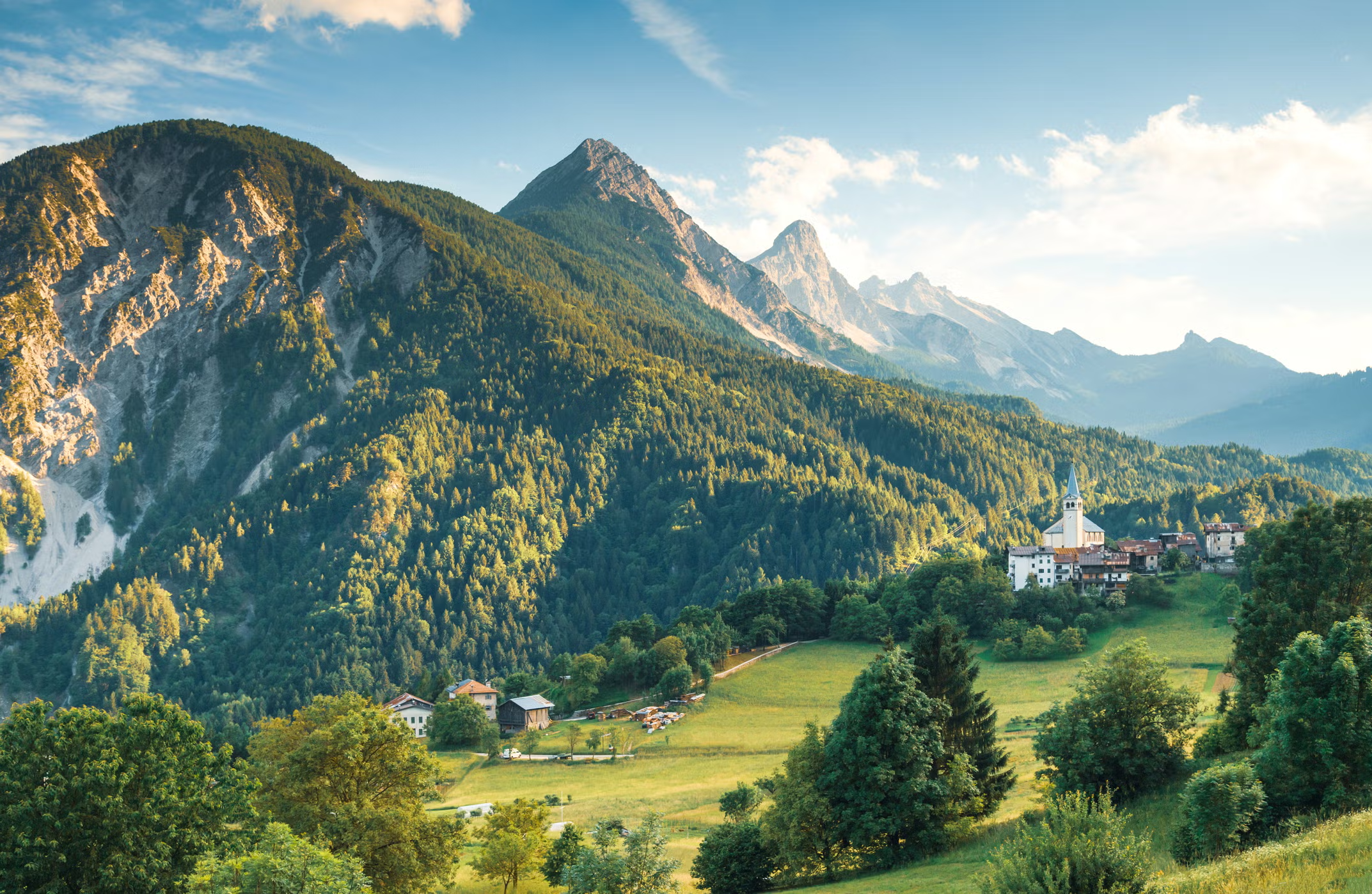
The Food and Agriculture Organization of the United Nations (FAO) marked International Mountain Day (IMD) 2025 at its headquarters in Rome, calling for urgent global action to preserve glaciers and safeguard the mountain ecosystems that underpin water, food and livelihoods for millions. Held under the theme “Glaciers matter for water, food and livelihoods in mountains and beyond,” the event highlighted the centrality of mountains to planetary well-being, launched a new technical brief and announced this year’s Mountain Future Award winners.
Nearly 70 percent of the world’s freshwater is stored in snow and ice, and glacier melt sustains the daily water needs of almost 2 billion people while supporting hydropower, agriculture, industry and biodiversity. Yet glaciers are retreating at rates without historical precedent, exposing mountain and downstream communities to intensifying water scarcity, natural hazards and food insecurity. This year’s IMD theme emphasised both the magnitude of these challenges and the opportunities for collaborative action to strengthen resilience across mountain regions.
In a video message to the high-level gathering, FAO Director-General QU Dongyu noted that mountain communities have long demonstrated exceptional ingenuity in managing fragile landscapes, but need expanded support to turn escalating risks into sustainable opportunities. He highlighted FAO’s backing for artificial glacier construction in Kyrgyzstan, where some structures have stored more than 1.5 million cubic metres of ice—enough to irrigate extensive crop areas. He also referenced a joint FAO–International Atomic Energy Agency initiative in Bolivia that deploys glacier-based sensors to monitor snow accumulation and melt, providing farmers and policymakers with critical insights into future water availability. He stressed that youth and Indigenous Peoples, often the first to feel the impacts of glacier loss, must remain central to designing local solutions and adaptation strategies.
A new technical brief, Glaciers and mountains – the food and water security and livelihoods nexus, was launched at the event. The document outlines the indispensable role of glacier-fed water systems in sustaining food production from high-altitude terraces to vast downstream plains. It describes how rapid glacial melt is destabilising food systems by lowering crop yields, endangering livestock, heightening exposure to disasters and eroding rural livelihoods. It argues that sustainable agricultural practices and ecosystem-based approaches offer viable long-term pathways to resilience, while reinforcing the importance of coupling traditional knowledge with innovation. The brief underscores the need for policy and financial strategies that match the scale of the challenge, including stronger monitoring systems, inclusive governance, cross-border cooperation and targeted climate finance.
The 2025 Mountain Future Award winners were also announced, recognising transformative initiatives that strengthen mountain economies and enhance resilience to glacier-related risks. In the Innovation category, Aziz Soltobaev of the Internet Society Kyrgyzstan Chapter was honoured for a low-cost climate-monitoring system that delivers real-time weather and glacier data to remote mountain communities. Using affordable sensors and long-range connectivity, the project trains young people in AI-driven monitoring and ensures all data is publicly accessible.
The Adaptation category award went to Marcela Fernández and Estefanía Angel Villanueva of Cumbres Blancas in Colombia. Their high-mountain restoration initiative accelerates the recovery of frailejón and other native páramo species through a model that links in vitro propagation with community nurseries. The programme bolsters Indigenous and rural capacity while safeguarding key ecosystems that supply most of Colombia’s freshwater.
In the Youth category, the award was presented to Ali Sarwar of the Gulmit Educational & Social Welfare Society in Pakistan. His project empowers young people to take the lead in glacier and water resilience efforts in the Gulmit Valley. Participants receive training in drones, GIS mapping and sensor-based surveillance of glaciers, water sources and flood risks. The initiative, which engages 100 youth—half of them women—strengthens local disaster preparedness while building technical skills that expand employment and entrepreneurship opportunities.
Delegations from Kyrgyzstan, Switzerland, Italy and Peru took part in the commemorations, which featured youth-led discussions, an interactive exhibition titled On the Trail of the Glaciers, and a tasting of mountain products curated by Slow Food producers from Italy’s alpine regions.
As the UN’s lead agency for mountains and host of the Mountain Partnership Secretariat, FAO has coordinated International Mountain Day for more than two decades. The Secretariat receives financial support from the governments of Italy, Switzerland, Andorra and Ireland. This year’s observance reaffirmed that protecting glaciers is indispensable to securing water, food systems and resilient livelihoods for mountain peoples and the billions who depend on them downstream.