Wednesday, 15 July 2026

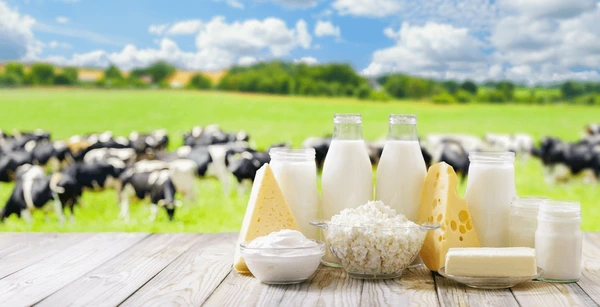
The Government of India is sharpening its push to modernise India’s dairy ecosystem through two flagship infrastructure programmes—the National Programme for Dairy Development (NPDD) and the Animal Husbandry Infrastructure Development Fund (AHIDF)—designed to upgrade processing capacity, strengthen procurement networks, and accelerate the sector’s shift toward energy-efficient and climate-friendly systems.
Under NPDD, the Department of Animal Husbandry and Dairying (DAHD) is expanding cold-chain and testing infrastructure across the country, supporting States in creating and modernising milk procurement, chilling, and processing facilities. The programme has also prioritised decentralised, clean-energy-based cooling, with village-level Dairy Cooperative Societies receiving support for Bulk Milk Coolers (BMCs) powered by Solar Photovoltaic Systems and Thermal Storage Systems; 52 solar-powered BMCs have already been sanctioned, signaling a decisive move toward greener dairy logistics.
Complementing this, AHIDF is enabling dairy cooperatives, FPOs, SHGs, and private entrepreneurs to establish or upgrade processing plants, value-added dairy units, renewable-energy systems, and energy-efficient infrastructure. The fund is driving early adoption of solar-powered processing, with dairy unions in Barauni (Bihar), Banaskantha (Gujarat), and Ernakulam (Kerala) among the first beneficiaries. Together, NPDD and AHIDF aim to close long-standing power, chilling, and processing gaps while positioning India’s dairy sector for a more sustainable and technology-driven future.
To boost productivity at the farm gate, DAHD is simultaneously advancing the Rashtriya Gokul Mission (RGM), a nationwide programme aimed at genetic upgradation and scientific cattle management. Through the National Artificial Insemination Programme, 9.36 crore animals have been covered and 14.56 crore AIs performed, benefitting 5.62 crore farmers and significantly expanding access to improved genetics. The Mission has also scaled sex-sorted semen production—now at 128 lakh doses, with the cost reduced from Rs 800 to Rs 250 per dose through indigenous technology—while creating a combined 40-lakh-dose annual capacity and an additional 150-lakh-dose capacity under establishment.
RGM’s technology pipeline extends to IVF, with 24 IVF labs operational and an incentive of ₹5,000 per assured pregnancy to accelerate adoption. The programme continues to strengthen India’s breeding ecosystem through pedigree selection, progeny testing, and support to semen stations, resulting in the production of 4,288 high-genetic-merit bulls and the sanctioning of 47 semen stations nationwide. This is backed by 39,810 MAITRIs, trained rural technicians who deliver doorstep AI services, along with extensive farmer-awareness campaigns, fertility camps, calf rallies, and training initiatives.
Together, NPDD, AHIDF, and RGM represent a comprehensive national strategy to build a future-ready dairy sector—one that pairs modern infrastructure with genetic advancement and farmer-centric innovation, ensuring higher productivity, improved incomes, and a resilient value chain for India’s millions of small and marginal dairy farmers.