Saturday, 11 July 2026

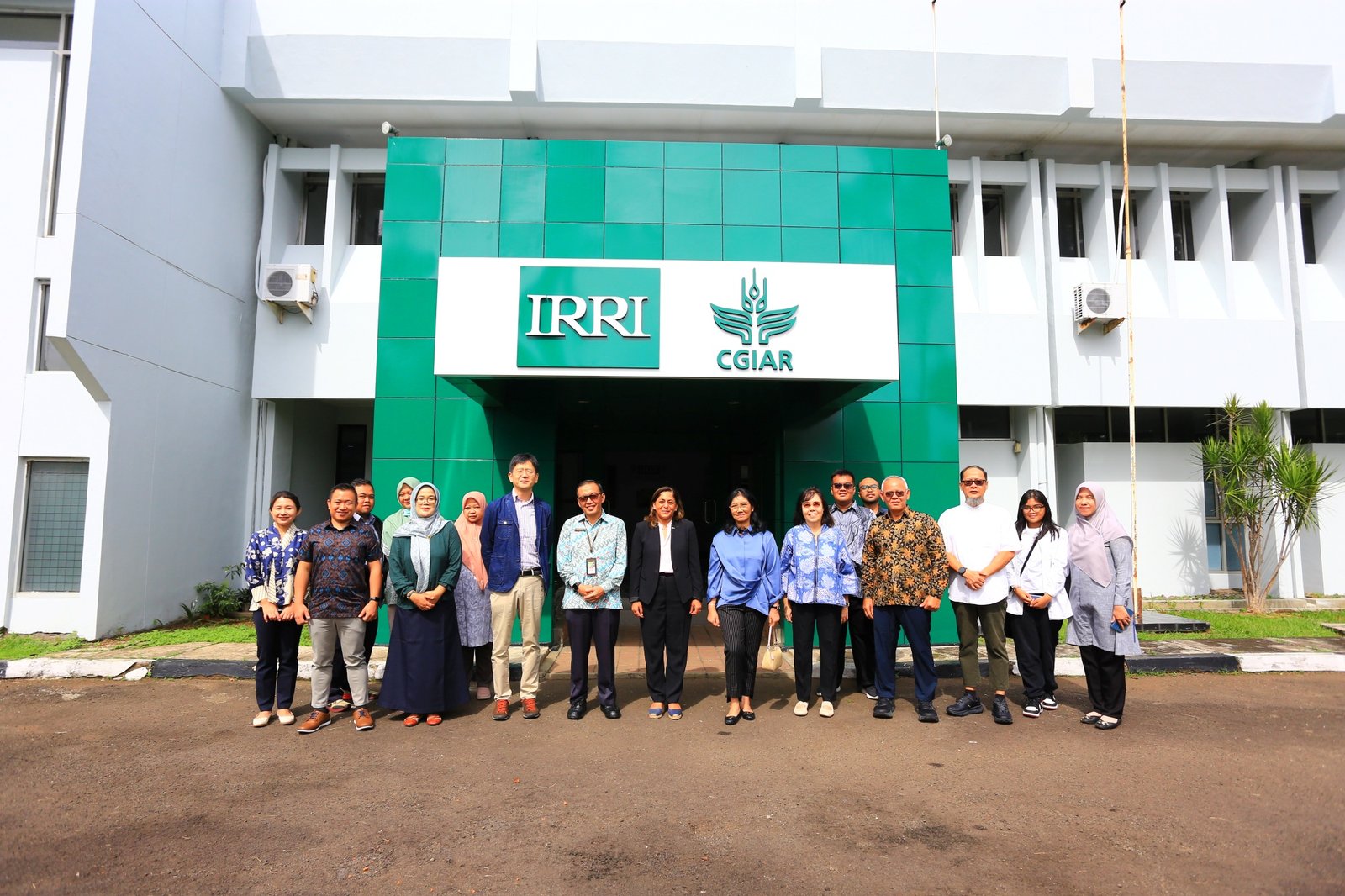
The International Rice Research Institute (IRRI) and Indonesia’s Badan Perakitan dan Modernisasi Pertanian (BRMP) have strengthened their long-standing partnership through a series of high-level meetings aimed at accelerating climate resilience, modernizing rice production systems, and advancing Indonesia’s national goal of rice self-sufficiency. The collaboration was formally reinforced on 21 November with BRMP issuing an Endorsement Letter for Collaboration, underscoring its continued financial and institutional support for joint scientific research, technology deployment, and capacity-building initiatives.
BRMP’s renewed mandate follows its organizational restructuring in 2024, which sharpened its focus on delivering improved seed varieties, mechanization, and modern agricultural systems through a nationwide network of technical centers, laboratories, experimental farms, and genetic resource platforms. The agency emphasized that stronger seed systems, efficient fertilizer and water use, and climate-smart technologies suited to swampy, upland, and rainfed ecologies will be pivotal for achieving sustainable rice self-sufficiency.
“Indonesia faces increasingly complex challenges from climate variability to emerging diseases. We must respond with strong science and modern technology,” said BRMP Executive Director Dr. Husnain. “Our collaboration with IRRI is essential for ensuring that Indonesian rice farmers benefit from innovations in breeding, agronomy, and precision agriculture.” National Research and Innovation Agency (BRIN) Senior Researcher Dr. Hasil Sembiring added that water-saving irrigation, precise nutrient management, rice ratooning, and low-emission production practices will be central to the next phase of transformation.
IRRI Director General Dr. Yvonne Pinto highlighted the strong synergy between BRMP’s modernization agenda and IRRI’s Strategy 2025–2030. “Our shared goal is to deliver innovations that improve nutrition, safeguard the environment, and support the livelihoods of Indonesia’s rice farmers. Our discussions showed real momentum toward solutions that are science-based, scalable, and grounded in national priorities,” she noted.
During the meetings, both institutions identified a set of aligned priorities that will underpin future collaboration. These include developing stress-tolerant and nutrient-enriched rice varieties, modernizing breeding pipelines and national seed systems, scaling climate-smart and low-emission rice production technologies, and strengthening digital advisory services to reach farmers with field-specific guidance. Plans to expand training for early- and mid-career researchers and deepen institutional partnerships also emerged as critical to accelerating innovation delivery.
The IRRI–Indonesia partnership spans 53 years and has been central to the country’s agricultural advancement. Between 1980 and 2017, Indonesia released 341 rice varieties, 210 of which trace their ancestry to IRRI breeding materials—evidence of extensive scientific exchange and enhanced national capability. Joint initiatives have consistently enhanced productivity and farmer incomes. One recent example is the Rice Crop Manager program—locally known as Layanan Konsultasi Padi (LKP)—which generated more than 125,000 field-specific, actionable agronomic recommendations for Indonesian rice farmers.
As Indonesia intensifies its push for climate-resilient rice systems and long-term self-sufficiency, the reinforced IRRI–BRMP alliance signals a strong, coordinated commitment to deliver next-generation solutions rooted in science, innovation, and farmer-first design.