Friday, 17 July 2026

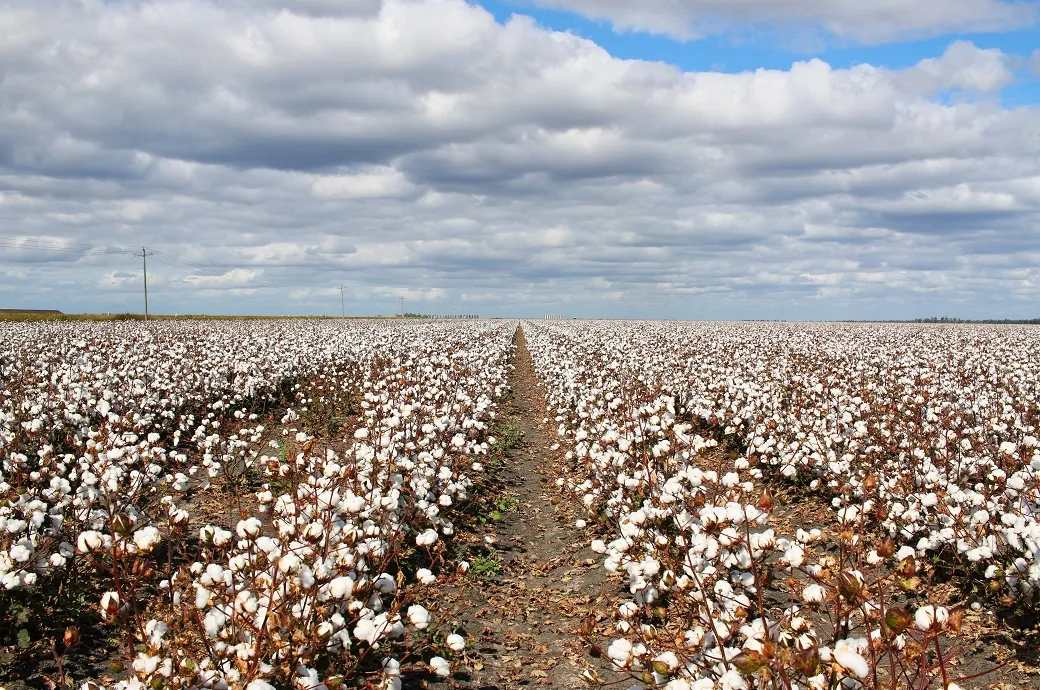
National cotton sowing lags by 14.41 lakh hectares despite gains in Telangana and Andhra Pradesh, highlighting widening regional disparities as monsoon variability reshapes planting decisions
India’s cotton-growing belt is witnessing an uneven start to the 2026 kharif season, with delayed monsoon rains and region-specific weather conditions resulting in a sharp contraction in acreage across key producing states. As of July 10, 2026, cotton had been sown over 79.55 lakh hectares, compared with 93.95 lakh hectares during the same period last year—a decline of 14.41 lakh hectares, or nearly 15.3 per cent. The latest sowing data reveals a stark regional divergence. While southern states such as Telangana and Andhra Pradesh have outperformed last year’s planting pace, India’s largest cotton-producing states—Gujarat and Maharashtra—have registered substantial declines, significantly dragging down the national acreage.
Maharashtra, India’s largest cotton-growing state, reported sowing over 30.07 lakh hectares, down from 35.46 lakh hectares a year ago, representing a decline of 5.39 lakh hectares. The state alone accounts for more than one-third of the national acreage deficit, reflecting delayed rainfall across major cotton belts in Vidarbha and Marathwada. An even sharper percentage decline was recorded in Gujarat, where cotton area dropped from 17.11 lakh hectares to 9.32 lakh hectares, a steep reduction of 7.79 lakh hectares. The state has experienced one of the slowest sowing seasons among major producers, underscoring the sensitivity of cotton cultivation to monsoon timing.
Together, Gujarat and Maharashtra account for nearly 13.2 lakh hectares of the national shortfall, making them the principal contributors to India’s slower cotton planting this season. In contrast, Telangana has emerged as the strongest performer. Cotton acreage increased by 1.96 lakh hectares, reaching 15.96 lakh hectares, already covering nearly 76 per cent of its state target of 21.04 lakh hectares. The state has benefited from relatively favourable rainfall and timely field operations.
Andhra Pradesh also posted encouraging growth, with acreage rising by 0.78 lakh hectares to 2.40 lakh hectares, indicating better sowing progress than last year despite a slightly lower state target. Most other cotton-producing states remain below last year’s levels. Rajasthan registered a decline of 1.28 lakh hectares, while Haryana recorded a reduction of 0.90 lakh hectares. Odisha, Karnataka, and Punjab also witnessed lower sowing, with acreage falling by 0.66 lakh hectares, 0.59 lakh hectares, and 0.43 lakh hectares, respectively. In Madhya Pradesh, cotton planting has remained largely stable, declining by only 0.05 lakh hectares, while Tamil Nadu maintained acreage at 0.04 lakh hectares, making it the only major state to record no year-on-year change.
The current sowing progress also reflects the gap between planned and actual acreage. Against a national state target of 116.12 lakh hectares for 2026, only 79.55 lakh hectares had been covered by July 10, suggesting that nearly one-third of the intended cotton area remains to be planted. Historically, however, cotton sowing continues through July and early August, leaving scope for recovery if rainfall improves. The regional disparities also signal evolving production dynamics. Telangana’s accelerated planting demonstrates how timely rainfall can rapidly boost sowing, while Gujarat’s delayed progress illustrates the vulnerability of rainfed cotton cultivation to weather disruptions. Maharashtra, despite remaining India’s largest cotton-growing state by area, will require sustained monsoon activity over the coming weeks to narrow the deficit. From a market perspective, slower cotton acreage could tighten raw cotton availability later in the marketing season if planting does not recover. Lower production would have implications for India’s textile industry, cotton exports, and domestic fibre prices, particularly at a time when global cotton markets remain sensitive to weather-related supply risks.