Saturday, 11 July 2026

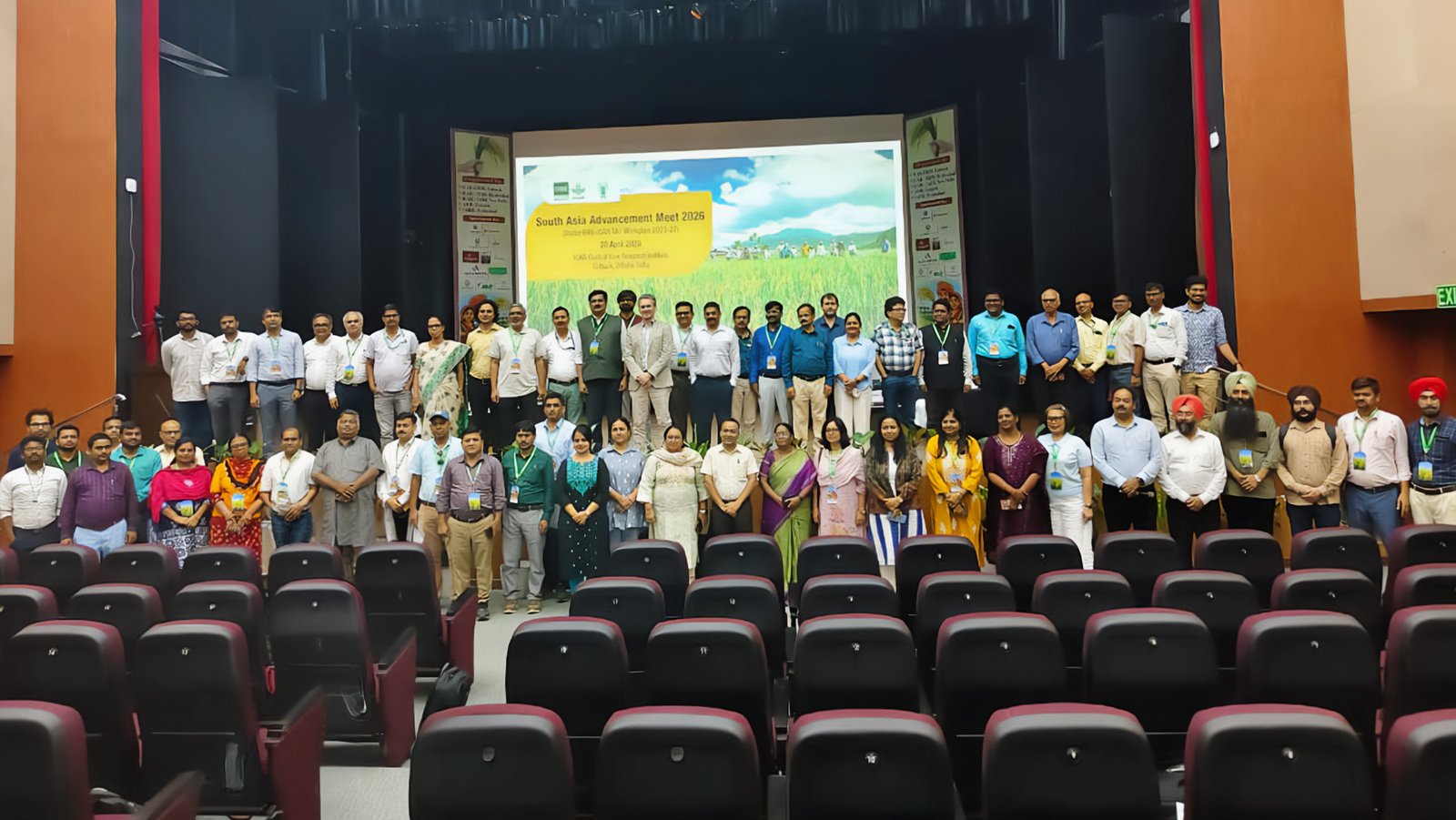
IRRI and national research institutions across South Asia are modernising rice breeding systems through AI-enabled analytics, predictive selection and integrated regional collaboration to future-proof rice production against escalating climate disruptions.
The International Rice Research Institute and its National Agricultural Research and Extension Systems partners have intensified efforts to modernise rice breeding across South Asia as climate volatility, shrinking arable land and rising food demand converge into an increasingly consequential threat to regional food security. The coordinated regional initiative, operating under the OneRice Breeding Strategy, seeks to accelerate the development and deployment of climate-resilient, market-responsive rice varieties through an integrated framework of advanced breeding science, digital agriculture and collaborative research infrastructure.
The programme represents a sweeping recalibration of conventional rice breeding systems, aligning the scientific capabilities of IRRI with national agricultural institutions across India and neighbouring countries in an attempt to shorten breeding cycles, eliminate duplication and improve the precision of varietal development. The strategy arrives against the backdrop of the region’s intensifying “Minus 5 plus 10” challenge — a projected loss of nearly five million hectares of rice-growing land due to climate stress and competing land use, even as South Asia must generate an additional 150 million metric tonnes of rice to sustain future demand.
The initiative places particular emphasis on restructuring breeding pipelines around end-user demand rather than yield maximisation alone. Researchers are increasingly integrating consumer grain preferences, cooking quality attributes and farmer-valued resilience traits into varietal selection systems. This transition reflects the growing recognition that future rice adoption will depend not merely on productivity gains, but on the ability of new varieties to deliver measurable superiority across agronomic performance, market acceptability and climatic adaptability.
The modernisation drive is being reinforced through the deployment of digital breeding ecosystems such as BioFlow and IRRI-developed analytical dashboards that integrate multi-location trial data with genetic, environmental and phenotypic intelligence in real time. These platforms are enabling researchers to identify elite breeding lines with greater speed and precision, significantly enhancing genetic gain rates while reducing breeding inefficiencies historically embedded within fragmented regional systems.
Across breeding pipelines, scientists are reporting notable advances in varietal performance. Early-maturity rice lines developed for western India have demonstrated yield advantages exceeding conventional benchmark varieties, while medium-duration breeding programmes are registering accelerated genetic gains aligned with evolving consumer demand for preferred grain profiles. Simultaneously, late-duration breeding efforts targeting flood-prone and salinity-affected ecologies have produced elite lines exhibiting superior tolerance to submergence, flash flooding and coastal salinity stress, alongside improved post-flood recovery characteristics.
The regional transformation agenda also incorporates hybrid rice innovation and artificial intelligence-driven predictive breeding technologies designed to enhance both productivity and operational efficiency. Newly developed hybrid rice lines are demonstrating yield advantages exceeding 25 per cent over conventional cultivars while substantially reducing seed production costs. AI-powered cross-prediction systems are further streamlining breeding operations by identifying optimal parental combinations with exceptionally high predictive accuracy, thereby reducing dependence on laborious manual crossing methods.
Parallel advances are unfolding within IRRI’s pre-breeding and trait discovery programmes, where researchers are mining traditional rice landraces for genes associated with disease resistance, nutritional enhancement and environmental resilience. Multiple resistance genes targeting bacterial blight, rice blast and brown planthopper have already been integrated into elite breeding material, while biofortification efforts involving zinc-enhancing genetic traits are advancing without compromising crop yield performance.
The initiative’s downstream impact is increasingly visible within regional seed systems. Accelerated varietal replacement programmes are reducing the average age of cultivated rice varieties across several Indian states, displacing older cultivars with newer, climate-adaptive alternatives capable of delivering superior productivity and resilience. Researchers estimate that the resulting increase in varietal turnover could generate hundreds of millions of dollars in additional annual farm income through improved adoption rates and stronger integration between breeding systems and seed delivery mechanisms.
Beyond scientific innovation, the programme underscores the growing indispensability of transnational agricultural collaboration in an era of systemic climatic instability. By integrating shared breeding infrastructure, harmonised testing frameworks and coordinated research governance, the OneRice Breeding Strategy seeks to establish a durable regional architecture capable of sustaining future rice productivity under increasingly hostile environmental conditions.
As climate change progressively reshapes the ecological and economic foundations of rice cultivation, South Asia’s intensified breeding modernisation effort represents not merely an agricultural intervention, but a strategic imperative to safeguard the staple crop upon which billions of livelihoods and nutritional systems remain profoundly dependent.