Saturday, 11 July 2026

New bilateral innovation platform seeks to fuse AI, precision farming and climate intelligence to reshape the future of agriculture
In a significant diplomatic and technological convergence aimed at redefining the architecture of future agriculture, India and Australia have jointly launched the India-Australia Smart Farm Network, an ambitious transnational platform designed to accelerate the transition toward climate-intelligent, digitally orchestrated and eventually unmanned agricultural systems by 2047.
The initiative was formally unveiled at Professor Jayashankar Telangana Agricultural University in Hyderabad through a collaborative effort involving Charles Sturt University, Bengaluru Science and Technology Cluster, Research and Innovation Circle of Hyderabad and the Centre of Excellence for Farmer Producer Organisations. Conceived as a strategic knowledge-and-innovation bridge between the two nations, the network aims to catalyse advances in precision agriculture, AI-enabled farming systems, climate resilience technologies, agri-robotics and sustainable rural transformation.
At the heart of the initiative lies a broader recognition that agriculture can no longer remain tethered to conventional paradigms in an era increasingly defined by climate volatility, resource scarcity and food-system fragility. The network seeks to create an integrated ecosystem for collaborative research, pilot deployments, startup acceleration, technology commercialisation and institutional knowledge exchange spanning both countries.
Philip Green, Australia’s High Commissioner to India, underscored the strategic importance of deepening bilateral partnerships around sustainability and agricultural resilience, particularly as both nations confront intensifying environmental and food-security challenges. The alliance, he suggested, represents not merely an academic collaboration but a long-horizon investment in resilient food systems and technologically empowered farming communities.
In one of the event’s most striking articulations of future ambition, Aldas Janaiah, Vice Chancellor of PJTAU, projected that India could potentially realise the vision of unmanned agriculture by 2047 through the integration of smart technologies, autonomous systems and advanced data-driven agronomy. His remarks reflected the growing conviction within scientific and policy circles that the next phase of agricultural transformation will be shaped as much by algorithms and automation as by seeds and soil.
The launch also brought together an influential cross-section of policymakers, scientists, technologists and financial institutions. Representatives from NABARD, the Australian Consulate, agri-tech startups and innovation platforms highlighted the need for globally coordinated approaches to tackle increasingly complex agricultural risks.
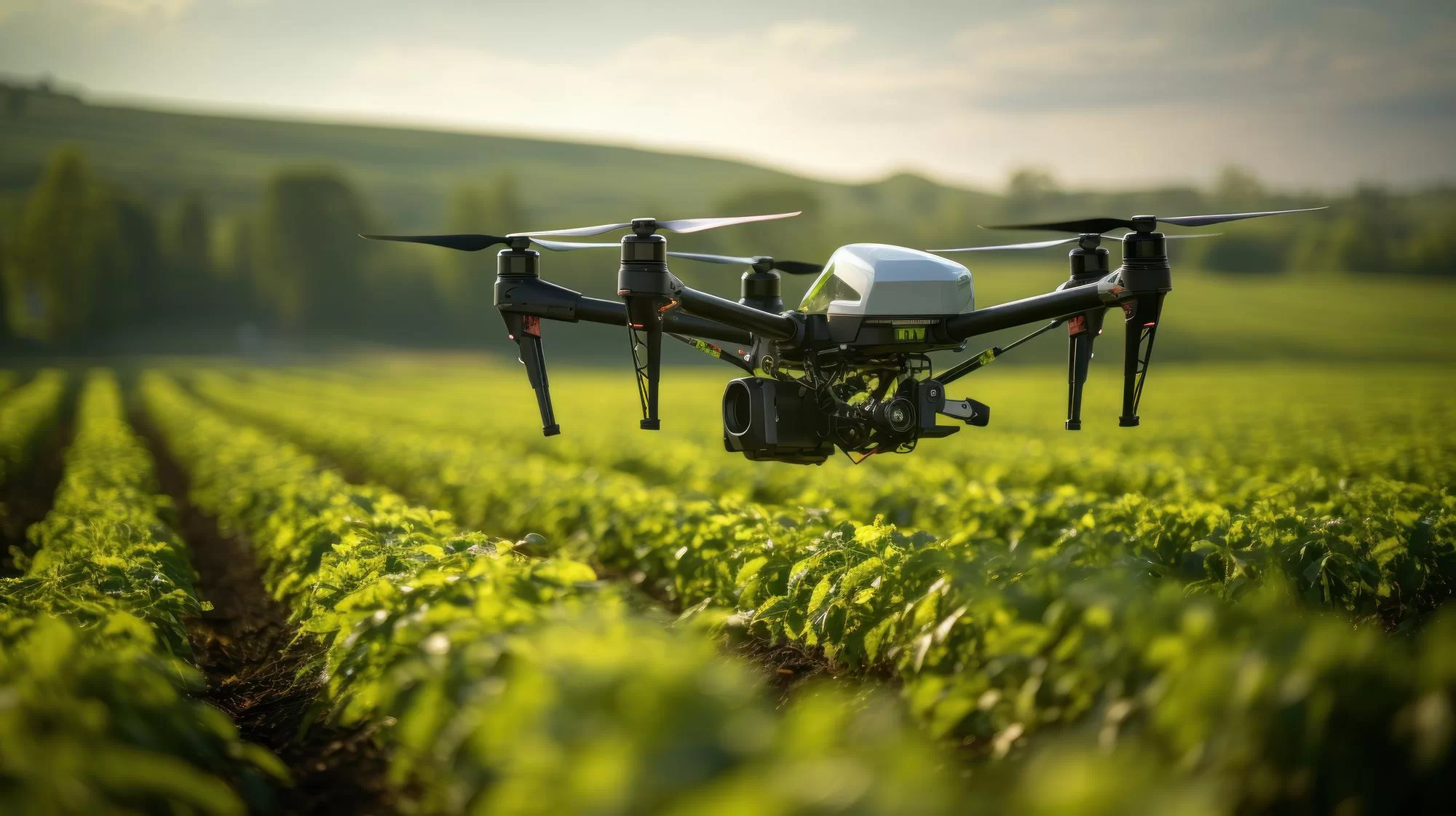
Speakers at the event repeatedly emphasised that the future of farming will depend on the convergence of artificial intelligence, sensor-based precision systems, drone-led monitoring, predictive analytics, smart irrigation and climate-adaptive crop management. The initiative therefore aims not only to improve productivity, but to fundamentally re-engineer agricultural decision-making through real-time intelligence and cross-border scientific collaboration.
Michael Friend of Charles Sturt University stressed that international partnerships would be indispensable in building scalable and sustainable agricultural systems capable of responding to future climate shocks. Meanwhile, Rashmi Pimpale, CEO of Research and Innovation Circle of Hyderabad, noted that stronger alignment between academia, startups and industry would be essential to translating laboratory breakthroughs into farmer-ready solutions.
Beyond technology, the alliance also signals a broader geopolitical and economic alignment around food security and sustainability. As nations increasingly recognise agriculture as both a strategic and climate-sensitive sector, initiatives such as the India-Australia Smart Farm Network are expected to play a defining role in shaping the future contours of global agri-innovation.
Positioned at the intersection of science, sustainability and strategic cooperation, the network aspires to transform agriculture from a labour-intensive enterprise into an intelligent, interconnected and resilient ecosystem capable of feeding future generations amid mounting environmental uncertainty.