Saturday, 11 July 2026

Borrowing drive aimed at ensuring uninterrupted procurement and stable foodgrain supply chains
The Food Corporation of India (FCI) is set to raise Rs 50,000 crore in short-term debt from scheduled commercial banks to support its foodgrain procurement and distribution operations, with a green-shoe option that could take total borrowings up to Rs 75,000 crore, according to a senior government official.
The borrowing programme, structured as unsecured short-term loans with a three-month tenure, comes as the country’s nodal food agency navigates cash flow mismatches arising from large-scale wheat procurement under the ongoing 2026–27 marketing season. Tenders for the financing arrangement are scheduled to be opened on May 22, with loan offers required to remain valid until August 31, and disbursements to be made in tranches based on operational requirements.
Officials clarified that the borrowing will not be backed by the existing Rs 6,000 crore Government of India guarantee available for food credit to FCI, marking a notable feature of the current financing structure.
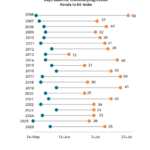
FCI, which is responsible for procuring, storing, and distributing foodgrains under the public distribution system and other welfare schemes, is currently in the midst of active wheat procurement operations across key producing states. So far in the 2026–27 season, FCI and state agencies have collectively procured 22.97 million tonnes of wheat at minimum support price, with Punjab contributing 10.51 million tonnes, followed by Madhya Pradesh at 6.72 million tonnes, Haryana at 2.58 million tonnes, and Rajasthan at 1.77 million tonnes.
The government has set a total procurement target of 34.49 million tonnes of wheat for the season, underscoring the scale of ongoing operations and the corresponding liquidity requirements of the procurement system.
The planned borrowing highlights the financial intensity of India’s foodgrain management system during peak procurement cycles, where significant upfront payments to farmers are followed by staggered recoveries through distribution and buffer stock rotation. The short-term debt infusion is intended to ensure uninterrupted procurement from farmers while maintaining steady supply flows under national food security programmes.
By structuring the facility without sovereign guarantee coverage, the financing also reflects a more market-linked approach to managing working capital requirements within India’s food distribution architecture.
As procurement operations continue across major wheat-producing regions, the funding arrangement is expected to provide FCI with necessary liquidity flexibility while supporting timely payments to farmers at minimum support prices, a critical element in sustaining procurement efficiency during the high-intensity harvest season.