Wednesday, 10 June 2026

Novel active ingredient designed to control resistant grass weeds in key crops like soybean, cotton
Syngenta, a global leader in agricultural innovation, is bringing to market the world’s first selective herbicide to control resistant grass weeds in soybean and cotton in nearly 40 years.
Today, Syngenta announced the global launch of VIRESTINA technology (active ingredient: metproxybicyclone), after Argentina became the first country in the world to approve the technology. Syngenta is also planning to bring this innovation to Brazil, Australia, the U.S., and Canada.
Argentina – the world’s third largest producer of soybeans – ranks among the most innovative agricultural markets worldwide, with its farmers often being the first globally to access cutting-edge agricultural technologies. Soybeans are one of the world’s most important crops, containing a high concentration of essential amino acids and valued as an important source of high-protein animal feed.
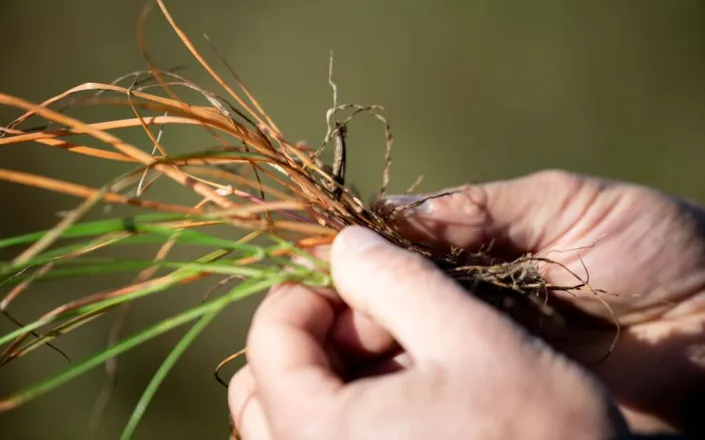
Resistant weeds are a persistent threat to growers as they survive herbicide applications and remain in the field to compete with crops for nutrients, sunlight, and water. At the same time, such weeds act as a “green bridge” for pests, viruses, fungi and bacteria that infect crops. Resistant weeds can dramatically reduce harvest yields and decimate the value of agricultural farmland.
Amid a rise in the spread and severity of weed resistance globally, VIRESTINA technology is set to deliver an urgently-needed reprieve to growers faced with a shrinking toolbox of effective options. Over the past few decades, limited herbicide technologies have been successfully brought to market; the ability of resistant weeds to metabolize and be cross-resistant is further exacerbating the challenge. Herbicide resistance is officially reported today in 75 countries and affects farmers of more than 100 crops; grass weeds account for 40 percent of the 273 weed species afflicted.
VIRESTINA technology marks an important innovation in herbicide technology. In key crops such as soybean and cotton, the technology is highly effective in controlling grass weeds that are resistant to common herbicides like glyphosate and clethodim. Safe to use over crops, VIRESTINA technology also breaks down rapidly in soil, ensuring an excellent safety profile and a reduced environmental footprint. Farmers benefit from greater flexibility during crop rotations and in their choice of cover crops, while lowering soil compaction and greenhouse gas emissions as they reduce the number of passes of heavy farm machinery necessary to control resistant grass weeds.
Scientists at Syngenta’s cutting-edge Jealott’s Hill International Research Centre in the UK leveraged predictive science to bring this innovation to market in just 10 years – significantly faster than the average 12-14 year timelines for agricultural technologies – reflecting Syngenta’s nuanced understanding of the challenges growers face, and its commitment to deliver effective solutions.
“At Syngenta, our innovations have an important role in enabling growers to address some of the biggest challenges they face,” said Ioana Tudor, Syngenta’s Global Head of Crop Protection Marketing. “VIRESTINA™ technology demonstrates Syngenta’s ability to foresee a challenge a decade earlier, to accelerate our research and development timeline and successfully deliver an innovation that is timely in meeting growers’ needs. We are very proud of our industry-leading innovation pipeline.”
Syngenta’s leadership in innovative crop protection technologies
Syngenta’s R&D pipeline is delivering some of agriculture’s most advanced and important innovations. Over the next decade, Syngenta is on track to launch at least 20 new proprietary innovations in advanced crop protection technologies and agricultural biologicals. Its portfolio of advanced crop protection technologies already includes blockbusters such as TYMIRIUM technology to control nematodes and fungal disease, PLINAZOLIN technology for insect control and ADEPIDYN technology for fungal disease control, valued by farmers for their strong efficacy and sustainability attributes.
Syngenta is also a leader in agricultural biologicals, offering an extensive portfolio of biocontrols, biostimulants and nutrient use efficiency solutions, while expanding its offer of artificial intelligence (AI)-enabled digital and precision agriculture solutions.
VIRESTINA technology was invented leveraging Syngenta’s extensive expertise in a specific family of herbicide technologies called ACCase-inhibitors (HRAC Group 1), widely considered a foundational technology in modern agriculture. As the fourth generation of this herbicide group, VIRESTINA technology is engineered to effectively control weeds resistant to herbicides from other groups, as well as older ACCase herbicides.