Tuesday, 9 June 2026

A dispute over three consignments reveals the fragility of supply chains and the weaponization of regulation in the age of geopolitical rivalry
In March 2026, three consignments of Indian non‑basmati rice bound for China were abruptly rejected at Chinese ports. The official reason was the alleged presence of genetically modified organisms (GMOs). India, which does not permit commercial cultivation of GM food crops, was stunned. The shipments had already been cleared by China Certification & Inspection Group (CCIC), a state‑owned Chinese agency. For exporters, the incident was more than a bureaucratic hiccup—it was a reminder that in the geopolitics of trade, standards can be wielded as weapons.
India’s Rice Diplomacy
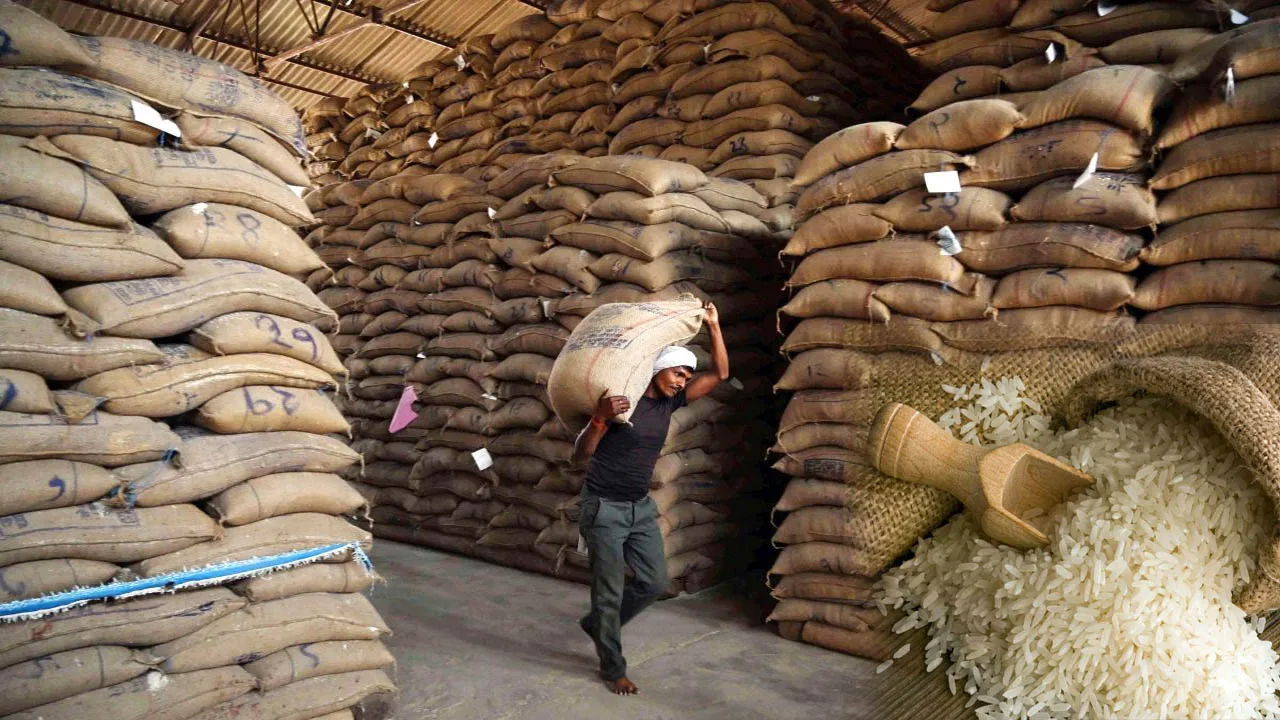
India today stands as the world’s largest exporter of rice, commanding nearly 40 percent of global trade. This dominance is not accidental—it is the product of decades of agricultural investment, policy support, and the sheer scale of India’s farming communities. From the fragrant basmati that graces Middle Eastern tables to the sturdy non‑basmati varieties that feed Africa and Southeast Asia, Indian rice has become a staple of global food security. In 2024–25 alone, India shipped 180,805 tones of non‑basmati rice to China, worth nearly $ 80 million . For New Delhi, rice is not merely an agricultural commodity—it is a strategic export, a symbol of reliability, and a lever of soft power.
The country’s share in total global rice production has now crossed more than 28 percent, a figure that underscores India’s centrality in the world’s food supply chain. Even the United States Department of Agriculture (USDA), in its December 2025 report, acknowledged India’s achievement, noting that India’s rice production had reached 152 million metric tonnes, surpassing China’s output of 146 million metric tonnes. This milestone is not just statistical—it is symbolic. It positions India as the undisputed leader in rice cultivation, overtaking China in a crop that has historically been associated with both nations’ agricultural prowess.
Rice has been grown and consumed in India since ancient times. Whenever the origin of rice is discussed, India’s name is often mentioned first. The crop is deeply woven into the country’s cultural and civilizational fabric, celebrated in rituals, cuisines, and folklore. India’s genetic wealth in rice is unparalleled: of the approximately 123,000 varieties of rice found worldwide, nearly 60,000 are indigenous to India. This biodiversity is not only a testament to India’s agricultural heritage but also a strategic asset in an era where food security and genetic resilience are paramount.
Rice embodies India’s claim to be a trusted supplier of non‑GMO staples in a world increasingly wary of genetically modified food. Unlike countries that have embraced GM cultivation, India has deliberately positioned itself as a guardian of traditional varieties, allowing only Bt cotton as a commercial GM crop. This stance has become part of its export identity: Indian rice is marketed not just as food, but as a guarantee of purity. The rejection by China, therefore, strikes at the heart of India’s credibility. It challenges the very narrative India has built—that of being a dependable source of non‑GMO staples in a global marketplace where consumers and regulators are ever more cautious.
The incident raises uncomfortable questions. Are food safety concerns being used as a proxy for geopolitical maneuvering? Is China’s rejection a genuine regulatory response, or a calculated move to remind India of its vulnerability in agricultural trade? For India, the episode is a reminder that agricultural exports are not insulated from politics. They are deeply entangled in the shifting currents of global power, where standards and certifications can be deployed as instruments of leverage.
India’s rice diplomacy has always been about more than trade. It is about projecting reliability in a volatile world. When African nations face drought, Indian rice shipments stabilize markets. When Southeast Asian buyers seek non‑GMO assurances, India steps in as a trusted supplier. This reputation is now under strain. The rejection by China threatens to cast doubt not only on India’s rice but on its broader claim to be a credible agricultural power. At stake is more than a few consignments. What hangs in the balance is India’s narrative as a nation that feeds the world with integrity. If that narrative falters, the consequences will ripple far beyond rice, affecting perceptions of Indian wheat, pulses, and other staples. In the age of fractured geopolitics, credibility is currency—and India must now defend its agricultural credibility with the same vigor it defends its borders.
China’s Calculus
Why would Beijing reject shipments that had already been cleared by its own inspection agency? To understand the move, one must look beyond the technicalities of food safety and into the layered motivations of Chinese statecraft. Analysts point to overlapping factors that together form a coherent strategy.
Food safety optics matter deeply in China. For decades, Chinese consumers have lived with the memory of contamination scandals—from tainted milk powder to adulterated cooking oil—that shook public trust in domestic supply chains. The government has since worked relentlessly to project vigilance, positioning itself as uncompromising when it comes to consumer protection. By rejecting Indian rice, Beijing reinforces this image, signaling to its citizens that it will not hesitate to act against imports that raise even the faintest suspicion. In a country where food security is tied to political legitimacy, such gestures carry weight far beyond the commodity itself.
Trade leverage is another dimension. China’s rejection of Indian rice is not an isolated act; it fits into a broader pattern of using regulatory levers to gain bargaining power. By raising doubts over Indian rice, Beijing creates pressure points in negotiations that extend well beyond agriculture. Whether the subject is technology transfer, rare earths, or strategic commodities, China has demonstrated a willingness to use trade disruptions as bargaining chips. In this case, rice becomes a proxy—an instrument through which Beijing reminds New Delhi that access to its vast consumer market is conditional, and can be curtailed at will.
The rejection also serves as geopolitical signaling. India and China remain locked in a complex relationship marked by border tensions, competition in regional influence, and rivalry in global forums. Against this backdrop, the rejection of rice consignments is a subtle but potent reminder of Beijing’s ability to disrupt India’s export ambitions. It is not a direct confrontation, but a calibrated move—one that unsettles India’s exporters, raises questions about credibility, and forces New Delhi to expend diplomatic capital in defending its agricultural integrity.
The Exporter’s Dilemma
For Indian exporters, the incident is nothing short of a nightmare scenario. The rejection of three consignments by China does not merely represent a logistical setback; it threatens reputational damage on a global scale. In the world of agricultural trade, credibility is everything. Once a product is questioned in one major market, the shadow of doubt can spread quickly. Exporters fear that if China, with its vast consumer base and regulatory muscle, raises concerns about Indian rice, other buyers may follow suit. The European Union, with its notoriously strict stance on GMOs, looms large in these anxieties. A single rejection in Beijing could cascade into heightened scrutiny in Brussels, Paris, or Berlin, where regulators are already predisposed to err on the side of caution.
The dilemma is compounded by the sheer scale of India’s rice economy. Rice exports are not an abstract statistic; they are a lifeline for millions of farmers, millers, traders, and logistics providers. From smallholder farmers in Uttar Pradesh and West Bengal to exporters in Andhra Pradesh and Tamil Nadu, the rice trade sustains livelihoods across the country. The rejection threatens to undermine confidence in India’s agricultural supply chain, casting doubt on the integrity of its testing systems and certification processes. For exporters, the fear is not only about lost shipments but about the erosion of trust that has taken decades to build.
The incident also exposes the fragility of India’s dependence on a handful of large buyers. China, despite being a relatively recent entrant into India’s rice market, has become a significant destination. Its sudden rejection highlights the risks of over‑reliance on a single market. Exporters now recognize the urgent need to diversify, to spread risk across Africa, the Middle East, and Southeast Asia, where demand for non‑basmati rice remains strong. Diversification is not just a commercial strategy; it is a survival mechanism in a world where trade can be disrupted by politics, regulation, or perception.
In response, exporters are calling for global third‑party certification mechanisms to validate India’s non‑GMO status. Such certifications, recognized by international agencies, would provide a shield against unilateral rejections. They would reassure buyers that Indian rice meets the highest standards of integrity, regardless of political maneuvering. Exporters also demand stronger diplomatic engagement, urging New Delhi to resolve disputes before they escalate into trade wars. They argue that agricultural diplomacy must be as robust as defense diplomacy, given the stakes involved.
The rejection has also sparked introspection within the industry. Exporters are questioning whether India’s testing infrastructure is sufficiently modern, whether its certification processes are globally recognized, and whether its narrative as a non‑GMO supplier is being communicated effectively. The incident is a wake‑up call, forcing the industry to confront weaknesses that might otherwise have remained hidden.
Ultimately, the exporter’s dilemma is about more than rice. It is about credibility, resilience, and survival in a global marketplace where trust is fragile and politics ever‑present. For India’s exporters, the rejection is a reminder that they operate not just in the fields and ports of India, but in the contested space of global geopolitics. Their challenge now is to rebuild confidence, diversify markets, and ensure that Indian rice continues to be seen not as a commodity under suspicion, but as a staple of reliability in an uncertain world.
Lessons from History
This is not the first time food has been politicized, nor will it be the last. The history of global trade is littered with examples of agricultural commodities being transformed into instruments of power. In the 1970s, the United States used grain exports as leverage against the Soviet Union, weaponizing food supply at the height of Cold War tensions. Grain shipments became bargaining chips, reminding Moscow that even its most basic needs could be influenced by Washington’s geopolitical calculus.
In the 2010s, Russia restricted wheat exports to manage domestic inflation, demonstrating how governments can turn inward when global markets threaten domestic stability. What looked like a simple economic measure was in fact a strategic act: by curbing exports, Moscow not only stabilized prices at home but also signaled to the world that it would prioritize sovereignty over global supply chains.
The 2018 U.S.–China trade war brought another vivid example. Soybeans, a seemingly mundane crop, became a proxy battlefield. Washington imposed tariffs, Beijing retaliated, and suddenly farmers in Iowa found themselves at the center of a geopolitical confrontation. What had once been a straightforward agricultural trade became a symbol of rivalry between two superpowers.
India’s rice rejection is the latest chapter in this long history of commodities as instruments of power. The lesson is clear: food is never just food. It is a strategic resource, vulnerable to manipulation in times of geopolitical tension. The incident underscores the need for exporters to build resilience and for governments to anticipate the weaponization of trade.
For India, the rejection is a reminder that its agricultural exports exist in a contested space where trust, credibility, and perception matter as much as yield and quality. For China, the move is part of a broader tradition of using regulatory levers to assert influence. And for the world, the episode is a case study in how fragile the global food system has become, where a single rejection can ripple across markets, unsettle exporters, and reshape diplomatic narratives.
History teaches us that food has always been political. What is new is the intensity of its weaponization in an era of fractured geopolitics. Rice, wheat, soybeans, and grain are no longer neutral commodities—they are tools of statecraft, deployed in the service of national strategy. India’s challenge now is to learn from these precedents, to build resilience into its agricultural diplomacy, and to ensure that its credibility as a supplier is never again so easily questioned.
Conclusion: A Grain of Statecraft
China’s rejection of Indian rice shipments is not about GMOs. It is about geopolitical signaling through trade policy. It is a reminder that in the fractured world of 2026, even a grain of rice can become a weapon.
For India, the challenge is to reassert credibility, diversify markets, and build a narrative of trust. For China, the move reinforces its leverage. For the world, the incident is a case study in how food safety standards can be weaponized in the age of geopolitical rivalry. In the end, the rejection of three consignments of rice is not a minor trade dispute—it is a symbol of how fragile global supply chains have become, and how deeply politics now permeates the most basic of commodities.
— Suchetana Choudhury (suchetana.choudhuri@agrospectrumindia.com)