Friday, 10 July 2026

Asia’s largest bioenergy platform returns from August 11–13 with 150+ exhibitors, 7,000 business visitors, and over 200 expert speakers as the sector eyes a $3.2 billion CNG market by 2032
As India accelerates its transition toward cleaner fuels and circular energy systems, industry leaders are emphasizing the need to strengthen the entire bioenergy value chain—from feedstock management to advanced technology interventions—to unlock the sector’s full potential. These themes will take center stage at the India Bioenergy and Tech Expo 2026, scheduled to take place from August 11 to 13, marking the third edition of what is now widely regarded as Asia’s largest bioenergy platform.
Speaking on the future of India’s bioenergy ecosystem, Y. B. Ramakrishna, Senior Vice President at the Indian Federation of Green Energy (IFGE), Chairman of the IFGE CBG Producer Forum, and former Chairman of the Biofuels Working Group under the Ministry of Petroleum and Natural Gas, stressed that the success of the sector depends on optimizing the value chain beginning with feedstock.
According to Ramakrishna, the foundation of bioenergy lies in effectively utilizing agricultural residues and other biomass resources that are abundantly available across India. He highlighted that the next phase of growth will require deeper technological interventions, particularly in the processing and treatment of biomass before it enters biogas production systems.
“Entire value chain starts at feedstocks,” he noted, emphasizing that the integration of technologies such as precooking of biomass and enzymatic treatment can significantly improve digestion efficiency and increase biogas yields. Such innovations can also help address one of the sector’s persistent challenges—methane leakage.
Reducing methane loss to less than one percent is becoming a key technological goal for the industry, he explained, as it directly improves both environmental outcomes and plant economics. Another emerging focus area is the valorisation of carbon dioxide generated during biogas upgrading, which can create additional revenue streams while improving the overall sustainability of bioenergy operations.
Ramakrishna also pointed to the need to strengthen markets for biodigested slurry, an important by-product of biogas plants that can serve as an organic fertilizer. According to him, developing structured markets for biodigested products and exploring carbon monetization mechanisms will be essential for making compressed biogas (CBG) projects more financially attractive.
“Carbon monetization is the need of the hour,” he said, noting that new revenue streams linked to carbon credits and sustainability markets could significantly improve project viability across the industry.
These themes will form part of broader discussions at the India Bioenergy and Tech Expo 2026, which is expected to bring together policymakers, technology providers, investors, and project developers from across the bioenergy ecosystem.
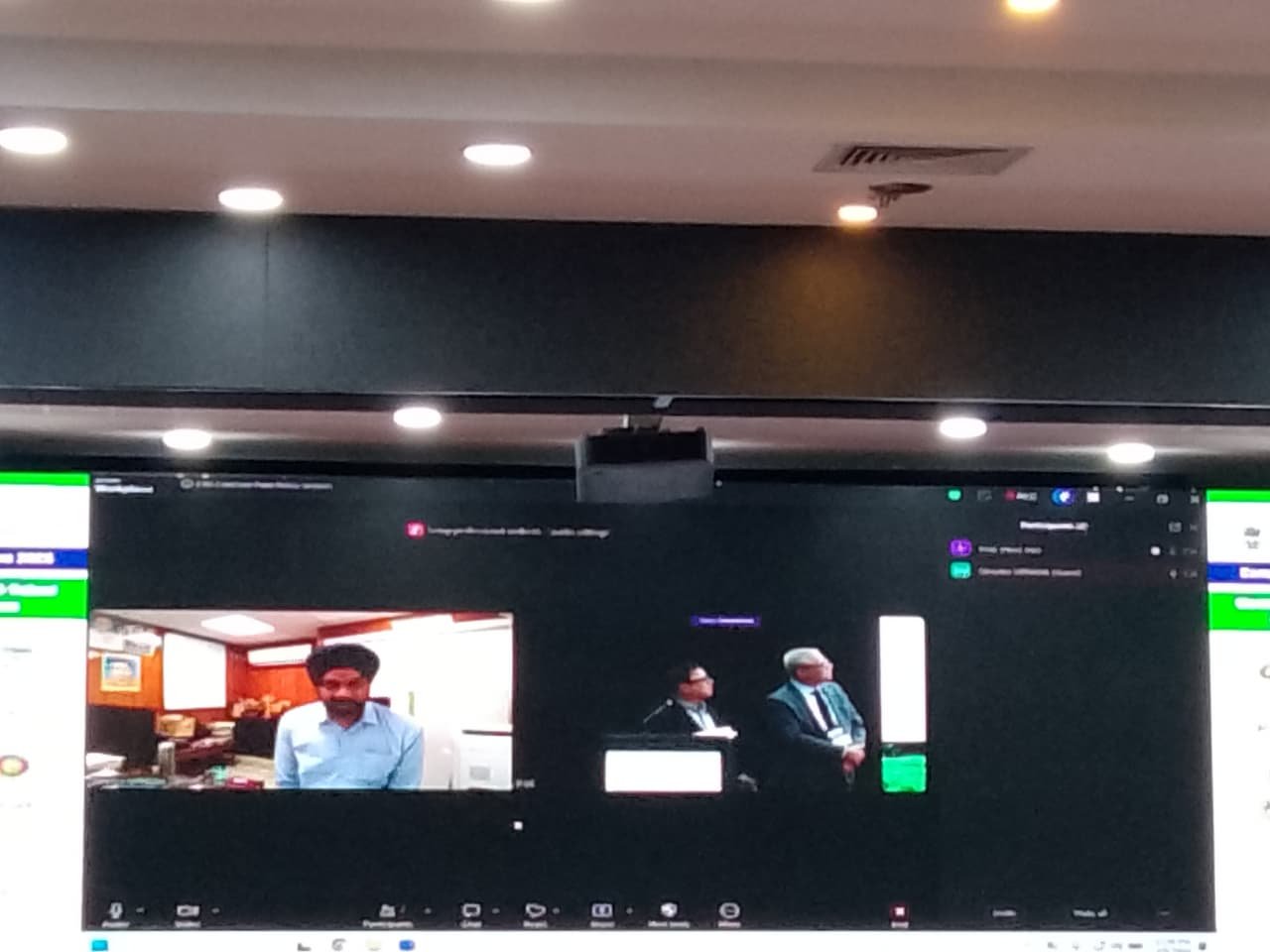
Ravindra Boratkar, Founder Member of the Indian Federation of Green Energy and Managing Director of MM Activ Sci-Tech Communications, presented an overview of the upcoming event and highlighted the rapid growth of India’s bioenergy sector.
The third edition of the expo is expected to host more than 150 exhibitors and over 7,000 business visitors, creating a major platform for technology demonstrations, industry partnerships, and policy dialogue. The event will feature more than 35 technical conference sessions and over 200 expert speakers, offering in-depth discussions on emerging technologies, policy frameworks, financing models, and innovations across the bioenergy value chain.
Hosted by the Government of Uttar Pradesh and supported by more than five central ministries, the expo is expected to reflect the growing scale of India’s bioenergy ambitions. Uttar Pradesh in particular has emerged as a key hub for the sector, given its vast agricultural base and large biomass resource potential.
The rapid expansion of India’s compressed natural gas ecosystem is also creating strong momentum for the bioenergy industry. According to industry projections presented during the event preview, India’s CNG market is expected to reach approximately USD 3.2 billion by 2032, driven by the country’s push toward cleaner transportation fuels and increased adoption of compressed biogas.
The previous edition of the expo drew significant participation from senior policymakers and industry stakeholders. Among the prominent leaders present were Nitin Gadkari, Union Minister for Road Transport and Highways, Government of India; Hardeep Singh Puri, Union Minister for Petroleum and Natural Gas, Government of India; and Pralhad Joshi, Union Minister for New and Renewable Energy, Government of India underscoring the growing national importance of the bioenergy sector.
With India positioning bioenergy as a key pillar of its energy transition strategy, the India Bioenergy and Tech Expo 2026 is expected to serve as a critical platform for advancing technology deployment, strengthening supply chains, and accelerating investment across the industry.
As the sector evolves, industry leaders believe that integrating advanced technologies, improving feedstock management, and unlocking new revenue streams such as carbon credits will be essential to scaling bioenergy solutions across the country. The upcoming expo aims to bring these conversations together under one roof, reinforcing India’s position as an emerging global leader in sustainable bioenergy development.
— Suchetana Choudhury (suchetana.choudhuri@agrospectrumindia.com)