Saturday, 11 July 2026

State offers up to Rs 20 crore per project in subsidies, commissions dozens of plants, maps district-level biomass resources, and partners with leading institutes to accelerate bioenergy investments.
The Government of Uttar Pradesh is accelerating its transition toward clean energy through the implementation of the Uttar Pradesh Bioenergy Policy 2022, which aims to achieve 1,000 tonnes per day (TPD) of compressed biogas (CBG) production over the next two years. The initiative, spearheaded by the Uttar Pradesh New and Renewable Energy Development Agency (UPNEDA), is positioning the state as a leading destination for bioenergy investment in India.
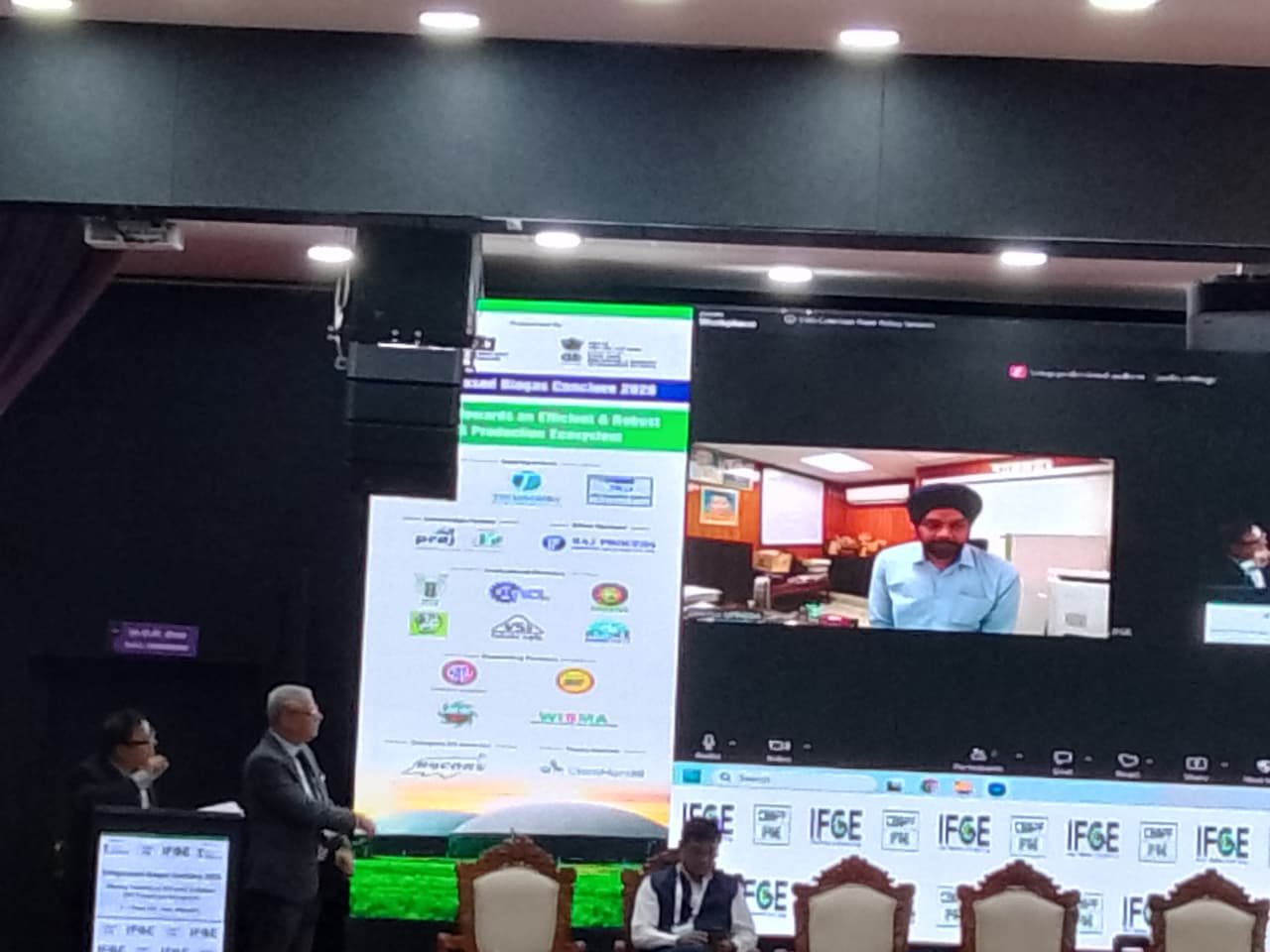
Speaking about the progress and future roadmap at IFGE Conference in Pune, Inderjit Singh, Director of UPNEDA, said the state has made strong progress in building a comprehensive bioenergy ecosystem backed by policy incentives, infrastructure development, and strategic collaborations.
Under the Bioenergy Policy 2022, the state government has introduced an attractive incentive structure designed to accelerate investment in compressed biogas projects. Investors establishing CBG plants in Uttar Pradesh can avail capital subsidies of up to Rs 75 lakh per tonne of production capacity, with a maximum limit of Rs 20 crore per project. The policy also provides exemptions from electricity duty and stamp duty, significantly reducing the overall cost of project development and making the state a highly competitive destination for bioenergy investments.
Uttar Pradesh has already commissioned 48 compressed biogas plants and nine biodiesel plants as part of its expanding renewable energy infrastructure. According to UPNEDA, the state remains on track to reach the 1,000 TPD CBG production target within the next two years, marking a major milestone in India’s clean fuel transition.
A key advantage for the state lies in its vast biomass resource base. UPNEDA has undertaken an extensive mapping exercise to identify biomass resources across every district of Uttar Pradesh. This mapping includes agricultural residues from major crops, by-products from sugar mills, dedicated energy crops such as Napier grass, and animal waste including cow dung generated from gaushalas across the state. As one of India’s largest agricultural producers, Uttar Pradesh generates substantial volumes of agri-residue and organic waste, making it an ideal environment for scaling bioenergy production.
To further strengthen research and innovation in the sector, UPNEDA has signed memoranda of understanding with leading academic institutions, including Indian Institute of Technology Delhi and Indian Institute of Technology Kanpur. These collaborations are expected to support advancements in biomass conversion technologies, improve feedstock efficiency, and enhance the operational performance of bioenergy projects across the state.
The government is also working closely with investors to address infrastructure needs, including land availability. UPNEDA is facilitating land allocation for developers interested in setting up bioenergy plants and is also taking steps to raise and develop land resources dedicated to renewable energy projects. The availability of land close to feedstock sources is expected to improve project viability and encourage faster implementation.
Looking ahead, the state government is proposing the development of dedicated bioenergy parks that would serve as integrated hubs for multiple bioenergy technologies, including compressed biogas, biodiesel, and biomass-based energy systems. These parks are expected to optimize resource utilization, reduce logistics costs, and attract larger investments into the sector.
With strong policy support, abundant biomass resources, and growing infrastructure, Uttar Pradesh is emerging as one of India’s most promising regions for bioenergy development. According to Singh, the opportunities in the sector remain significant as the state continues to expand its renewable energy ecosystem.
“The opportunities in bioenergy in Uttar Pradesh are immense,” he said. “With the resources available and the policy support in place, the state is well positioned to become a major hub for bioenergy investment and innovation.”
— Suchetana Choudhury (suchetana.choudhuri@agrospectrumindia.com)