Wednesday, 10 June 2026

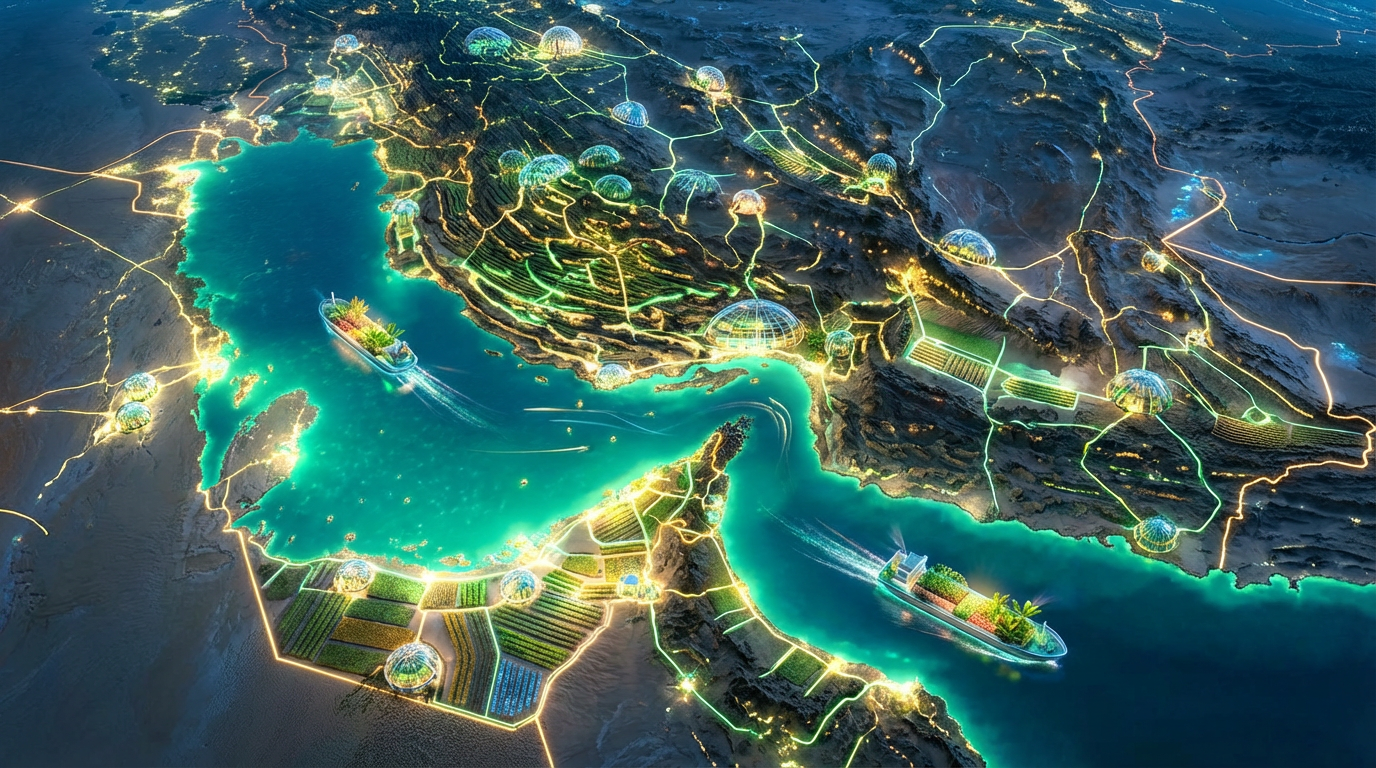
Tensions around the Strait of Hormuz are rattling oil markets, disrupting shipping networks and exposing fragile fertilizer supply chains that underpin global food production
The narrow waters of the Strait of Hormuz have long been one of the world’s most strategically sensitive maritime corridors. Now, as tensions flare across the Middle East following unprecedented joint military strikes by the United States and Israel on Iran, the waterway has once again emerged as the epicenter of a rapidly escalating global economic shock. Oil prices are climbing. Shipping companies are scrambling to reroute vessels. Freight costs and insurance premiums are surging. And fertilizer markets—already fragile—are bracing for another wave of volatility.
For countries like India, which depend heavily on both Middle Eastern energy and imported agricultural inputs, the repercussions could ripple far beyond energy markets, touching everything from food production and agricultural costs to inflation and trade logistics. The crisis underscores a stark reality of the global economy: a sliver of water barely 24 miles wide can still dictate the fortunes of nations.
A Strategic Chokepoint Under Pressure
Stretching roughly 100 miles between Iran in the north and the coastlines of Oman and the United Arab Emirates in the south, the Strait of Hormuz has long occupied a singular place in the architecture of the global energy system. Few geographic features exert such disproportionate influence over the world economy. On a map it appears as little more than a thin ribbon of water separating the Persian Gulf from the open ocean. In reality, it functions as one of the most consequential arteries of global commerce.
Disruption or heightened risk in the Strait of Hormuz can significantly affect India’s agri trade flows, as fertilizers, sulphur, phosphoric acid and other critical inputs face longer transit times, higher freight rates and insurance premiums.
Sulphur prices are especially vulnerable, since a large share of global sulphur is recovered from Middle Eastern oil and gas processing; any slowdown or shipping disruption can tighten supply and spike prices for sulphur-based fertilizers. For India, this translates into higher nutrient costs, pressure on fertilizer subsidies, and potential delays during key sowing seasons. The overall risk is not a shortage-driven crisis, but a cost- and timing-driven shock to agricultural supply chains.
— Dr Rahul Mirchandani, Chairman, Aries Agro
At its narrowest point, the strait measures just 24 miles across—barely the distance of a short highway commute. Yet through this slender maritime corridor flows close to 20 percent of the world’s crude oil supply, an extraordinary concentration of energy trade passing through a single chokepoint. Every day, vast fleets of tankers carrying millions of barrels of oil move through these waters, transporting crude from the Persian Gulf’s dominant producers—Saudi Arabia, Iraq, Kuwait and the United Arab Emirates—toward energy-hungry economies in Asia, Europe and beyond.
The significance of the strait lies not only in the volume of oil that moves through it, but in the absence of credible alternatives. Pipelines exist that bypass the corridor, including routes across Saudi Arabia and the UAE, yet their combined capacity falls far short of replacing the immense flow handled by maritime tankers. The geography of the region has effectively locked the global energy system into dependence on this narrow passage.
That dependence transforms the strait into something more than a shipping lane—it becomes a pressure point where geopolitics and economics intersect. Any disruption, whether from military confrontation, maritime blockades, sabotage or even heightened security threats, reverberates far beyond the Gulf. Traders, insurers and shipping companies monitor developments in the strait with extraordinary sensitivity because even small risks can translate into immediate market reactions.
“Exports to the Middle East are effectively on hold for now as shipping companies reassess security risks in the Gulf. Carriers are likely to impose additional insurance and war-risk surcharges, which will inevitably make imports more expensive.
If the situation persists, the combined effect of higher freight costs, longer transit times and elevated insurance premiums could significantly raise the cost of fertilizers and other agricultural inputs for countries like India.”
—- Rajib Chakraborty, National President, SFIA
History has repeatedly shown how fragile this equilibrium can be. Periods of tension in the Gulf—from the tanker wars of the 1980s to more recent confrontations between regional powers—have demonstrated how quickly shipping routes can become contested and how rapidly energy markets respond. Today, that sensitivity remains acute. Analysts warn that even the threat of closure—without a single tanker being physically blocked—could push crude prices sharply higher as traders price in the possibility of disrupted supply. Some estimates suggest that oil could surge toward $108 per barrel if shipments through the strait were significantly curtailed.
Recent movements in energy markets suggest investors are already factoring in that risk. The mere possibility of instability in the Strait of Hormuz is enough to ripple through futures markets, insurance premiums and freight rates, underscoring how profoundly the global economy still depends on the safe passage of ships through a corridor barely two dozen miles wide. In an era defined by complex supply chains and interconnected markets, the world’s energy lifeline still runs through one narrow stretch of water—and the consequences of instability there rarely remain confined to the region.
Oil Markets React
Global crude markets wasted little time registering the shock. As geopolitical tensions escalated across the Gulf, oil prices moved almost instantly, reflecting how sensitive energy markets remain to developments around the Strait of Hormuz. Futures linked to West Texas Intermediate crude surged more than 6 percent, climbing above $71 per barrel—their highest level in over eight months. At one stage during trading, prices spiked nearly 10 percent, a sharp intraday surge that underscored the market’s growing anxiety about potential supply disruptions.
Yet traders say the rally is not driven by immediate shortages of crude. Rather, it reflects a rapidly expanding geopolitical risk premium—the additional cost markets attach to the possibility that instability in the Persian Gulf could threaten one of the world’s most vital energy corridors. The Gulf remains the epicenter of global oil exports. When tensions rise in a region responsible for such a large share of global supply, markets react with remarkable speed.
Shipping data already suggests that tanker operators are recalibrating their strategies—adjusting routes, revising security protocols, and factoring higher risk into charter rates. As insurers reassess exposure in a potential conflict zone, maritime insurance premiums are also beginning to climb. For oil-importing economies, the implications are immediate and unavoidable. Rising freight costs, higher insurance charges and a swelling geopolitical risk premium combine to push energy bills upward, transmitting the shock from the Gulf directly into global inflation and trade flows.
India’s Energy Vulnerability
Few economies illustrate the stakes of Gulf instability more starkly than India.
Roughly half of India’s crude oil imports—between 2.5 and 2.7 million barrels per day—move through the Strait of Hormuz, making the narrow corridor one of the most critical arteries in the country’s energy supply chain. These shipments originate largely from Iraq, Saudi Arabia, the United Arab Emirates and Kuwait—producers that together anchor India’s long-standing energy relationship with the Persian Gulf. Any sustained disruption to maritime traffic through the strait would therefore reverberate quickly through India’s economy.
The country’s vast refining sector remains deeply intertwined with Middle Eastern crude flows. Although New Delhi has diversified supply in recent years—most notably by ramping up purchases from Russia—the Gulf continues to form the backbone of its energy strategy. A surge in crude prices would ripple through the economy with speed. Fuel costs feed directly into transportation networks, manufacturing supply chains and logistics, amplifying inflationary pressures across sectors. In a country where energy prices carry both economic and political sensitivity, volatility in the Gulf rarely remains confined to commodity markets for long.
Yet oil is only one layer of the vulnerability. The same sea lanes that carry crude tankers also support a sprawling web of container shipping, agricultural commodities and fertilizer shipments—cargoes that are just as critical to India’s economic stability and food security as energy itself.
Shipping Lines Pull Back
Long before any formal closure of sea lanes, the global shipping industry has begun behaving as though the risk is already real. As tensions rise around the Strait of Hormuz and the wider Persian Gulf, some of the world’s largest container carriers are quietly redrawing their maritime maps—suspending cargo bookings, rerouting vessels and issuing emergency advisories to fleets navigating one of the world’s most critical trade corridors.
The response has been swift and coordinated.
The Geneva-based shipping giant MSC Mediterranean Shipping Company announced on March 1 that it was suspending all bookings for worldwide cargo bound for the Middle East until further notice, a move that effectively freezes a significant portion of container traffic headed toward Gulf ports.
Meanwhile, Danish logistics powerhouse Maersk confirmed that two of its major shipping services—ME11 and MECL, which connect the Middle East and India with Mediterranean and U.S. markets—would be rerouted around the Cape of Good Hope.
While safer, the diversion dramatically extends sailing distances between Asia, Europe and the Americas, adding days—sometimes weeks—to global shipping schedules. France’s maritime heavyweight CMA CGM has taken an even more sweeping step. Citing escalating operational and security constraints, the company halted all refrigerated container bookings for a wide swath of Middle Eastern destinations including Iraq, Bahrain, Kuwait, Yemen, Qatar, Oman, the United Arab Emirates, Saudi Arabia, Jordan, Egypt (Port of Ain Sokhna), Djibouti, Sudan and Eritrea.
Across the Gulf itself, caution has hardened into operational directives. China’s state-backed carrier COSCO Shipping has instructed vessels already inside the Gulf to proceed to safer waters and remain on standby until security conditions stabilize. German shipping line Hapag‑Lloyd—the world’s fifth-largest container shipping company—has gone further still, suspending all transit through the strait. Ships already operating within the Gulf have reportedly been ordered to seek shelter and await further instructions.
Taken together, these moves amount to a quiet but profound shift in global maritime behavior. Without a single official blockade being declared, the shipping industry is already acting as though one of the world’s most vital trade corridors has become dangerously uncertain.
Freight Costs Begin to Spike
As vessels quietly alter their routes and insurers reassess the risks of operating in a rapidly militarizing maritime corridor, the financial consequences are already rippling through global shipping markets.
Freight rates are beginning to climb.
Shipping companies have introduced what is known as an Emergency Conflict Surcharge (ECS)—a temporary levy designed to compensate carriers for the sharply elevated risks of operating near the Strait of Hormuz and the wider Persian Gulf.
The new charges are steep and immediate. Current ECS levels include $2,000 per 20-foot container, $3,000 per 40-foot container, and $4,000 for refrigerated or specialized containers, the latter particularly significant for food, pharmaceutical and agricultural shipments that depend on temperature-controlled transport.
These surcharges are only part of the emerging cost structure. Maritime insurers are simultaneously recalibrating risk assessments for ships entering Gulf waters, prompting additional War Risk Surcharges across multiple routes.
German carrier Hapag-Lloyd has already confirmed the introduction of such fees, setting charges at $1,500 per TEU for standard containers and $3,500 per container for refrigerated units and specialized equipment.
For exporters and importers, the financial arithmetic escalates quickly.
Every additional surcharge compounds the cost of moving goods through already strained supply chains. Longer detours around the Cape of Good Hope increase fuel consumption and voyage durations, while rising insurance premiums add another layer of expense.
The result is a mounting logistical squeeze that many trade analysts say is beginning to resemble the cascading disruptions witnessed during the early months of the COVID-19 pandemic—when shipping delays, container shortages and freight inflation reverberated across the global economy. In today’s case, however, the trigger is not a virus but geopolitics—and a narrow maritime corridor whose instability can still reshape the economics of global trade.
Port Disruptions and Regional Bottlenecks
The stress is not confined to oil tankers and container vessels navigating the narrow waters of the Strait of Hormuz. It is increasingly visible across the wider logistics architecture of the Gulf, where some of the world’s most important trade hubs are beginning to feel the strain.
At the center of this network lies Jebel Ali Port—one of the largest container transshipment complexes on the planet and a crucial redistribution gateway linking Asia, Africa and Europe. Reports indicate that the port has experienced temporary operational halts following conflict-related blasts and debris incidents in the region, forcing precautionary pauses in port activity.
Even short disruptions at such strategic hubs can send shockwaves through global supply chains.
Ports like Jebel Ali operate as the logistical heartbeat of the Gulf’s “free-zone” trade ecosystem, where cargo arriving from Asia is redistributed onward to markets across the Middle East, Africa and the Mediterranean. When these nodes slow down—even briefly—the consequences propagate outward through shipping schedules, container availability and delivery timelines.
For exporters thousands of miles away, the effects can be immediate. Indian exporters who rely heavily on Gulf transshipment routes warn that the growing instability could lengthen transit times and inject fresh uncertainty into key export corridors connecting South Asia with Europe and Africa. Delays at a single hub can cascade through multiple supply chains, forcing cargo to wait for connecting vessels, rerouted containers or alternative port calls.
Air logistics may offer little relief. With parts of regional airspace subject to potential restrictions or heightened security oversight, cargo flights could face longer routes or operational constraints—tightening supply chains even further. Yet amid the turbulence engulfing oil markets and container shipping, one of the most consequential ripple effects may emerge in a sector far removed from tankers and port cranes. The next shock could arrive in the global fertilizer market.
Fertilizer Markets Brace for Impact
Beyond oil tankers and container vessels, another critical supply chain runs quietly through the waters of the Persian Gulf—one that ultimately feeds the world. The Middle East plays a pivotal role in global fertilizer production, particularly for nitrogen-based fertilizers such as urea. Countries across the region have built vast petrochemical complexes that convert natural gas into fertilizers shipped to agricultural markets around the world.
Among them, Iran occupies a significant position. The country has a urea production capacity of roughly 9 million tonnes per year, exporting around 5 million tonnes annually to international markets. Iranian urea is frequently among the lowest-priced supplies globally, making it an important source for fertilizer-importing countries—including India. Any disruption to these exports—whether triggered by shipping constraints, sanctions pressure, or logistical bottlenecks across the Strait of Hormuz—can quickly ripple through global fertilizer markets.
Analysts warn that instability along these maritime routes could push prices higher across the entire fertilizer spectrum: urea, MOP (muriate of potash), DAP (di-ammonium phosphate) and NPK fertilizers. For India, the implications are particularly significant. The country is among the world’s largest consumers of agricultural nutrients, and its food security is deeply intertwined with the reliability of international fertilizer supply chains.
In the fiscal year 2024–25, India imported 160.29 lakh metric tonnes of bulk fertilizers, underscoring the enormous scale of its dependence on global trade. These imports underpin the productivity of one of the world’s largest agricultural systems—supporting everything from wheat and rice cultivation to oilseeds and horticulture. But a closer examination of India’s fertilizer import structure reveals something more consequential. Many of these supply lines run directly through the same geopolitical fault lines now emerging across the Gulf.
Urea Imports and Gulf Dependence
Urea dominates India’s fertilizer import basket. Total imports amount to 56.47 LMT, making it the largest category in the country’s fertilizer trade.
The supply structure reveals a striking concentration in Gulf producers. Oman supplies 26.13 LMT, making it India’s largest supplier by far. Russia provides 9.23 LMT, while Saudi Arabia contributes 5.38 LMT and Qatar exports 3.70 LMT. Taken together, Oman, Saudi Arabia and Qatar account for 35.21 LMT—around 62.35 percent of India’s total urea imports.
This means that nearly two-thirds of India’s most critical fertilizer flows from countries located in or near the Gulf region. If shipping routes through the Strait of Hormuz were disrupted, the consequences for India’s fertilizer supply chain could be immediate.
MOP Import Patterns
Muriate of potash (MOP) is the second-largest fertilizer import category at 45.69 LMT. Major suppliers include Saudi Arabia (19.05 LMT) and Morocco (10.74 LMT), alongside smaller shipments from China and Jordan (2.39 LMT).
Imports from Saudi Arabia and Jordan together total 21.44 LMT, representing 46.92 percent of India’s MOP imports. While this share is lower than that of urea, it still reflects a substantial reliance on suppliers connected to West Asia.
DAP Supply Structure
DAP imports total 35.41 LMT, and the supply structure is more geographically diversified. Russia dominates with 18.00 LMT, while Jordan supplies 3.01 LMT and Israel contributes 2.80 LMT.
Gulf-region contributions are relatively smaller—5.81 LMT, or 16.41 percent of total DAP imports. This diversification provides a measure of resilience, though it also highlights Russia’s expanding role in global fertilizer supply chains.
NPK Fertilizer Imports
NPK fertilizer imports amount to 22.72 LMT, the smallest category among the four. Here again Russia dominates with 18.27 LMT, followed by Saudi Arabia with 3.40 LMT, while China supplies a minor share. The Gulf contribution therefore totals 3.40 LMT, accounting for 14.96 percent of India’s NPK imports.
Structural Vulnerabilities in the Supply Chain
Viewed together, the import data reveals a set of structural vulnerabilities that extend far beyond simple trade statistics. Beneath the numbers lies a complex web of geopolitical exposure linking India’s agricultural system to two of the world’s most strategically sensitive regions—the Persian Gulf and Russia.
The most striking dependency appears in urea, where India’s reliance on Gulf suppliers exceeds 62 percent. Countries such as Oman, Saudi Arabia and Qatar together account for the overwhelming share of shipments, tying India’s most critical fertilizer directly to the stability of trade routes that pass through the Strait of Hormuz.
A similar—though slightly less concentrated—pattern emerges in MOP (muriate of potash) imports. Nearly 47 percent of India’s supply originates from Gulf-linked producers, notably Saudi Arabia and Jordan. While additional supplies arrive from producers such as Morocco and China, the Gulf remains a crucial pillar of the supply chain. The picture shifts somewhat for DAP and NPK fertilizers, where the sourcing base is more geographically diversified. Here, Russia has emerged as the dominant supplier, particularly in NPK and a substantial share of DAP imports, reflecting Moscow’s growing footprint in global fertilizer markets.
Yet diversification does not necessarily eliminate risk. Instead, it redistributes it across multiple geopolitical fault lines.
In practical terms, India’s fertilizer supply chain now sits at the intersection of two volatile arenas. Tensions in the Gulf can disrupt maritime routes through the Strait of Hormuz. Diplomatic shifts or sanctions regimes can reshape exports from Russia. Meanwhile, the mechanics of global shipping—freight rates, insurance premiums and vessel availability—can change almost overnight when conflict alters maritime risk calculations.
Each of these pressures ultimately converges in a single place: fertilizer prices.
If vessels are forced onto longer routes, if insurers impose war-risk premiums, or if supply chains fragment under geopolitical strain, the cost of nutrients essential to agricultural production rises accordingly—transmitting geopolitical instability directly into the economics of farming and food production.
The Global Stakes
The world has faced crises in these waters before—from the tanker wars of the 1980s to the recurring standoffs between Iran and Western powers. Yet the stakes today may be even higher.
Global supply chains are now more tightly interwoven than at any point in modern economic history. Energy markets respond instantly to geopolitical tremors, while food systems—often overlooked in strategic debates—depend heavily on the uninterrupted movement of fertilizers and agricultural inputs across oceans.
At the center of this delicate architecture lies the Strait of Hormuz. Should tensions escalate further—or should the passage become unsafe for commercial shipping even temporarily—the consequences would extend far beyond the Middle East. Oil prices could spike sharply as traders scramble to price in supply risks. Shipping lanes could remain disrupted as vessels reroute around conflict zones, driving up freight costs and insurance premiums. Fertilizer markets, already sensitive to logistics disruptions, could tighten rapidly, amplifying pressure on global food production.
The resulting shock would not remain confined to commodity markets. It would ripple outward—through inflation, trade balances and food security—reverberating across economies already strained by geopolitical fragmentation and fragile supply chains. For now, the world’s attention remains fixed on a narrow corridor of water where geopolitics, energy security and global trade converge.
History offers a clear lesson: what unfolds in the Strait of Hormuz rarely stays there.
— Suchetana Choudhury (suchetana.choudhuri@agrospectrumindia.com)