Wednesday, 3 June 2026

With a production capacity of 400,000 tons per year, this will be Cargill’s largest dairy feed plant in South Asia, supporting India’s objective of becoming self-reliant in dairy feed
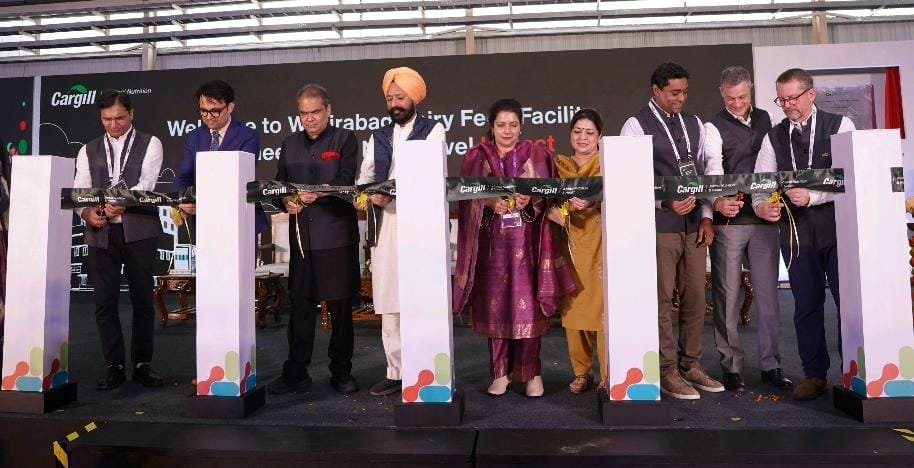
Underscoring its long-term confidence in India’s livestock sector and to help accelerate growth in Punjab’s dairy industry, Cargill Animal Nutrition & Health today opened a state-of-the-art dairy feed plant in Wazirabad, Punjab (India). Built with an investment of Rs 300 crore, the new plant will provide dairy farmers access to world-class feed solutions and deliver science-based dairy nutrition at scale. This expansion marks an important step from Cargill towards making India self-reliant in dairy feed, contributing to the Indian Government’s initiative of ‘Atmanirbhar Bharat’ (Self-Reliant India).
Spread over 15 acres, with an annual production capacity of 400,000 metric tons, the new facility will be Cargill’s largest dairy feed plant in South Asia and second plant in the state of Punjab (after Bhatinda). It will add over 1000 (direct and indirect) jobs, creating livelihood opportunities for the local community and help the company meet rising demand from core dairy markets of Punjab. Products manufactured here will be marketed under the globally renowned brands Provimi and Purina and cater to multiple customer segments including dairy farmers, producers and feed mills.
Strategically located within a high-density dairy region, Cargill’s Wazirabad facility will bring production closer to farming communities in Punjab, one of north India’s most productive dairy belts. It will also give dairy producers access to the latest technology used in the production of a wide range of dairy feed for young animals and milking cows, using a high degree of automation. By enabling consistent availability of safe and quality feed, this plant will support dairy producers improve milk yields, animal health, farmer incomes, and strengthen the entire dairy value chain.
The facility was inaugurated today by Sanjeev Arora, Minister of Industries & Commerce, Punjab, alongside Cargill leadership: “Punjab continues to be a leader in India’s agricultural and dairy landscape, supported by its progressive farmers and strong infrastructure. Investments from global companies like Cargill will further strengthen the state’s industrial ecosystem and create employment opportunities for local communities, supporting rural livelihoods.
This clearly reflects growing industry confidence in Punjab as a preferred destination for agri and food sector investments and aligns with our vision of transforming the state into a progressive, prosperous and self-reliant entity,” said Sanjeev Arora, Minister of Industries & Commerce, Punjab speaking at the plant inauguration. He said that the Punjab government will support them with all possible help and make Punjab choicest destination for investors.
“By expanding our manufacturing presence closer to the key dairy regions of Punjab, farmers in the state will have consistent access to high quality and low toxin feed complying with BIS guidelines. This will enhance supply reliability and farm profitability for dairy farmers, besides contributing to local employment, thereby strengthening the state ecosystem,” said Ravinder Balain, President, Cargill India & Senior Managing Director Cargill Animal Nutrition & Health, India, speaking at the plant launch.
India is the world’s largest milk producer for several years and accounts for over a quarter of the global output. Currently, dairy is the largest agricultural product in India, contributing 5% to the national economy and directly employing more than eight crore farmers (National Accounts Statistics). This, coupled with steady growth in dairy consumption, makes availability of high-quality dairy feed critical for the growth of the sector.
Cargill’s latest expansion builds on decades of work with Indian farmers through trusted brands such as Provimi and Purina. Together with the Bathinda plant, the new facility also builds on the ‘Make in India’ agenda by expanding local manufacturing, supporting skill development and economic activity in surrounding communities. Safety, quality, and responsible operations remain foundational to the facility. Designed in alignment with Cargill’s global standards for workplace safety, biosecurity, and product excellence, the plant reflects the company’s commitment to operational integrity and sustainable food systems.