Wednesday, 20 May 2026


Agriculture remains central to India’s economy, contributing to GDP and employing nearly half the workforce, but it faces challenges such as fragmented landholdings, monsoon dependence and resource inefficiencies.
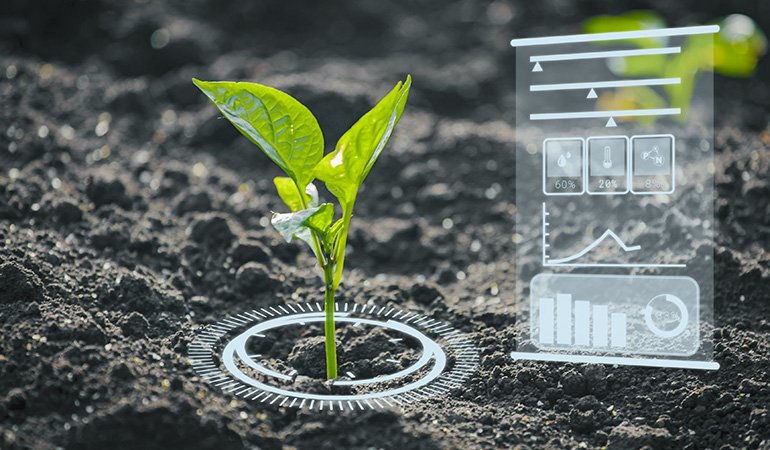
Technology, particularly Artificial Intelligence (AI), is emerging as a key enabler alongside policy support. AI-driven tools like satellite imagery, Internet of Things (IoT) sensors and data analytics are strengthening precision farming through yield forecasting, risk mapping and micro-climate prediction. Focusing on the current Rabi season, this analysis draws on pilot initiatives to examine how AI is improving efficiency and profitability while addressing accessibility challenges for small and marginal farmers.
To this day, over 80 per cent of farmers are classified as small and marginal who operate on landholdings of less than two hectare. This is combined with environmental problems like soil degradation affecting nearly 98 million hectare, the risks of volatile markets that have led to rising input costs constraining productivity and incomes. Climate change further exacerbates these pressures, with projections suggesting potential yield losses of 10-40 per cent by the end of the century due to increased frequency of heat stress, droughts, floods and pest outbreaks.
In this context, Artificial Intelligence (AI), which encompasses machine learning, computer vision and predictive analytics has emerged as a powerful tool to help optimise resource use and provide data-driven actionable insights across the agricultural value chain. By enabling data-driven insights on weather, soil health, crop performance and market trends, the use of AI offers pathways to reduce risks and improve farm-level outcomes.
To read more, click: https://online.anyflip.com/unmb/kqnc/mobile/index.html