Wednesday, 20 May 2026

By linking rivers, rails and ports, Budget 2026 turns logistics reform into a productivity lever for Indian agriculture
Union Budget 2026 places logistics and connectivity at the centre of agricultural transformation, recognising that farm productivity and farmer incomes are increasingly shaped by how efficiently goods move from field to market. By expanding freight corridors, inland waterways and coastal shipping, the Budget links infrastructure investment with lower logistics costs, reduced post-harvest losses and stronger price realisation for farmers.
Freight Corridors and Market Integration
The proposal to establish a new dedicated freight corridor from Jalpaiguri to Surat is strategically significant for agriculture. By connecting eastern production belts with western consumption and export hubs, the corridor is expected to improve the movement of cereals, horticulture produce, fertilisers and agro-inputs. Faster, predictable freight movement will reduce transit losses, stabilise prices across regions and strengthen national agricultural market integration.
Waterways as Agricultural Arteries
Budget 2026 also strengthens inland water transport through the expansion of National Waterway-5, linking the Talcher–Angul industrial belt with the ports of Paradeep and Dhamra. For agriculture, this creates a low-cost, low-emission logistics channel for bulk commodities such as foodgrains, fertilisers, coal for fertiliser plants, and processed agri-products. Improved waterway connectivity reduces dependence on road transport, easing congestion and lowering logistics costs—an important lever for controlling food inflation.
To support this shift, the Budget announces capacity-building programmes for youth in waterway cargo management, creating a skilled workforce for handling agricultural and bulk cargoes. This links rural employment generation with the modernisation of farm logistics.
Coastal Shipping and Agri-Exports
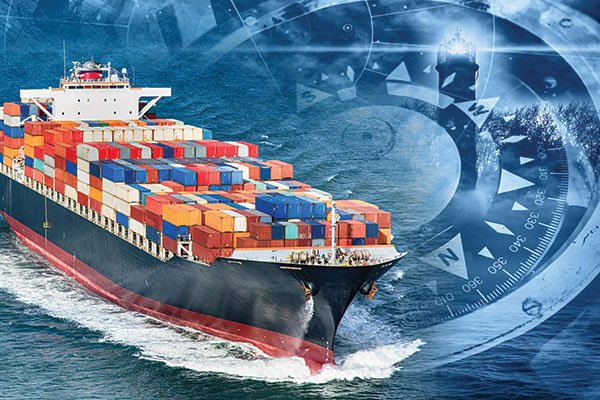
The launch of a Coastal Cargo Promotion Scheme aims to increase the share of inland waterways and coastal shipping by at least 6 per cent. For the agricultural sector, this enhances the viability of coastal movement of foodgrains, edible oils, fertilisers and agri-exports, particularly from eastern and southern states. Lower logistics costs improve farm-gate prices while enhancing the competitiveness of Indian agricultural exports.
Decarbonising Farm Logistics
Budget 2026 also aligns agricultural logistics with India’s climate commitments. Investments in carbon capture, utilisation and storage (CCUS) technologies, now reaching high levels of technological readiness, signal a long-term push toward decarbonising heavy transport, fertiliser production and port operations. For agriculture, this supports a transition to lower-emission supply chains without compromising scale or efficiency.
Building a Riverine Ship Repair Ecosystem
The proposal to develop ship repair ecosystems in Varanasi and Patna strengthens the inland water transport backbone of the Gangetic belt—one of India’s most important agricultural regions. Localised repair and maintenance capacity reduces downtime for cargo vessels, lowers operating costs and improves reliability of waterway-based movement of agri-commodities.
The Larger Agricultural Payoff
Together, these initiatives reflect a strategic shift: treating logistics as an extension of farm policy. By reducing transport costs, expanding market reach and creating rural logistics employment, Budget 2026 positions infrastructure investment as a catalyst for higher agricultural productivity, better price realisation and income stability.
As India advances toward Viksit Bharat, the Budget signals that the next phase of agricultural growth will be driven not only by what is produced on farms, but by how efficiently it is moved, stored and delivered—linking rivers, rails and coasts to the country’s food economy.
— Suchetana Choudhury (suchetana.choudhuri@agrospectrumindia.com)