Thursday, 16 July 2026

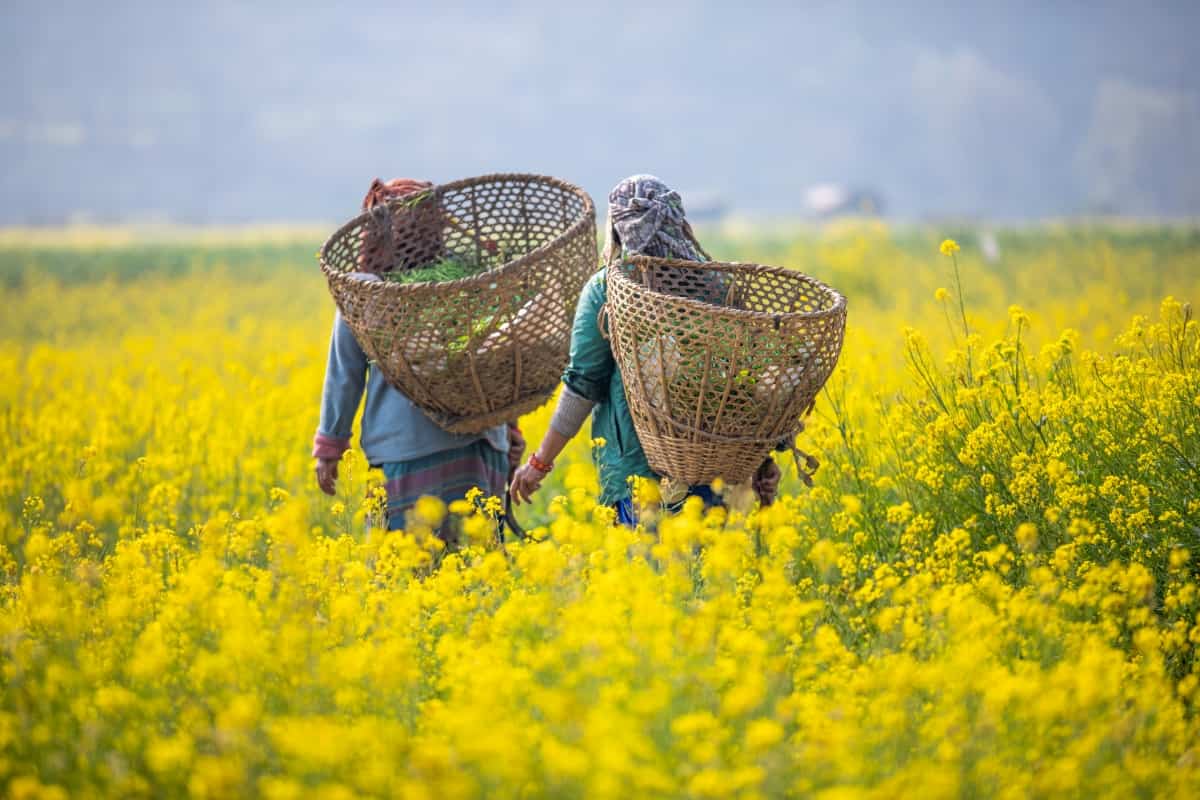
A multi-state Front Line Demonstration programme led by the The Solvent Extractors’ Association of India shows how regenerative agriculture can significantly boost mustard productivity, farmer profitability, and reduce import dependence across Rajasthan, Haryana, and Madhya Pradesh
A regenerative mustard cultivation initiative spearheaded by the The Solvent Extractors’ Association of India has produced remarkably salutary outcomes, registering yield augmentations of up to 30 per cent across select agrarian tracts of Rajasthan and Haryana. The endeavour underscores, with persuasive empirical clarity, the capacity of ecologically attuned agricultural methodologies to simultaneously elevate farmer prosperity and attenuate India’s entrenched dependence on imported edible oils.
Executed during the Rabi 2025–26 agricultural cycle, the programme—undertaken in consort with Solidaridad Network Asia Ltd.—encompassed 3,000 Front Line Demonstration plots distributed across Rajasthan, Haryana, and Madhya Pradesh, thereby providing a statistically meaningful canvas for evaluating regenerative interventions at scale. The initiative drew upon a consortium of agribusiness stakeholders, including AWL Agribusiness Ltd., Bunge India Pvt. Ltd., Louis Dreyfus India Pvt. Ltd., Godrej Agrovet Ltd., V.V.F. India Pvt. Ltd., J.R. Agro Industries Ltd., and Arihant Solvex Pvt. Ltd., whose collective engagement fortified the programme’s operational and agronomic credibility.
Empirical observations from Rajasthan were particularly striking, with yields ascending from 1,853 kg per hectare to 2,409 kg per hectare—an enhancement of approximately 30 per cent—accompanied by a notable improvement in the benefit-cost ratio from 2.6 to 4.0, indicative of materially improved farm-level viability. Haryana mirrored this trajectory, with yields advancing from 1,900 kg per hectare to 2,470 kg per hectare and profitability metrics strengthening appreciably. Madhya Pradesh, while comparatively modest in magnitude, nonetheless exhibited a robust 20.5 per cent productivity increase alongside improved economic returns.
Sanjeev Asthana observed that these outcomes vindicate the foundational objectives envisaged at the programme’s inception in 2019, and further suggested that such models merit wider geographical replication and crop diversification. B.V. Mehta, meanwhile, advocated for deeper institutional collaboration with governmental agricultural bodies to accelerate the dissemination of Front Line Demonstration frameworks. In the broader macroeconomic context, wherein India continues to import a substantial proportion of its edible oil requirements, such regenerative paradigms may well constitute a strategically significant lever for enhancing domestic self-reliance whilst simultaneously improving agrarian livelihoods.