Wednesday, 15 July 2026

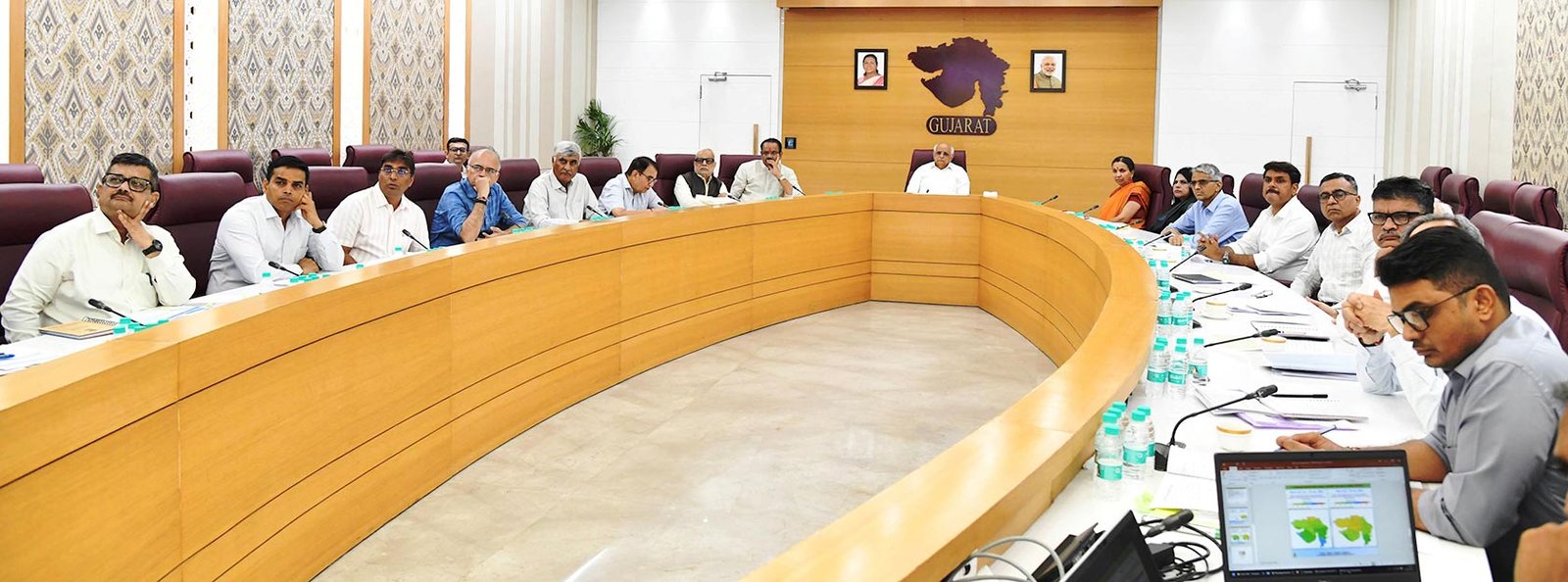
Chief Minister Bhupendra Patel orders filling of 300 lakes, launches contingency measures for farmers and livestock as Gujarat prepares for potential climate disruptions
The Gujarat government has unveiled a comprehensive statewide preparedness strategy to mitigate the potential impact of El Niño conditions, including a major expansion of its Narmada water distribution network, contingency crop planning for farmers, and strengthened fodder reserves for livestock. The measures were announced following a high-level review meeting chaired by Chief Minister Bhupendra Patel, who directed multiple departments to coordinate efforts aimed at safeguarding water security, agricultural productivity and rural livelihoods across the state.
At the centre of the strategy is a significant expansion of Gujarat’s lake-filling programme. The state has increased the eligibility radius for lakes connected to the Narmada pipeline network from 3 kilometres to 7 kilometres, enabling a broader reach of Narmada waters into drought-prone regions. Under the revised framework, more than 300 lakes across North Gujarat will be replenished through the Sujalam Sufalam Yojana, while reservoirs linked to the SAUNI (Saurashtra Narmada Avtaran Irrigation) scheme will be prioritised for filling to ensure uninterrupted drinking water supplies in Saurashtra.
“Under the guidance of Chief Minister Bhupendra Patel, all departments of the state administration have undertaken comprehensive micro-planning to address potential El Niño-related challenges,” said Gujarat government spokesperson and Agriculture Minister Jitu Vaghani.
Water Security Takes Centre Stage
With forecasts indicating the possibility of El Niño conditions later this year, state officials reviewed water storage levels across major reservoirs, including the Sardar Sarovar Narmada Dam, Gujarat’s principal source of water security. The Water Resources Department, Water Supply Department and Narmada authorities have been instructed to undertake advance planning to ensure adequate drinking water availability throughout the state, particularly in vulnerable regions.
The expansion of Narmada connectivity reflects Gujarat’s long-term strategy of using inter-basin water transfers to strengthen resilience against rainfall variability and drought risks.
AI-Driven Advisories for More Than 50 Million Farmers
Recognising the potential impact of erratic rainfall on agriculture, the state has launched an extensive contingency crop-planning framework for the Kharif 2026 season. The programme includes scientific advisories on alternative short-duration and low-water-requirement crops, enabling farmers to adjust sowing decisions if rainfall patterns deviate from normal expectations.
In addition, Gujarat is leveraging digital technologies to strengthen farm-level preparedness. Through the AI-powered Krushi Pragati platform, more than 5 million farmers are receiving real-time weather updates, crop advisories and agronomic recommendations directly on their mobile phones via SMS. The Agriculture Department is also using satellite-based monitoring systems to track soil moisture levels and crop health across the state. Officials confirmed that adequate stocks of seeds and fertilisers are already available for the Kharif season.
Livestock Protection a Key Priority
The state government has also placed significant emphasis on livestock protection, recognising that drought-related fodder shortages can have severe economic consequences for rural households. The Forest Department and Animal Husbandry Department have been directed to maintain strategic fodder reserves and implement advance planning measures to ensure uninterrupted feed availability. According to government estimates, Gujarat currently holds fodder stocks sufficient to meet demand for up to two years, providing a substantial buffer against potential weather-related disruptions.
Historical Lessons Inform Current Strategy
While El Niño events are often associated with below-normal rainfall, state officials cautioned against assuming a direct correlation between El Niño and drought conditions in Gujarat. According to data reviewed during the meeting, Gujarat experienced eight El Niño-influenced Kharif seasons between 2000 and 2026. However, rainfall outcomes have varied significantly.
Officials highlighted that during the strong El Niño years of 2006 and 2023, Gujarat still recorded rainfall equivalent to approximately 117 per cent of the long-term average. “Farmers and citizens should not be influenced by rumours or unnecessary concerns,” Vaghani said, emphasizing that historical evidence demonstrates that El Niño conditions do not automatically translate into deficient monsoons in Gujarat.
Whole-of-Government Response
The Revenue Department has been instructed to maintain continuous coordination with district administrations and collectors across the state, ensuring round-the-clock monitoring and rapid response capabilities should weather conditions deteriorate. Senior officials from the Agriculture, Irrigation, Water Supply, Revenue, Forest and Narmada departments participated in the review, alongside representatives from agricultural universities and climate experts.
The preparedness exercise comes amid growing global concern over the potential impacts of a strengthening El Niño event on agricultural production, water resources and food security across several regions. For Gujarat, however, officials insist that the state’s investments in water infrastructure, digital agriculture and contingency planning place it in a strong position to manage climatic uncertainties. As monsoon progress remains under close observation, the government’s message is clear: preparedness, rather than panic, will define Gujarat’s response to any El Niño-related challenges in the months ahead.