Wednesday, 1 July 2026

Ragi, maize and moong record the steepest discounts to MSP, raising concerns over farmgate profitability ahead of the kharif season
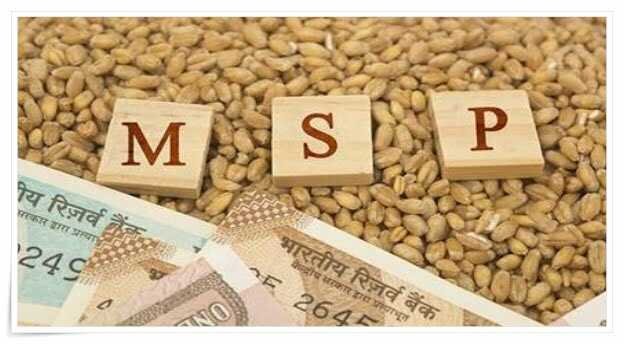
India’s agricultural markets are sending a mixed signal to policymakers as a broad basket of key foodgrain, pulse and oilseed crops continues to trade below the government’s Minimum Support Price (MSP), highlighting persistent gaps between policy support mechanisms and market realities.
Latest mandi data as of May 29, 2026 shows that 13 major agricultural commodities are currently being traded below their MSP levels, with discounts ranging from less than 1 per cent to more than 30 per cent. The trend comes at a critical juncture as farmers prepare for kharif sowing decisions, where relative price expectations often influence acreage allocation across crops.
The data underscores a familiar challenge in Indian agriculture: while MSPs provide an income assurance benchmark, market prices in many regions continue to remain below those support levels, particularly for pulses, coarse cereals and select oilseeds.
Ragi Faces Sharpest Price Erosion
Among all commodities tracked, ragi has emerged as the biggest underperformer.
Against an MSP of Rs 4,886 per quintal, the all-India mandi wholesale price stood at just Rs 3,406 per quintal, representing a steep 30.29 per cent discount to the support price.
The sharp divergence raises concerns about farmer returns in millet-producing regions, particularly as the government continues to promote millets as climate-resilient crops under its broader food security and nutrition agenda.
The substantial price gap suggests that market demand has yet to fully catch up with policy ambitions surrounding millet cultivation.
Maize and Moong Also Under Significant Pressure
Maize, increasingly viewed as a strategic crop due to rising demand from the poultry, starch and ethanol industries, was trading at Rs 1,900 per quintal against an MSP of Rs 2,400, reflecting a discount of 20.83 per cent.
Similarly, moong dal recorded one of the steepest deviations from MSP. Wholesale prices stood at Rs 7,006 per quintal, compared with an MSP of Rs 8,768, leaving farmers exposed to a 20.10 per cent shortfall.
The weakness in pulse prices could become a key policy concern, given India’s continued efforts to achieve greater self-sufficiency in pulse production and reduce import dependence.
Bajra and Paddy Remain Below Support Levels
Among staple crops, bajra was trading at Rs 2,288 per quintal against an MSP of Rs 2,775, representing a discount of 17.55 per cent.
Paddy (unmilled rice), India’s most important foodgrain crop, was quoted at Rs 2,088 per quintal, below its MSP of Rs 2,369, translating into an 11.86 per cent discount.
While government procurement operations typically absorb significant quantities of paddy during the marketing season, the current mandi prices indicate that open market transactions continue to occur below support levels in several regions.
Wheat Trades Below MSP Despite Supply Concerns
Perhaps more notable is the performance of wheat, which remains below MSP despite ongoing concerns regarding domestic stocks and food inflation.
Wholesale wheat prices stood at Rs 2,442 per quintal, compared with an MSP of Rs 2,585, representing a 5.53 per cent discount.
The price movement suggests that market arrivals and procurement dynamics continue to influence price discovery even as policymakers closely monitor cereal supplies.
Pulses Continue to Struggle
The broader pulse complex also remains under pressure.
Arhar (tur) was trading at Rs 7,491 per quintal, or 6.36 per cent below its MSP of Rs 8,000.
Masur stood at Rs 6,604 per quintal, a 5.66 per cent discount to its MSP of Rs 7,000.
Gram (chana) was quoted at Rs 5,715 per quintal, compared with an MSP of Rs 5,875, while urad traded at Rs 7,542 per quintal against an MSP of Rs 7,800.
The continued weakness across major pulse varieties suggests that procurement support and market interventions may remain important to protect farmer incomes in pulse-growing regions.
Oilseeds Show Relative Resilience
Compared with cereals and pulses, oilseeds have demonstrated greater price stability.
Groundnut was trading at Rs 6,961 per quintal, only 4.16 per cent below its MSP of Rs 7,263.
Sunflower showed the narrowest gap among all commodities tracked, with wholesale prices of Rs 7,678 per quintal against an MSP of Rs 7,721, representing a marginal discount of just 0.56 per cent.
The relatively stronger performance reflects robust edible oil demand and continuing efforts to improve domestic oilseed production amid India’s heavy dependence on edible oil imports.
MSP Effectiveness Under Scrutiny
The latest pricing data once again highlights the complexities of India’s MSP system.
While MSP serves as a crucial income assurance mechanism and policy signal for farmers, actual market realisation often depends on procurement intensity, local demand-supply conditions, storage capacity and private trade participation.
The fact that all 13 commodities in the latest dataset are trading below MSP suggests that procurement operations and market support mechanisms remain uneven across crops and regions.
For policymakers, the challenge is particularly significant as India seeks to encourage diversification into pulses, millets and oilseeds while simultaneously ensuring that farmers receive remunerative prices.
What It Means for Kharif 2026
The timing of the price weakness is important.
As farmers make sowing decisions for the upcoming kharif season, prevailing mandi prices often influence crop choices alongside MSP announcements, input costs and rainfall expectations.
Persistent discounts to MSP could discourage acreage expansion in certain crops, particularly pulses and millets, unless supported by stronger procurement interventions or improved market demand.
For now, the data presents a clear message: Despite record procurement systems and rising MSPs, market prices for a broad swathe of Indian agriculture remain below government support levels. As the 2026 kharif season begins amid El Niño uncertainties and rising input costs, ensuring that farmers receive prices closer to MSP may become just as important as ensuring adequate rainfall and fertiliser availability.