Monday, 6 July 2026

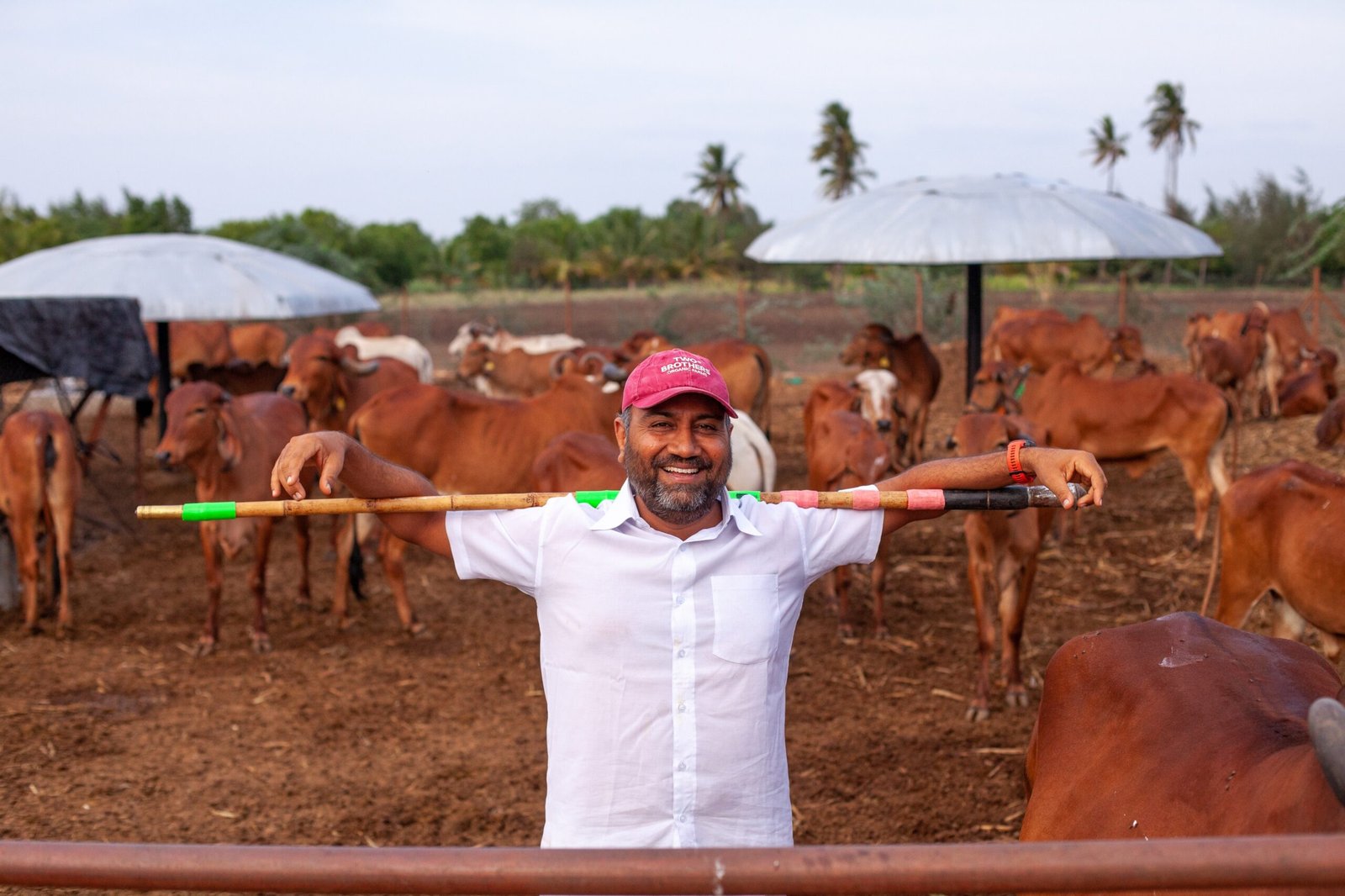
For decades, Indian agriculture was shaped by a clear and urgent priority: producing more food. In that context, hybrid and high-yielding varieties played a critical role in strengthening food security and enabling scale. Wheat, in particular, became central to this transformation. But as the sector evolves, farmers, agri-businesses and policymakers are increasingly recognising that productivity alone cannot remain the only benchmark of success. The larger conversation today is about resilience, profitability, input efficiency, nutritional value and long-term sustainability. It is in this changing context that khapli wheat is finding its way back into Indian fields after decades of hybrid-led farming.
This return is not driven by nostalgia alone. It reflects a practical reassessment of what makes sense for farmers in an environment shaped by rising input costs, soil fatigue, water stress and the economic constraints of undifferentiated commodity markets. In many regions, growers are beginning to look beyond yield alone and ask a more important question: which crop makes the most sense for my land, my cost structure and my long-term viability?
Khapli is being reconsidered because it offers a different kind of proposition. It is better aligned with lower-input cultivation systems, carries a distinct identity in the market, and increasingly benefits from demand for more traceable and differentiated food products.
A key reason for khapli’s return is that market demand has started to move in its favour. Over the last few years, Indian consumers have become far more conscious of what they eat, where it comes from and how it is grown. There is greater interest in traditional grains, less industrially standardised staples, and ingredients that carry a stronger association with authenticity and function. Khapli has benefited from this shift. Khapli, once sidelined, is now carving out a strong space within the heirloom flour segment, with more than a dozen brands entering the category. The category is expanding at nearly five times the pace of the overall atta market, even though it is priced at three to five times more than regular flour. Industry players have also observed a sharp rise in demand over the past two years.
That demand revival matters because it changes the economics for farmers. For a long time, heritage grains survived only in fragmented local markets with limited commercial upside. Once consumer demand begins to consolidate, the supply side starts to respond. That is exactly what is now happening with khapli. Specialty food brands, clean-label businesses, regional millers and direct-from-farm companies have started supplying khapli flour and grain-based products because they see long-term potential in a category built on provenance, differentiation and trust. Earlier reporting had already indicated this trajectory when sellers noted that demand for khapli had doubled every year for four consecutive years, alongside a sharp rise in retail prices and growing international shipments.
This is where khapli moves from being only a crop story to becoming a value-chain story. Farmers are not bringing it back in isolation; they are doing so because a market is re-emerging around it. Brands, in turn, are not merely selling a healthier wheat alternative. They are responding to a broader shift toward differentiated staples, regional grain identities and more transparent sourcing. In B2B terms, khapli represents a category where downstream consumer pull is beginning to create upstream opportunity across cultivation, aggregation, processing, branding and retail.
For farmers, this creates a different pathway to value realisation. High-yield wheat varieties may perform well under ideal conditions, but they also tend to operate within a system where margins are compressed by input intensity and limited differentiation. When seed dependence, fertiliser use, irrigation requirements and crop protection costs rise, the final margin available to the farmer can narrow significantly, especially when the output is sold as a commodity. Khapli offers another route. It may not compete only on volume, but it competes on distinctiveness.
When market linkages are strong, a grain with identity can offer better commercial potential than one that is treated as interchangeable. This does not mean heritage crops should be treated as universal replacements for mainstream wheat. The future of Indian farming does not lie in choosing one extreme over another. The real opportunity lies in building a more balanced agricultural system where modern efficiency and traditional wisdom are both valued. Not every region, farmer or value chain will be suited to the same crop model. But a resilient agricultural economy must be capable of supporting diversity. It must create room for crops that deliver not only yield, but also ecological fit, nutritional relevance and stronger farmer economics.
For agri-businesses, khapli’s revival is significant because it sits at the intersection of sustainability, premiumisation and traceable sourcing. It offers processors, food brands and retailers a chance to build categories that are not based only on marketing language, but on real supply-side differentiation. At the same time, heritage grains cannot be scaled like anonymous commodities. Their value lies in origin, consistency and integrity. That means businesses entering this space have to invest in seed preservation, farmer partnerships, aggregation systems, post-harvest management and quality assurance. Without that discipline, demand may rise but the category itself can lose credibility.
This is also where the policy and institutional ecosystem becomes important. If India wants more farmers to diversify into traditional grains with market relevance, the enabling environment has to improve. The broader policy direction is already moving toward resilience, diversification and nutrition-sensitive agriculture. A recent NITI Aayog sectoral report on agriculture highlighted diversification away from resource-intensive cereal systems as a way to strengthen drought resilience, income stability, lower input use and improve soil outcomes. The report also points to programmes such as the National Mission on Sustainable Agriculture, the Crop Diversification Programme and the National Mission on Natural Farming as part of this broader shift.
While there is no khapli-specific national policy, crops like khapli fit squarely within this direction of travel. The larger policy conversation is no longer only about raising output; it is also about building farming systems that are climate-aware, regionally suitable and economically viable. That shift has been visible in recent government messaging as well. In August 2025, the Prime Minister called for greater focus on climate-resilient crops, crop rotation, soil-specific suitability and affordable soil testing, while separately stressing the need to promote nutrition-rich crops at scale as India moves from a food-security mindset toward nutritional security.
For change-makers in the sector, the next step is scale with integrity. Farmer producer organisations and cooperatives can play an important role in aggregation and market access. Agricultural universities and extension systems can help identify where khapli is agro-climatically suitable and commercially viable. Seed conservation efforts are essential to maintain varietal integrity. Food companies can strengthen the category by building long-term sourcing models rather than treating heritage grains as short-cycle trend products. And policymakers can support the ecosystem by improving market development, decentralised processing and farmer-facing incentives for diversification where appropriate.
The comeback of khapli should therefore not be viewed as a niche wellness trend. It is better understood as an early signal of where Indian agriculture is headed. Consumers are pushing the market toward authenticity and function. Brands are responding by building supply around differentiated grains. Farmers are recognising that crops with market identity can sometimes offer stronger long-term viability than those grown only for volume. And policymakers are increasingly focused on agriculture that is not just productive, but also resilient, nutrition-sensitive and economically sound. Even as demand continues to grow, bottlenecks such as processing complexity and labour-intensive handling continue to limit scale, making coordinated ecosystem support all the more important.
Khapli wheat’s return after decades of hybrid dominance is not about reversing progress. It is about broadening the definition of progress itself. The future of Indian agriculture will not be secured by scale alone. It will depend on how successfully the sector can combine productivity with resilience, market demand with farmer value, and tradition with modern supply-chain thinking. Khapli is a strong example of how that shift is beginning to take shape.