Thursday, 25 June 2026

US-India Research Alliance aims to revolutionize wheat and rice breeding with artificial intelligence, drones and advanced crop analytics
As climate volatility intensifies pressure on global food systems, scientists are increasingly looking beyond traditional crop breeding methods to accelerate the development of more resilient food crops. A new transcontinental partnership between Texas Tech University and Punjab Agricultural University is betting that artificial intelligence may provide the breakthrough plant breeders have been searching for.
The two institutions have launched a major research initiative designed to transform wheat and rice breeding through the integration of artificial intelligence, remote sensing, machine learning and advanced crop analytics. The project, titled AI-enabled high-throughput phenotyping for accelerated breeding in wheat and rice, seeks to dramatically shorten the time required to identify crop varieties capable of thriving under increasingly challenging environmental conditions.
Supported by India’s Scheme for Promotion of Academic and Research Collaboration (SPARC), the initiative reflects a growing global trend: the convergence of agriculture and artificial intelligence as researchers race to strengthen food security in the face of climate stress, water scarcity and rising temperatures.
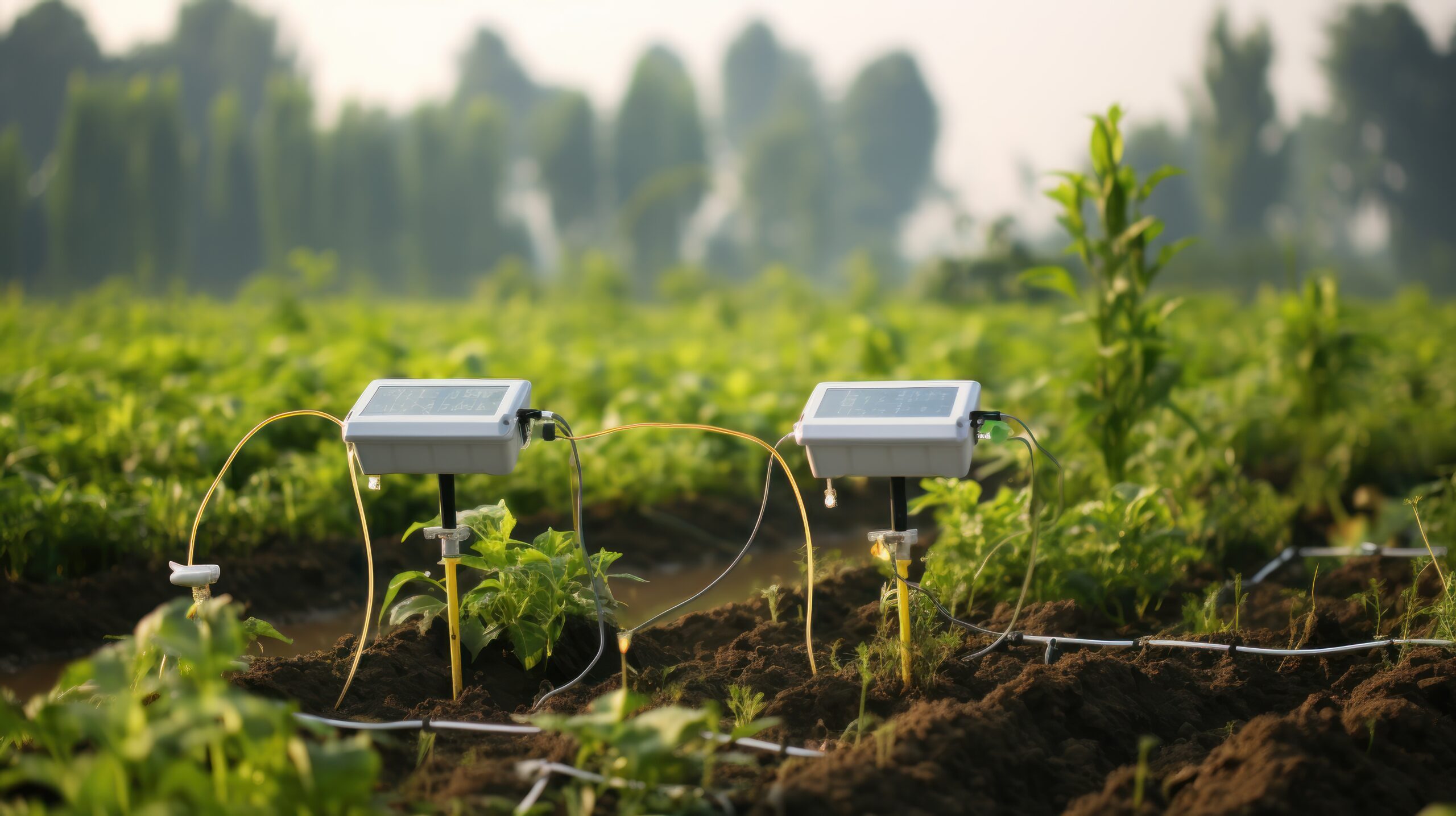
At the center of the collaboration is the development of an AI-integrated high-throughput phenotyping platform capable of evaluating thousands of crop breeding lines at a scale and speed that would be impossible through conventional field assessments. Using multispectral imaging, thermal sensing technologies, field-based sensors and machine learning algorithms, researchers will be able to capture and analyze critical plant traits with unprecedented precision.
For plant breeders, phenotyping—the process of measuring observable plant characteristics such as growth, stress tolerance and yield potential—has traditionally been one of the most time-consuming stages of crop development. The new platform aims to automate much of that process, enabling scientists to identify superior wheat and rice varieties more rapidly while reducing labor-intensive field evaluations.
The collaboration combines complementary strengths from both countries. Texas Tech researchers bring expertise in artificial intelligence, drone-based remote sensing, geospatial analytics and crop stress physiology, while Punjab Agricultural University contributes decades of experience in wheat and rice breeding, genetics and crop improvement. Together, the teams are attempting to build a data-driven breeding ecosystem capable of accelerating innovation in two of the world’s most important staple crops.
The significance of the initiative extends beyond academic research. Wheat and rice collectively provide a substantial share of global caloric intake, making their resilience increasingly critical as climate-related stresses affect agricultural productivity across major growing regions. Rising temperatures, erratic rainfall patterns and water shortages are forcing breeding programs worldwide to develop crops that can maintain yields under harsher conditions.
Artificial intelligence is emerging as a powerful tool in that effort. By processing massive volumes of field data generated through sensors and imaging systems, machine learning models can identify patterns and predict plant performance far more quickly than traditional evaluation methods. Researchers believe this capability could fundamentally reshape how breeding programs operate in the coming decade.
The project also places significant emphasis on capacity building and scientific exchange. Graduate students from Punjab Agricultural University will undertake funded research residencies at Texas Tech, receiving specialized training in AI-enabled phenotyping, drone technologies, geospatial analytics and machine learning applications for agriculture. Meanwhile, Texas Tech researchers will conduct workshops, demonstrations and collaborative field activities in India aimed at helping plant breeders integrate emerging technologies into crop improvement programs.
More than 20 scientists and doctoral researchers are expected to receive advanced training through the initiative, creating a new generation of agricultural researchers equipped to work at the intersection of plant science, data analytics and artificial intelligence.
Beyond developing new crop varieties, the collaboration is expected to generate a suite of digital agricultural tools, including open-access datasets, AI-powered decision-support systems, prototype phenotyping technologies, scientific publications and training resources that can be shared with breeding programs globally.
The project underscores a broader transformation underway in agricultural research. As the challenges facing global food production become increasingly complex, scientific institutions are moving toward multidisciplinary approaches that combine biological sciences with advanced computing, data science and automation.
For Texas Tech and Punjab Agricultural University, the partnership represents more than a research collaboration. It is a strategic investment in the future of crop improvement—one that recognizes that feeding a growing global population will depend not only on better genetics, but also on smarter technologies capable of accelerating discovery.
As artificial intelligence becomes an increasingly important tool in agriculture, initiatives such as this signal how the next generation of crop breeding may be defined not by years of manual observation, but by algorithms, sensors and predictive analytics working alongside plant scientists to deliver climate-ready crops faster than ever before.