Thursday, 25 June 2026

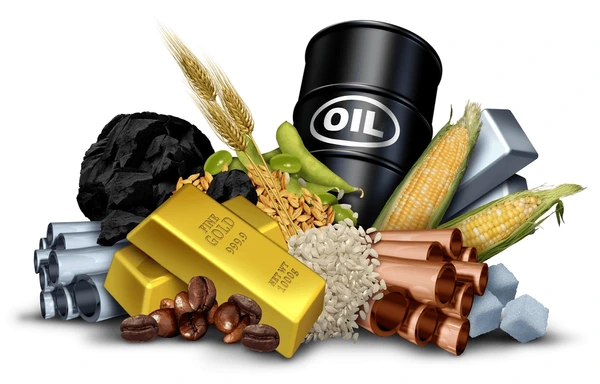
From a 7 per cent surge in cocoa to a 26 per cent crash in potatoes, agricultural commodities deliver one of their most divergent trading sessions of the year, as per Trading Economics
If there was one message from global agricultural markets today, it was this: there is no single commodity story anymore. On one side of the market, cocoa staged a stunning rally, tea and coffee extended their gains, and wheat remained comfortably in positive territory. On the other, potatoes suffered a spectacular collapse, edible oils weakened, dairy products slipped, and industrial agricultural commodities remained under pressure. The result was one of the most polarized trading sessions seen across agricultural commodities in recent months—a market where the biggest winner gained more than 7 per cent, while the biggest loser plunged more than 26 per cent.
At the heart of the rally was cocoa, which emerged as the undisputed star of the day. Prices surged 7.06 per cent to $4,973 per tonne, making it the strongest-performing agricultural commodity by a wide margin. The move serves as a reminder of cocoa’s extraordinary sensitivity to supply concerns. Even after retreating from the record highs witnessed earlier this year, the market remains vulnerable to disruptions in West Africa, which produces the overwhelming majority of the world’s cocoa beans.
For traders, the message was simple: the cocoa story is far from over.
Tea joined the rally, climbing 3.85 per cent to Rs 221.19 per kg. While tea rarely captures the same attention as cocoa or coffee, the commodity has quietly been building strength amid weather concerns in major producing regions and resilient consumer demand. The latest gain reinforces a broader trend in beverage commodities, where supply-side uncertainty continues to support prices.
Coffee also moved higher, rising 1.50 per cent to 281.35 US cents per pound. Coffee has spent much of the past year at the center of commodity conversations as traders monitor production conditions across key growing regions. The latest advance suggests that concerns about future supplies remain firmly embedded in market sentiment.
Cotton added 0.86 per cent to reach 76.92 US cents per pound, while wheat edged up 0.14 per cent to $586.55 per bushel. Neither move was dramatic, but both contributed to a broader picture of resilience across major crop markets. Yet while traders were celebrating gains in some corners of the agricultural universe, another part of the market was experiencing a very different reality.
The most dramatic move of the day came from potatoes.
Prices crashed 26.32 per cent to just EUR 1.40 per 100 kg, making potatoes not only the worst-performing agricultural commodity of the day but one of the most volatile assets across commodity markets. The scale of the decline dwarfed movements elsewhere and suggests a major repricing event driven by changing supply-demand dynamics. Whether triggered by excess supplies, weak seasonal demand, inventory adjustments or aggressive market liquidation, the collapse highlights the vulnerability of agricultural commodities where perishability and storage constraints can rapidly amplify price movements.
The fall in potatoes was so large that it overshadowed declines across every other commodity. Orange juice, which has been gradually retreating from the extraordinary highs that defined much of the past year, fell 3.62 per cent to 146.25 US cents per pound. The market appears to be reassessing supply concerns that previously fueled one of the strongest rallies in agricultural commodities.
Butter also came under pressure, declining 2.70 per cent to EUR 3,858 per tonne. Dairy markets have recently faced a more challenging environment as production conditions improve and buyers become increasingly cautious about demand. Wool dropped 2.31 per cent to AUD 1,943 per 100 kg, reflecting ongoing uncertainty surrounding textile demand and manufacturing activity. The decline mirrors broader concerns about global consumer spending and industrial output.
Then there was palm oil, one of the world’s most strategically important agricultural commodities. Rubber declined 1.28 per cent to 224.30 US cents per kg, while lumber fell 1.20 per cent to $617 per 1,000 board feet. Both commodities are closely linked to industrial activity and construction demand, making them useful indicators of broader economic sentiment. Their declines suggest that concerns about global growth remain firmly on investors’ radar. Sugar slipped 0.92 per cent to 13.89 US cents per pound, while canola eased 0.51 per cent to CAD 740.92 per tonne. Meanwhile, sunflower oil was virtually unchanged, declining just 0.07 per cent to Rs 1,578.40 per 10 kg, making it one of the session’s most stable agricultural commodities.
Taken together, today’s market action reveals an agricultural sector increasingly driven by individual commodity stories rather than broad market themes. In previous years, inflation fears, geopolitical tensions, droughts or energy shocks often pushed large segments of the commodity complex in the same direction. That is no longer happening. Instead, traders are confronting a market where cocoa can rally 7 per cent on supply concerns while potatoes simultaneously collapse 26 per cent on entirely different fundamentals. Tea and coffee are benefiting from weather and production uncertainties, while palm oil is reacting to crude oil prices. Wool is responding to textile demand, while orange juice is adjusting to evolving supply expectations.
It is a market of micro-stories rather than macro-trends. The divide is perhaps best illustrated by today’s scoreboard.
The biggest gain belonged to cocoa at +7.06 per cent, followed by tea (+3.85 per cent), coffee (+1.50 per cent), cotton (+0.86 per cent) and wheat (+0.14 per cent).
The biggest losses came from potatoes (-26.3 per cent), orange juice (-3.62 per cent), butter (-2.70 per cent), wool (-2.31 per cent) and palm oil (-1.77 per cent).
Elsewhere, rubber (-1.28 per cent), lumber (-1.20 per cent), sugar (-0.92 per cent), canola (-0.51 per cent) and sunflower oil (-0.07 per cent) recorded smaller declines.
For investors, traders and commodity consumers, the lesson is becoming increasingly apparent. The agricultural market is no longer moving as a single asset class. Each commodity is increasingly trading on its own supply chain realities, weather patterns, consumption trends and policy developments. Today’s session captured that reality perfectly. A cocoa trader, a potato grower, a palm oil exporter and a coffee merchant all woke up to the same global market environment. Yet by the end of the day, they were living in entirely different worlds.
— Suchetana Choudhury (suchetana.choudhuri@agrospectrumindia.com)