Wednesday, 17 June 2026

High-quality carbon credits and water-saving practices drive scalable impact
In a significant move to scale climate action in agriculture, Amazon has entered into a long-term agreement to purchase methane-reducing carbon credits from The Good Rice Alliance (TGRA), a program backed by Bayer CropScience India. The deal positions Amazon as the primary buyer of high-integrity carbon credits generated through sustainable rice cultivation practices across India.
The agreement covers more than 685,000 metric tons of CO₂ equivalent during the initial crediting phase, underscoring growing corporate demand for verifiable, large-scale climate solutions. It also highlights agriculture’s emerging role as a critical frontier in methane mitigation, particularly in rice cultivation, which accounts for an estimated 8–10 per cent of global methane emissions.
India, the world’s largest rice-growing country and the third-largest methane emitter globally, sits at the center of this transition. With over 100 million livelihoods dependent on rice farming, the sector presents both a climate challenge and a significant opportunity for impact.
Scaling Climate Action Through Smallholder Farming
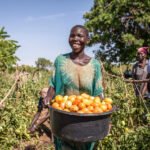
TGRA’s program operates across multiple Indian states, working directly with more than 13,000 smallholder farmers across 35,000 hectares of farmland. The initiative promotes improved water management practices, including Alternate Wetting and Drying (AWD) and Direct Seeded Rice (DSR), which significantly reduce methane emissions compared to conventional flooded paddy systems.
Beyond emissions reduction, these practices deliver tangible economic benefits for farmers, including lower input costs, improved yields, and enhanced resilience to climate variability. Water usage is also reduced by up to 30 per cent, addressing one of agriculture’s most pressing resource constraints.
Science-Led Carbon Markets Take Center Stage
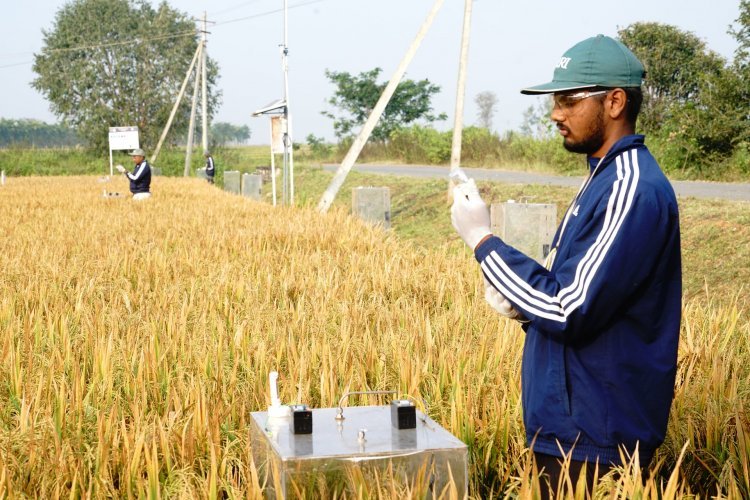
At the core of TGRA’s model is a measurement-first approach to carbon credit generation. Emissions reductions are quantified using direct, field-based methane measurements conducted in collaboration with the International Rice Research Institute, supported by digital monitoring tools and independent verification.
Credits are issued under Verra’s Verified Carbon Standard using the VM0051 methodology for improved rice management, ensuring high levels of transparency and credibility. The program also integrates satellite-based monitoring and is working toward incorporating advanced biogeochemical modeling to further strengthen accuracy and scalability.
TGRA’s rigorous approach has earned it an ex-ante A rating from BeZero Carbon, making it one of the highest-rated rice-based carbon projects globally.
From Pilot to Scaled Deployment
The alliance builds on a multi-year foundation established through collaborations involving Bayer, GenZero, and Shell Nature-Based Solutions, which validated the technical and operational feasibility of methane reduction in rice systems at scale.
With Amazon’s entry as a committed offtaker, the initiative is now positioned to transition from pilot programs to large-scale deployment, accelerating adoption of climate-smart agriculture practices across India.
Corporate Climate Commitments Meet Ground-Level Impact
For Amazon, the partnership reflects a broader strategy to invest in high-quality, science-backed carbon credits that deliver measurable climate outcomes. The focus on methane—a potent greenhouse gas with over 27 times the warming potential of carbon dioxide—signals a shift toward addressing short-term climate drivers with immediate impact.
For TGRA and Bayer, the agreement reinforces a dual objective: delivering measurable emissions reductions while placing smallholder farmers at the center of the value chain.
As carbon markets evolve, this collaboration underscores a growing convergence between corporate climate commitments and on-ground agricultural transformation—where scalable solutions are defined not just by ambition, but by verifiable impact.