Monday, 6 July 2026

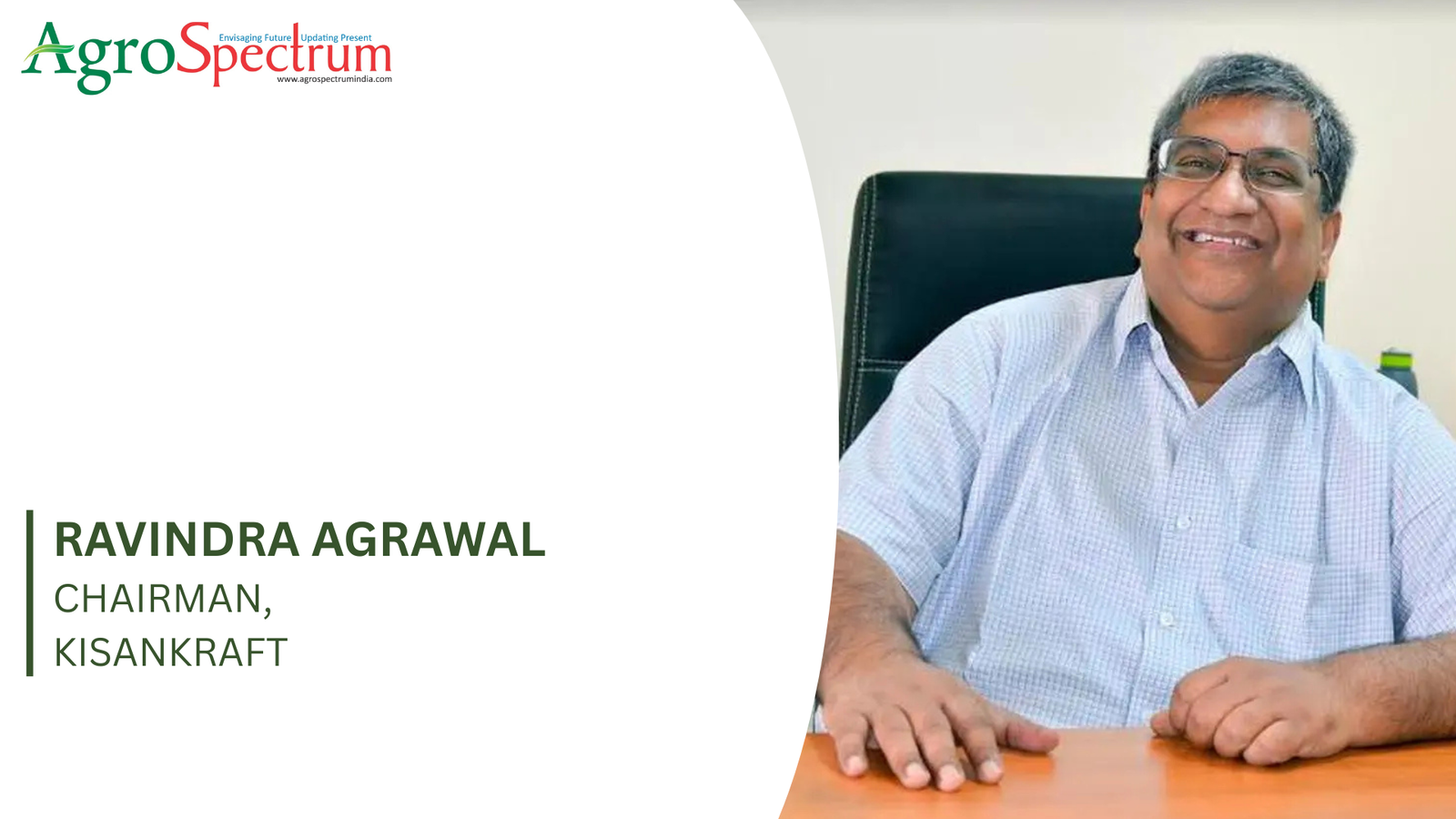
Authored by Ravindra Agrawal, Chairman, KisanKraft
For a long time, Indian agriculture has depended on one thing more than anything else i.e. PEOPLE. Fields were cultivated, harvested, and maintained by a steady supply of rural labour that, until recently, seemed almost guaranteed. That reality is now changing, and not gradually enough for farmers to easily adjust.
Across rural India, workers are steadily moving away from farm work. The reasons are not hard to understand. Jobs in construction, transport, small factories, and even local service businesses are offering more regular income and, in many cases, less physically exhausting work. With better roads, mobile connectivity, and expanding local economies, these opportunities are no longer limited to big cities. They are much closer to home.
For farmers, this shift is beginning to show up in very practical ways. During peak agricultural seasons, especially sowing and harvesting, finding workers has become harder and more expensive. Many farmers now talk about uncertainty, not just around weather or crop prices, but around whether they will even have enough hands on the field when it matters most. Delays of even a few days can affect crop outcomes, and that risk is growing.
Small and marginal farmers feel this pressure the most. They typically work with limited resources and tighter margins, so rising labour costs hit them harder. Unlike larger farms, they cannot easily absorb these cost increases or invest in large-scale machinery. For them, the labour shortage is not just an inconvenience—it can directly affect whether farming remains worth continuing.
There is also a quieter, generational shift underway. Younger people from farming families are choosing different paths. Education and exposure have broadened their options, and many are unwilling to take up physically demanding farm work with uncertain returns. Farming, in many cases, is being left to older family members, which brings its own set of challenges.
In this context, mechanisation is starting to look less like an upgrade and more like a necessity. But the kind of mechanisation India needs is not the large, expensive machinery seen in countries with vast, uniform farms. Indian agriculture is fragmented, and solutions have to match that reality.
Smaller, more affordable machines like weeders, brushcutters, and compact harvesters are becoming increasingly relevant. They do not replace labour entirely, but they reduce dependence on it at critical moments. More importantly, they fit the scale at which most Indian farmers operate. Mobile-based platforms are beginning to connect farmers to farmers to facilitate equipment rentals, making access affordable.
While still evolving, these systems point to a future where mechanisation is not just available, but easier to integrate into everyday farming.
None of this means labour will disappear from agriculture. It will remain important. But its role is clearly changing, and farming systems will need to adapt around that reality.
The movement of rural workers away from agriculture is part of a larger economic shift, not a temporary phase. The question is not how to reverse it, but how to respond to it. For Indian farming, that response will likely depend on how effectively it can balance human effort with the right level of mechanisation, especially for those working on the smallest plots.