Wednesday, 10 June 2026

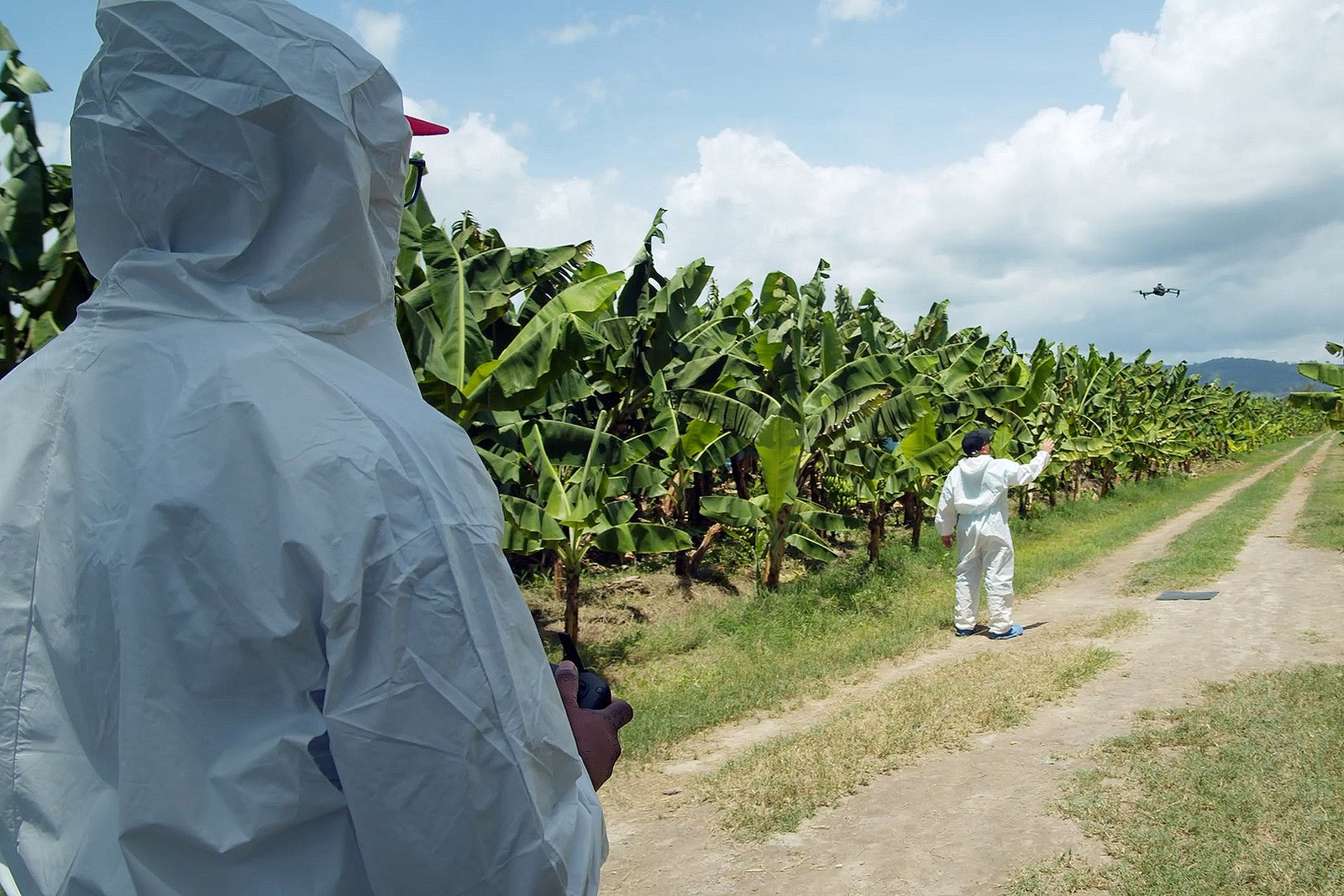
Photo courtesy: FAO
How Venezuelan farmers are learning to grow and live with a devastating plant disease
In the fields of Venezuela, where the banana has been for generations a symbol of sustenance and tradition, a shadow fell across the land. In 2023, Venezuela’s National Institute of Integral Agricultural Health (INSAI) declared a phytosanitary emergency: the fungus Fusarium Tropical Race 4 (TR4) (Fusarium oxysporum f. sp. cubense tropical race 4; syn. Fusarium odoratissimum) had arrived in producing areas in the states of Aragua, Carabobo and Cojedes.
This fungus, considered a devastating disease of banana and plantain (Musaceae) trees, can remain in the soil for more than two decades, threatening production and the lives of those who depend on it.
In the state of Aragua in the north of the country, the Renacer community had been growing bananas and plantains on 20 hectares since 2018. Then Fusarium arrived.
“When the disease hit, the entire plantation began to deteriorate. We refused to ‘die’ with the trees because that was our livelihood. The visits of INSAI confirmed that we had to chop down the banana trees. I cried a lot because I had worked with my banana trees for years,” recalls woman farmer, Lesbia Margarita García, with a broken voice.
In response, INSAI implemented measures to eliminate the affected plantations and improve the soil health by changing to other crops that allow agricultural production to recover. The Food and Agriculture Organization of the United Nations (FAO) offered assistance by providing corn seeds, tools, biosecurity inputs and training, with teams of experts helping farmers to start again.
“Planting corn, thanks to the INSAI-FAO programme, gave us a harvest that benefited everyone. We have been improving the soil,” says Lesbia Margarita with a smile. “Now we rotate crops, observe soil health and have learned how to use natural fertilizers. Expert assistance has been key.”
The pilot project works directly with affected producers in high-risk areas, promoting alternative crops such as cereals and vegetables, delivering inputs and tools to mitigate damage and applying biosecurity measures for safe and effective containment.
“Beyond the corn received, we have already planted cassava, chili peppers, beans and pumpkin. We hope that by the end of the year [2025] we will be diversified and that each season we will have something to sell. These lands do not give up,” says Lesbia Margarita with conviction.
The Renacer community is beginning to see fruits. Their products are reaching local markets, generating income and rebuilding their livelihoods.
Key actions to manage Fusarium TR4 are ongoing, including regular monitoring, continuous training, inter‑institutional coordination, updates to the national plan, information campaigns and producer impact assessments. INSAI is sustaining regulatory, surveillance measures and training —with FAO support—as part of a comprehensive long‑term strategy.
At the global level, FAO supports awareness raising, capacity building and international collaboration in the fight against Fusarium TR4 by facilitating the World Banana Forum and its Global Network on TR4.
“The objective is for countries to strengthen their operational and technical capacity, articulating actions between the public sector, the private sector and family farmers,” says Raixa Llauger, FAO Agriculture Officer in Mesoamerica. “FAO and local partners have promoted this approach in Venezuela.”
As an essential part of the activities, a comprehensive training programme was developed with activities that taught farmers how to identify the disease contain it and protect crops. In addition, FAO has distributed laboratory equipment, biosecurity tools and a multispectral drone to INSAI. Drones are an efficient and cost‑effective tool for phytosanitary surveillance, offering rapid, high‑resolution monitoring and early detection of plant pests and diseases.
Overall, the project strengthened biosecurity measures against the Fusarium fungus through the adoption of the National Action Plan and the establishment of partnerships with national and international institutions. In addition, the pilot initiative supporting smallholder farmers in key production areas and a nationwide awareness campaign with broad outreach improved surveillance, diagnosis and phytosanitary response capacities across the country.
To read more click: https://www.fao.org/newsroom/story/fighting-the-fungus-foe-of-the-beloved-banana/en