Wednesday, 1 July 2026

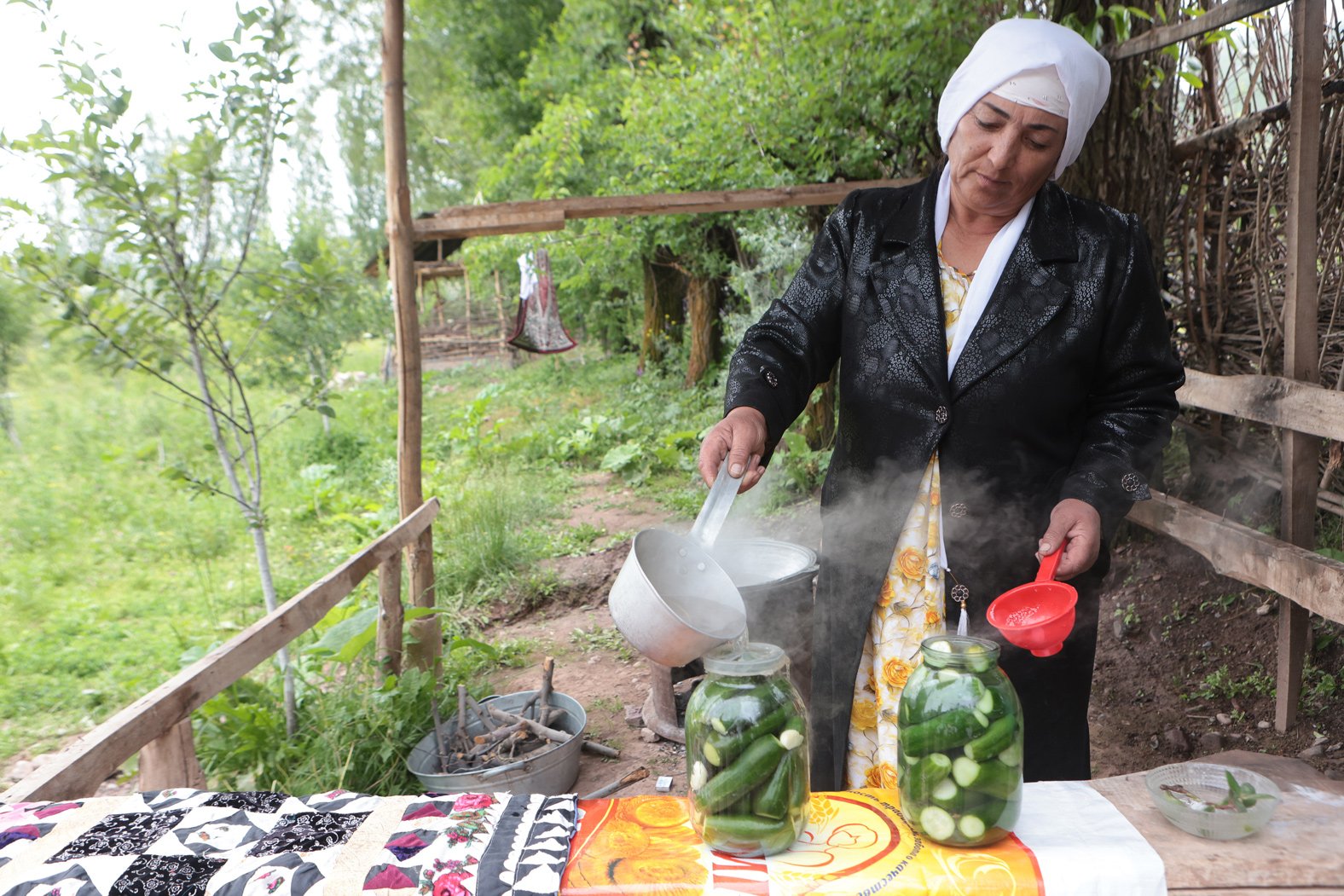
Photo courtesy: FAO/Mattia Romano
Leading women farmers in reviving lost crops and reshaping the future
Sonya Kirgizova is well known in the mountain villages of Tojikobod in central-eastern Tajikistan. Her neighbours admire her greenhouse, her jars filled with pickled Anzur onions and cucumbers, and the buzzing hives behind her home. More than anything, though, they trust her. This trust is what made her a central figure in bringing women farmers into a project that is helping to protect Tajikistan’s rich agrobiodiversity.
Sonya’s connection to farming runs deep. As a teenager, she helped her parents grow potatoes. After she got married, she planted seedlings with her husband. After he left for long periods of seasonal work in the Russian Federation, she managed the fields alone. Over time, she began to master each step of the process: planting, irrigating, harvesting and storing. What began as a necessity became a skill.
“I had no choice,” she says. “At first it was difficult, but over time I learned to manage everything. I grew stronger.”
Sonya’s path is shared by many women in Tajikistan. Rural women have always played a central role in agriculture, planting, weeding, tending livestock and managing household food production, but as more men migrate in search of income, women are now taking on even more tasks. In fact, women have become the main agricultural workforce—often managing entire farms on their own.
Long unrecognized and often unpaid, however, many women still lack access to the knowledge, finance, tools and resources they need to make agriculture a reliable source of income.
Sonya’s role in the community goes far beyond her own household. Over the years, whenever she gained new skills and knowledge through health and development projects, she shared them with other women.
When a new project to protect traditional crops and strengthen local farming began in Tojikobod, Sonya was one of the first people the Food and Agriculture Organization of the United Nations (FAO) approached. Led by the Government of Tajikistan and FAO with funding from the Global Environment Facility (GEF), the initiative helped communities, with women taking the lead, to revive local seeds, improving food security and nutrition and enhancing resilience.
Cultural and societal norms often make direct engagement with women in rural villages complex, but Sonya already had the trust of the community and the support of the local government. She opened the door.
“She was the key,” says Carolina Starr, FAO Agricultural Officer. “Sonya helped bridge the gap and enabled women to access local seeds, attend trainings and participate actively in the project activities.”
She began collaborating with FAO by organizing hands-on training sessions in her garden. She invited other women to learn how to grow vegetables, prune fruit trees, manage greenhouses and raise bees. The more they learned, the more confident they became.
“Women here are hardworking,” Sonya says. “But they’re often not seen as farmers or decision-makers. Now they’re starting to.”
A turning point came with access to local seeds. Sonya helps manage one of seven community seed banks established with the project’s support.
These community seed banks, which store traditional, climate-resilient varieties, operate like a local loan system. A farmer can take a kilo of seeds at planting time, and after harvest, return 1.3 or 1.5 kilos to the bank. This keeps the banks active and growing.
“Seeds are very important for us,” Sonya explains. “Now, women can get seeds directly, without delays or complications.”
Most importantly, the banks are owned and run by the community. Farmers decide what to store in the bank, when and how to return seeds and how to manage their local stock.
“These community seed banks give farmers control over their production,” says Starr. “And because women are leading many of them and are mainly responsible for their household’s meals, it’s also improving nutrition.”
With more variety in the fields, families have more variety on their plates.
Women have begun to revive traditional, often forgotten crop varieties, using them again in their kitchens and selling the surplus. Some are now cultivating mountain crops like the Anzur onion on their land for the first time. These onions are pickled and preserved, creating new sources of income.
For Sonya, the most meaningful change is seeing women now viewing themselves as producers, mentors and decision-makers.
“Some of the women I work with had never earned money in their lives,” she says. “Now [that they are earning an income] they are helping their families, feeding their children better and even teaching others.”
And while community seed banks are the most visible result of this effort, the real foundation lies in people like Sonya, trusted local leaders who connect knowledge, guide change and bring others with them.
The FAO–GEF agrobiodiversity project is active across seven districts of Tajikistan, where farming communities are working to revive traditional crops, conserve plant genetic resources and strengthen local food systems. It also supports national efforts to improve policies to preserve agrobiodiversity.
By placing women at the centre, the project contributes to more resilient agriculture, improved nutrition and greater equity in rural development. To date, the project has reached over 1 500 people across the country.
This story is part of a series celebrating women farmers worldwide, from producers, fishers, and pastoralists to traders, agricultural scientists, and rural entrepreneurs. The International Year of the Woman Farmer 2026 recognises their essential contributions to food security, economic prosperity, and improved nutrition and livelihoods, despite heavier workloads, precarious working conditions, and unequal access to resources. It calls for collective action and investment to empower women, in all their diversity, and to build a fairer, more inclusive, and sustainable agrifood system for all.
To read the full story, click: https://www.fao.org/newsroom/story/the-woman-who-grows-tajikistan/en