Tuesday, 9 June 2026

ICRISAT led strategy identifies 181 vulnerable blocks, recommends resilient crops, precision advisories and water-saving interventions to shield farmers from monsoon shocks
As forecasts point to a heightened risk of below-normal rainfall during the 2026 kharif season, Maharashtra is moving proactively to reduce the impact of potential monsoon disruptions through a science-led agricultural preparedness strategy that combines climate forecasting, artificial intelligence and district-level contingency planning.
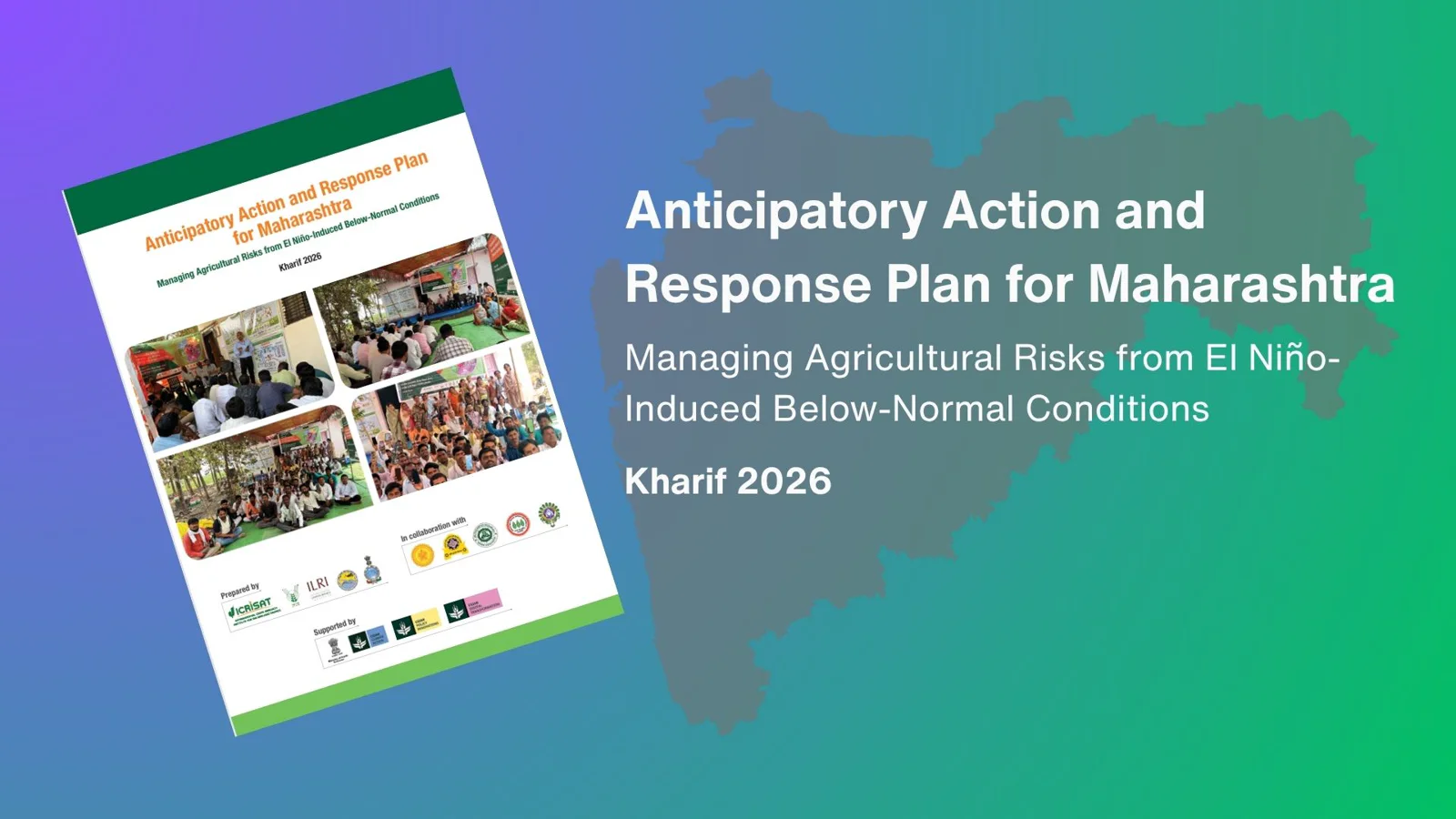
A new Anticipatory Action and Response Plan for Maharashtra, developed by the International Crops Research Institute for the Semi-Arid Tropics (ICRISAT) in collaboration with national meteorological, agricultural and research institutions, aims to help farmers navigate the growing uncertainty associated with a developing El Niño event, which has historically been linked to droughts, erratic rainfall and agricultural losses across large parts of India.
Released during a high-level technical consultation at the Indian Institute of Tropical Meteorology (IITM), Pune, the plan represents one of the most comprehensive attempts to translate seasonal climate forecasts into actionable farm-level decisions ahead of the sowing season.
The initiative brings together expertise from IITM, the India Meteorological Department (IMD), ICAR–Central Research Institute for Dryland Agriculture (ICAR-CRIDA), the International Livestock Research Institute (ILRI), Maharashtra’s State Agricultural Universities, All India Coordinated Research Project on Agrometeorology (AICRPAM) centres, the Project on Climate Resilient Agriculture (PoCRA) 2.0, and state agriculture authorities.
With climate variability increasingly disrupting traditional farming calendars, the plan reflects a broader shift in agricultural risk management—from responding to disasters after they occur to anticipating and mitigating risks before they affect production.
“Climate risks are becoming increasingly complex for smallholder farmers, and the need is to move from reactive responses to anticipatory action,” said Dr Himanshu Pathak, Director General of ICRISAT. He noted that the initiative demonstrates how climate science, AI-enabled advisory systems and institutional collaboration can support timely, location-specific decision-making for farmers and extension agencies.
At the core of the strategy is a detailed block-level vulnerability assessment covering Maharashtra’s agricultural landscape. Researchers identified 181 highly vulnerable blocks that face elevated exposure to climate shocks based on analyses of previous El Niño-linked drought years. The findings indicate that agricultural losses during such periods are driven less by declining crop productivity and more by reduced cultivated area, delayed sowing and poor crop establishment resulting from erratic rainfall patterns.
To address these risks, the report recommends a shift towards more resilient and lower-risk cropping systems, particularly in drought-prone regions.
Millets such as jowar and bajra, along with pulses including tur, gram and moong, have been identified as among the most climate-resilient options under projected rainfall-deficit conditions. These crops require less water, exhibit greater tolerance to moisture stress and offer farmers a practical adaptation pathway amid growing climatic uncertainty.
The plan also outlines a series of field-level interventions designed to improve water-use efficiency and reduce production risks. Recommended measures include seed priming, mulching, micro-irrigation systems, rain guns for protective irrigation, fodder banks, and climate-informed sowing advisories, all aimed at improving crop establishment and resilience during dry spells.
A significant innovation underpinning the initiative is the use of digital agriculture and artificial intelligence.
The recommendations are being supported through ICRISAT’s Intelligent Systems Advisory Tool (iSAT), developed under the project titled “AI-powered Context-Specific Agromet Advisory Services for Climate-Resilient Agriculture at Scale.” The platform integrates seasonal climate forecasts, weather data and agronomic intelligence to generate highly localised advisories tailored to specific farming conditions.
According to Dr Shalander Kumar, Principal Scientist at ICRISAT, the objective is to strengthen climate-informed agricultural decision-making by providing farmers and extension systems with actionable recommendations before weather-related risks materialise.
Experts involved in the programme emphasise that the success of climate adaptation efforts depends not only on scientific forecasting but also on ensuring that information reaches farmers in a timely and usable format.
“The value of climate information lies in its effective use by decision-makers and communities,” said Dr Suryachandra Rao, Director of IITM. “By linking seasonal outlooks and weather information with agricultural preparedness planning, this initiative supports the delivery of the right information, at the right time and at the local level.”
Beyond crop planning, the report underscores the need to strengthen broader agricultural resilience mechanisms, including livestock preparedness, fodder security, crop insurance coverage and institutional coordination.
Dr Anupam Hazra, Scientist-G and Associate Mission Director of the Monsoon Mission at IITM, highlighted that climate shocks increasingly affect entire farming systems rather than individual crops, making integrated preparedness essential for reducing economic losses.
To ensure last-mile implementation, the plan recommends stronger coordination among Agromet Field Units, Krishi Vigyan Kendras (KVKs), district agriculture departments, Farmer Producer Organisations (FPOs) and local institutions. The goal is to improve dissemination of advisories and facilitate rapid field-level responses during critical phases of the upcoming kharif season.
The initiative comes at a time when climate resilience is becoming a strategic priority for Indian agriculture. With extreme weather events occurring more frequently and rainfall patterns becoming increasingly unpredictable, state governments and research institutions are seeking ways to convert advances in climate science into practical tools for farmers.
For Maharashtra, where a large share of agriculture remains rainfed and vulnerable to monsoon variability, the new anticipatory action framework represents an important step toward institutionalising climate risk management.
Rather than waiting for drought conditions to emerge, the state is attempting to build preparedness before the season begins—a shift that experts believe could become a model for climate adaptation strategies across India’s agricultural landscape.